

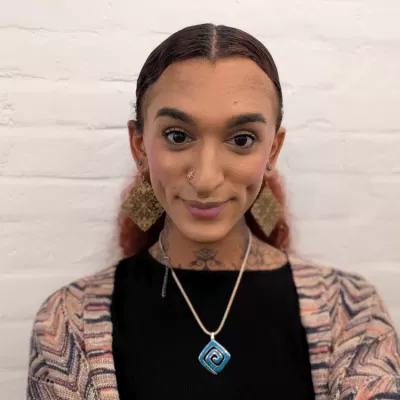
By Mya, MBACP
Integrative Counsellor & Clinical Hypnotherapist
Hypnotherapy can sound mysterious, especially if the first images that come to mind are stage performances or someone being made to act against their will. Clinical hypnotherapy is very different. It is a calm, collaborative therapeutic approach that uses focused relaxation to support patterns that may feel difficult to shift through conscious effort alone. For LGBTQIA+ people, the question is not only whether hypnotherapy can help, but whether it will be offered in a way that feels genuinely affirming. That matters. If you have spent years feeling misunderstood, questioned, or reduced to one part of who you are, the way therapy is held can matter as much as the technique itself.
This article is for informational purposes only and does not constitute medical or clinical advice. If you are concerned about your mental health or the mental health of someone you know, please speak with a qualified professional. Hope Therapy & Counselling Services offers a free 15-minute consultation — Book a Free 15-Minute Consultation
This article is intended for general information and educational purposes only and should not be considered medical, psychiatric, psychological, or therapeutic advice. Every person’s circumstances are unique, and reading this article does not create a therapeutic relationship with Hope Therapy & Counselling Services. If you are concerned about your mental health or emotional wellbeing, we encourage you to seek support from a suitably qualified healthcare or mental health professional. Hope Therapy & Counselling Services offers a free 15-minute consultation which can be booked at https://www.hopefulminds.co.uk/free-consultation-with-hope-therapy/.
What Clinical Hypnotherapy Actually Is
Clinical hypnotherapy uses a guided state of focused relaxation, sometimes called a trance state, to help a person work with thoughts, feelings, habits, and responses that may have become automatic. This does not mean being asleep, unconscious, or under someone else’s control. You remain aware. You can stop at any point. You cannot be made to say or do anything that goes against your wishes.
Many people describe the experience as similar to being deeply absorbed in a book, a piece of music, or a familiar journey where part of the mind is focused while another part feels quieter. In that state, the mind may be more open to considering different perspectives and practising new responses.
Clinical hypnotherapy is not magic, and it is not a shortcut around the complexity of real life. It can be one way of supporting change where patterns have become strongly linked to emotion, body responses, or habit. For some people, it works best alongside counselling, where there is also space to talk, reflect, and make sense of what is happening.
What LGBTQIA+ Affirming Hypnotherapy Means
LGBTQIA+ affirming hypnotherapy means that your sexual orientation, gender identity, relationship style, or lived experience is not treated as the problem. Your identity is not something to be corrected, questioned, reduced, or explained away. The therapeutic work focuses on the issue you bring, while respecting the whole context of your life.
This matters because hypnotherapy involves suggestion, imagery, language, and trust. The therapist’s assumptions therefore matter. An affirming practitioner will not use language that positions LGBTQIA+ identity as unusual, risky, less healthy, or something that needs to be moved away from. They will also understand that distress can arise not from identity itself, but from experiences such as rejection, concealment, discrimination, exclusion, or prolonged vigilance.
Affirming practice is not about making every session about identity. Sometimes your identity may be central to the work. Sometimes it may simply be part of the wider context. Either way, it should not need to be defended before you can talk about what has brought you to therapy.
When Hypnotherapy May Be Useful for LGBTQIA+ Clients
Hypnotherapy may be helpful for some LGBTQIA+ clients when anxiety, fear, habit, or body-based responses feel faster than conscious thought. This can happen when the mind understands something logically, but the body still reacts as though there is danger. You might know that a situation is not immediately threatening, yet still feel your heart race, your muscles tense, or your thoughts move quickly into protection mode.
For some LGBTQIA+ people, this can be linked with repeated experiences of having to scan rooms, monitor language, assess reactions, or decide how much of themselves feels okay to share. Over time, that kind of vigilance can become tiring.
A session might begin with something like: “I know we had planned to focus on feeling calmer about the future this week, but my mind feels completely overwhelmed. Nothing specific has happened today, but every time I try to rest, my thoughts start running through everything that could go wrong. My body reacts as if I need to protect myself, even when I am just lying in bed. I feel drained from constantly being on guard.”
That kind of experience is not a personal failure. It is a sign that the nervous system may have learned to stay alert. Hypnotherapy may support some people in gently practising different responses, while counselling can help make sense of where those patterns came from.
Anxiety with a Physical or Automatic Dimension
Anxiety is not always mainly a thought process. Sometimes it is felt first in the body: tightness in the chest, shallow breathing, a racing mind, a clenched jaw, or the sense that something bad is about to happen. When anxiety has become automatic, talking it through can be helpful, but it may not always reach the part of the response that feels immediate and physical.
Clinical hypnotherapy may support some people by working with relaxation, imagery, and suggestion in a way that gives the mind and body repeated opportunities to experience a different response. This does not mean anxiety disappears, and it does not mean the person has done anything wrong if it remains. It simply offers another therapeutic route for some people whose anxiety has become strongly linked to body-based reactions.
This can be especially relevant when anxiety is connected to anticipation, social situations, public spaces, or past experiences of not feeling accepted. The work should be paced carefully and should always remain within the client’s consent and comfort.
Internalised Stigma and Deeply Held Self-Beliefs
Internalised stigma can be painful because it may not match what a person consciously believes. Someone may know, intellectually, that there is nothing wrong with who they are, while still noticing shame, fear, self-criticism, or discomfort in certain situations. These responses can be shaped by years of messages from family, culture, institutions, media, or earlier relationships.
Hypnotherapy cannot simply remove deeply held beliefs, and it should never be presented as a guaranteed way to change how someone feels about themselves. That would be misleading and unfair. What it may offer, for some people, is a gentle way of working with patterns of association, self-talk, and emotional response that have become familiar over time.
For example, hypnotherapy might support a client in practising a kinder internal response, imagining themselves in situations with more steadiness, or loosening the intensity of an old emotional pattern. Counselling remains valuable here because internalised stigma often needs reflection, language, and relational understanding, not just symptom reduction.
Specific Fears, Habits, and Repeated Responses
Some people seek hypnotherapy for a specific fear or repeated response that has started to restrict their life. This might include social anxiety, fear of being judged, difficulty relaxing, or habits that began as coping strategies but now feel unhelpful. For LGBTQIA+ clients, the work should always avoid suggesting that identity is the cause of the difficulty. Instead, it should look at the specific response, the context around it, and what the client wants support with.
Hypnotherapy may be useful where there is a clear focus and the client feels willing to engage with guided relaxation and suggestion. It can be less suitable when the issue needs longer-term exploration, complex emotional processing, or a broader counselling relationship first.
A good practitioner will not push hypnotherapy as the answer to everything. They should help you think carefully about whether this approach fits what you are bringing, and whether counselling, hypnotherapy, or a combination may be more appropriate.
Not sure where to start? Hope Therapy offers a free, no-commitment 15-minute consultation. It is a chance to ask questions, talk through what you are looking for, and explore whether counselling, hypnotherapy, or another form of support may feel like the right fit for you. Book at https://calendly.com/hopetherapy/15-minute-consultation
When Hypnotherapy Is Not the Right Approach
Hypnotherapy is not suitable for everyone, and it is not the right approach for every difficulty. Some people do not enjoy guided relaxation. Some find it difficult to settle into the process. Others may need counselling first, especially when they want space to talk through complex experiences, identity questions, relationship patterns, or difficult past events.
Responses to hypnotherapy vary considerably. Some people find it calming and useful. Others notice only small changes, or decide that a different therapeutic approach suits them better. Outcomes are not guaranteed, and a reputable practitioner should be honest about that from the beginning.
Hypnotherapy should also never be used in a way that overrides consent, minimises lived experience, or suggests that a person simply needs to think differently in order to feel better. For LGBTQIA+ clients, this distinction is especially significant. Therapy should not ask you to become more acceptable to others. It should support you with the difficulties you choose to bring, in a way that respects your autonomy and dignity.
If the work begins and it does not feel right, that can be discussed. A good therapeutic relationship allows for questions, hesitation, and review.
How Hypnotherapy and Counselling Can Work Together
At Hope Therapy, hypnotherapy may be offered alongside counselling rather than as a replacement for it. This can be helpful because some difficulties have both a conscious and an automatic dimension. You may understand where a pattern comes from, but still find that your body reacts quickly. You may know that a fear is disproportionate, but still feel caught by it. You may have words for your experience, but still want support with the response that happens before words arrive.
Counselling gives space to talk, reflect, and feel understood. Hypnotherapy may add a more focused way of working with relaxation, imagery, and rehearsed responses. For some people, the combination feels more rounded than either approach on its own.
The pace should always be collaborative. You should know what is being suggested, why it is being used, and how it relates to what you have asked for. There should be no pressure to continue with hypnotherapy if it does not feel useful. The work should remain grounded, respectful, and transparent.
Who Offers LGBTQIA+ Affirming Hypnotherapy at Hope Therapy?
Ian is an Accredited NCPS member and registered LGBTQIA+ Affirming Practitioner who holds an Advanced Diploma in Psycho-therapeutic Counselling and Hypnotherapy. His practice combines integrative counselling with hypnotherapy, and his affirming approach means your identity is respected as part of who you are, not treated as the issue to be addressed. He offers face-to-face sessions near Basingstoke in Hampshire, as well as online and telephone sessions across the UK.
Mya is an Integrative Counsellor and Clinical Hypnotherapist who holds a First-Class degree in Counselling and is currently completing advanced training in Solution-Focused Clinical Hypnotherapy, practising under clinical supervision. She offers face-to-face sessions in Dalston, Hackney, and online across the UK. Her practice is LGBTQIA+ affirming and neurodivergent affirming, with particular attention to how identity, anxiety, masking, stress, and self-understanding can overlap.
You do not need to know exactly what type of therapy you want before getting in touch. A free 15-minute consultation can help you ask questions and decide whether counselling, hypnotherapy, or a combination might feel appropriate.
Ready to Take the First Step?
Reaching out can take courage, especially if previous experiences have left you feeling misunderstood or cautious about therapy. A free, no-commitment 15-minute consultation gives you space to ask questions and explore whether Hope Therapy feels like the right place to begin. There is no pressure to book ongoing sessions, and no promise of a particular outcome — just a conversation about what support may fit. Book a Free 15-Minute Consultation
This article is intended for general information and educational purposes only and should not be considered medical, psychiatric, psychological, or therapeutic advice. Every person’s circumstances are unique, and reading this article does not create a therapeutic relationship with Hope Therapy & Counselling Services. If you are concerned about your mental health or emotional wellbeing, we encourage you to seek support from a suitably qualified healthcare or mental health professional. Hope Therapy & Counselling Services offers a free 15-minute consultation which can be booked at https://www.hopefulminds.co.uk/free-consultation-with-hope-therapy/.
Free 15-minute consultation
A calm, supportive and no-pressure conversation to help you find the right therapist for your needs.
Book now — it’s freeABOUT THE AUTHOR
Ready to Take the First Step?
Reaching out for support can feel difficult, especially when you have been carrying everything quietly for a long time. At Hope Therapy & Counselling Services, we offer calm, compassionate and professional support tailored to your needs — online across the UK and in-person at selected clinics.
Book your free consultationPride is often associated with visibility and celebration, but for many LGBTQIA+ people it is also about feeling safe, understood and accepted. Finding a therapist who genuinely understands your experiences can be an important part of that journey.
Frequently Asked Questions
These questions offer a gentle starting point if you are curious about LGBTQIA+ affirming hypnotherapy, how it differs from common myths about hypnosis, and when it may or may not be a helpful option.
What is LGBTQIA+ affirming hypnotherapy?
LGBTQIA+ affirming hypnotherapy is clinical hypnotherapy offered in a way that respects your sexual orientation, gender identity, relationships and lived experience. It does not treat LGBTQIA+ identity as something to question or change. Instead, it may support issues such as anxiety, stress, specific fears, habits or repeated emotional responses, while recognising the wider context of your life.
Is clinical hypnotherapy the same as stage hypnosis?
No. Clinical hypnotherapy is very different from stage hypnosis. You remain aware, in control and able to stop at any point. The process usually involves guided relaxation, focused attention and therapeutic suggestion. Many people describe it as feeling deeply absorbed or calm rather than being under someone else’s control.
Can hypnotherapy help with anxiety?
Hypnotherapy may support some people with anxiety, particularly where anxiety has a strong physical or automatic quality. This might include racing thoughts, tension, difficulty relaxing or feeling on alert even when there is no immediate danger. Responses vary from person to person, and outcomes are not guaranteed.
Can hypnotherapy help with internalised stigma?
For some people, hypnotherapy may gently support work around internalised stigma by helping them practise kinder self-talk, calmer body responses or different associations with situations that previously felt difficult. It should not be presented as a guaranteed way to remove deeply held beliefs. Counselling may also be important where experiences need time, language and reflection.
Is LGBTQIA+ affirming hypnotherapy right for everyone?
No. Hypnotherapy is not suitable for everyone, and some people may prefer counselling, CBT, EMDR or another form of support. Some people find guided relaxation useful, while others do not. A reputable practitioner should be honest about whether hypnotherapy seems appropriate for what you are bringing.
Do I need to know whether I want counselling or hypnotherapy before getting in touch?
No. You do not need to know exactly what type of therapy you want before making contact. A free, no-commitment 15-minute consultation can help you ask questions and explore whether counselling, hypnotherapy or a combination may feel appropriate for you.
Hypnotherapy responses vary from person to person. This information is intended to help you understand the approach, not to promise a particular result.
📅 Published: June 2026 📄 Written by Mya