BLOG
Red Flags in Teenage Behaviour: Warning Signs and How to Help
- By Jayne Russell
- Person-Centred Counsellor
- 15th August 2026
- 8–11 minutes

Every parent of a teenager knows the ground shifts constantly, moods, sleep, friendships, the lot. So how do you tell the ordinary turbulence of growing up from a sign that something is genuinely wrong? It’s one of the hardest judgement calls in parenting, and it’s easy to get wrong in either direction.
This guide walks through the red flags in teenage behaviour worth paying attention to, what they might be telling you, how to start a conversation when you’re worried, and how to help a teenager who’s struggling, including when it’s time to bring in professional support. None of it requires you to have all the answers, just to know what to look for.
This article is intended for general information and educational purposes only and should not be considered medical, psychiatric, psychological, or therapeutic advice. Every person’s circumstances are unique, and reading this article does not create a therapeutic relationship with Hope Therapy & Counselling Services. If you are concerned about your mental health or emotional wellbeing, we encourage you to seek support from a suitably qualified healthcare or mental health professional. Hope Therapy & Counselling Services offers a free 15-minute consultation – book yours now.
What counts as a red flag in teenage behaviour?
A red flag isn’t any single mood or behaviour, teenagers are meant to change. It’s a marked shift from how your teenager usually is that lasts more than a couple of weeks and starts affecting their daily life. Change, duration, and impact are what turn ordinary teenage ups and downs into something worth acting on.
Almost everything on the list below can be entirely normal in isolation. Wanting more privacy, sleeping oddly, testing boundaries, the occasional slammed door, that’s adolescence. What matters is the bigger picture: a noticeable change from your teenager’s usual self, one that sticks around and gets in the way of friendships, school, or family life.
If your instinct is quietly telling you something’s different, that instinct is worth listening to, not as proof, but as a prompt to look more closely.
It’s worth saying that spotting red flags in teenage behaviour isn’t about pathologising every mood or bracing for the worst.
Most teenagers who go through a rough patch come out the other side, especially with steady support around them. The point of knowing the signs isn’t to worry more, it’s to notice sooner, so you can be there when it counts.
Red flags in teenage behaviour to look out for
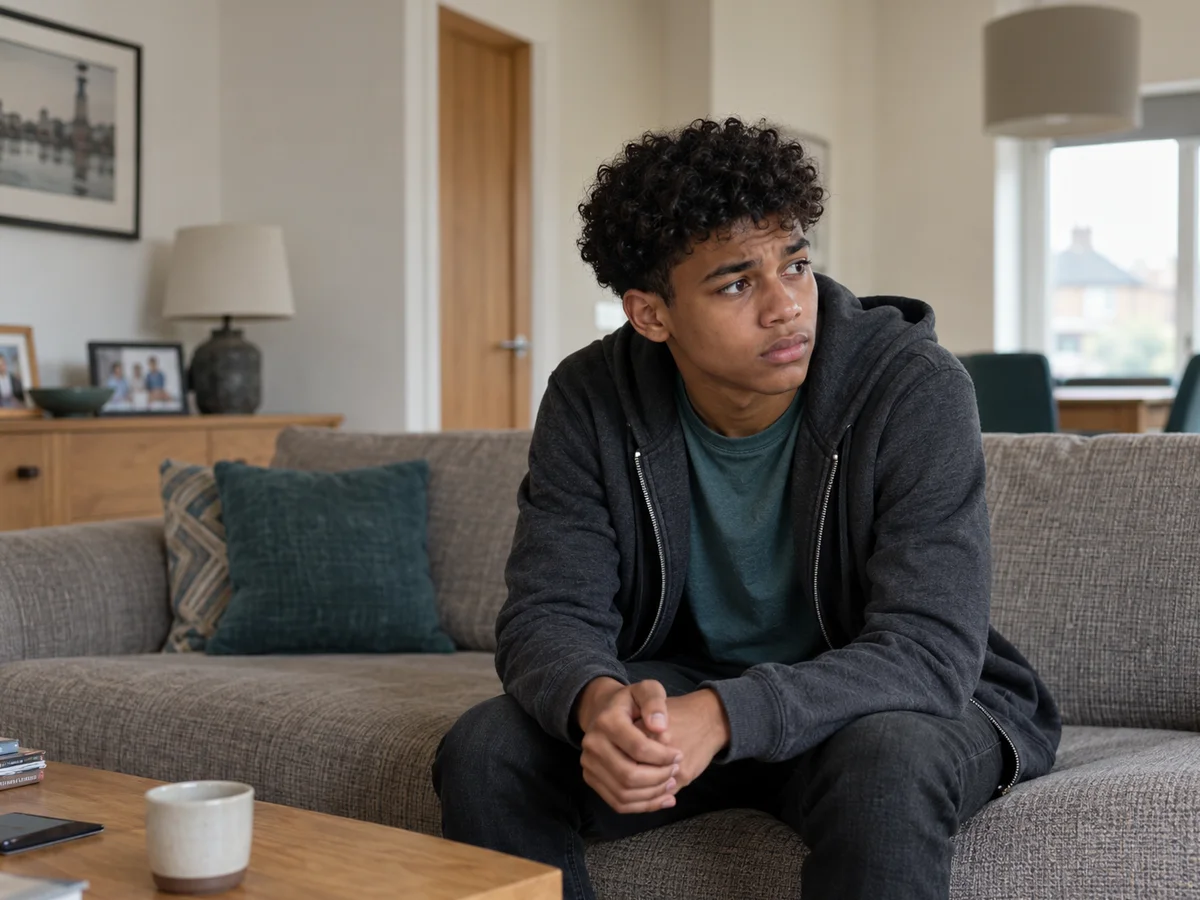
The clearest red flags in teenage behaviour are changes that persist: a lasting drop in mood, withdrawing from friends and family, losing interest in things they used to love, big changes to sleep or eating, a sharp fall at school, or any signs of self-harm or risky behaviour. Rarely does one sign tell the whole story, look for a cluster.
Emotional and social signs
These include a persistent low mood that doesn’t lift, heightened irritability or anger, constant worry, and pulling away from friends and family.
Losing interest in hobbies or friendships that used to matter, becoming unusually secretive, or talking in hopeless terms about themselves or the future all belong here too. Any talk of not wanting to be here, or of life not being worth it, should always be taken seriously, see the support box at the end of this article.
Behavioural and physical signs
Watch for marked changes to sleep or appetite, a drop in energy, unexplained aches and pains, and a slide in school attendance or grades. Riskier behaviour, secrecy around phones or friends, or any signs of self-harm are also flags worth acting on.
None of these confirms a mental health problem on its own, but several together, or any sign your teenager may be at risk, is a clear reason to step in and, where needed, to seek help straight away.
What might be behind the changes?
Behind a red flag there’s usually a feeling a young person can’t yet put into words. Anxiety, low mood or depression, anger, the exhaustion of masking a neurodivergent brain, bullying, or something happening in their world can all show up as changed behaviour. The behaviour is the signal; the cause sits underneath it.
Often it’s a mix. Anxiety in teenagers frequently hides behind irritability or avoidance, while persistent low mood can look like laziness or withdrawal. Sometimes what presents as anger is really distress with nowhere else to go.
Bullying, friendship breakdowns, academic pressure, family change, or the daily load carried by a neurodivergent young person can all sit underneath the surface. You don’t need to diagnose the cause, noticing the change and staying curious about it is enough to start.
Low mood that deepens and lingers can tip into depression, which in a teenager often looks less like sadness and more like irritability, exhaustion, or simply switching off.
It’s not always possible to tell one difficulty from another from the outside, and you don’t have to. What helps is treating a lasting change as information worth acting on, and letting a professional help work out the rest.
How to talk to a teenager you’re worried about
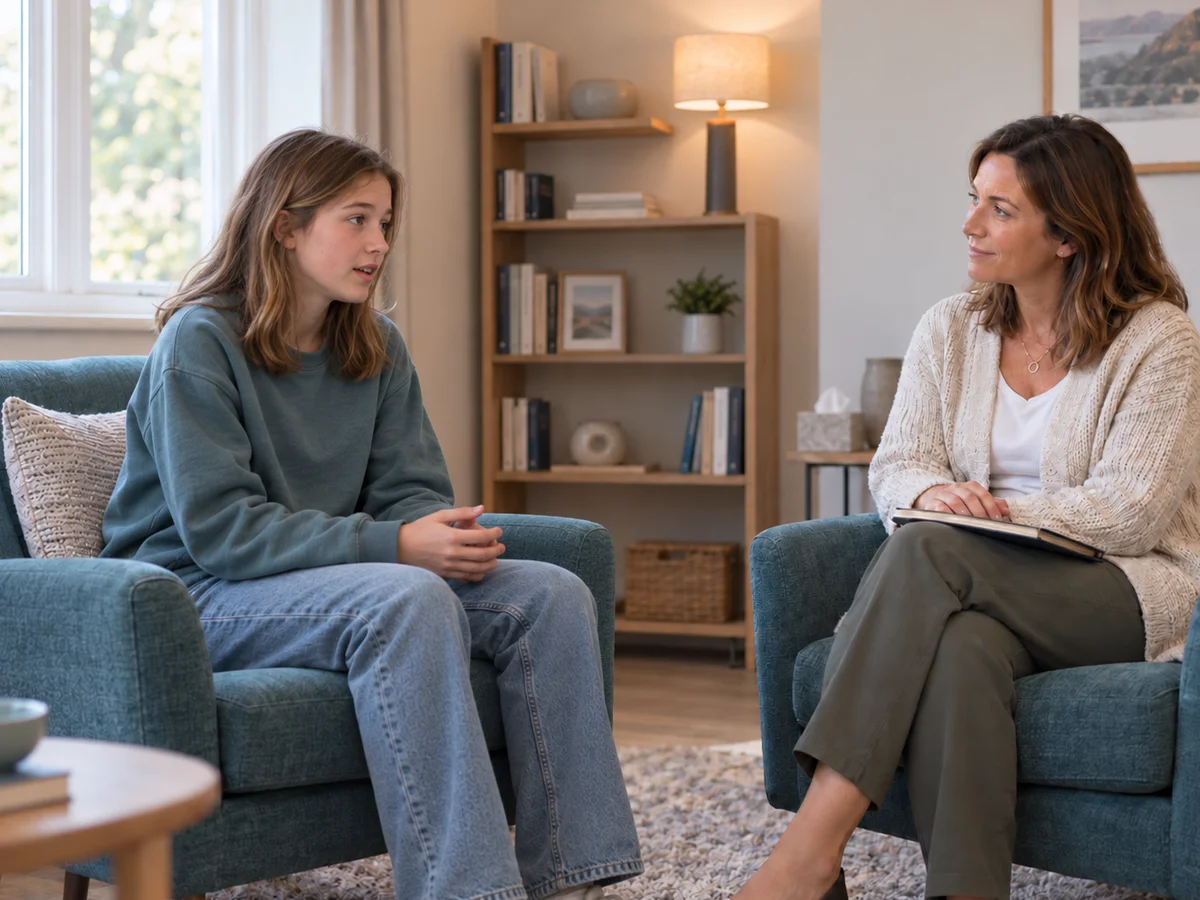
Opening a conversation with a worried-about teenager is less about the perfect words and more about making it feel safe to talk. Choose a low-pressure moment, lead with what you’ve noticed rather than accusations, and be ready to listen far more than you speak.
Starting the conversation
Timing and setting matter more than most parents expect. Side-by-side moments, a drive, a walk, doing something together, tend to work better than a face-to-face sit-down that can feel like an interrogation.
Lead with observation, not accusation: ‘I’ve noticed you’ve seemed really tired and quiet lately, and I’m here if you want to talk’ lands very differently from ‘what’s wrong with you at the moment?’ Keep it low-key, and don’t ambush them.
What helps them open up
Once they start talking, the most useful thing you can do is listen without leaping in to solve or panic. Try to stay calm even if what you hear worries you, a big reaction can teach a teenager to keep things to themselves next time. Take their feelings seriously rather than talking them out of them, resist the urge to fire off questions, and let them know the door stays open whether they talk today or not.
And if they shut the conversation down, that’s okay too, you’ve planted a seed. Teenagers often come back to a topic hours or days later, on their own terms, once they’ve had time to sit with the fact that you noticed and didn’t turn it into a crisis.
Are you concerned about your teenager’s behaviour?
A free 15-minute consultation is a chance to talk it through and ask questions, no commitment, and no pressure either way.
How to help a teenager with mental health issues
Once you know a teenager is struggling, helping is a mix of steady everyday support and knowing when to bring in more. Keep routines and connection going, take their feelings seriously, look after the basics like sleep, and don’t try to carry it all on your own.
Day to day, the ordinary things do a surprising amount of the work: regular routines, decent sleep, time together that isn’t about the problem, and a sense that home is steady. Take what they tell you seriously, and try not to rush in to solve everything, sometimes being heard is what helps most.
Different difficulties call for different approaches, which is why talking therapies and, where appropriate, your GP have a part to play. Look after yourself, too; supporting a struggling teenager is draining, and you’ll do it better if you’re not running on empty.
There’s no single right way to help a teenager with mental health issues, and you’ll almost certainly get bits of it wrong, every parent does.
What matters far more than getting each conversation perfect is the steady message underneath it: that you’ve noticed, that you care, and that they don’t have to sort it out on their own.
When to seek professional support
It’s time to seek professional support when the changes are persistent, getting worse, or affecting your teenager’s daily life, and straight away if there’s any risk to their safety. Your GP is the usual first step and can refer on to NHS services.
A GP visit is a sensible starting point: they can talk through what’s going on and, where needed, refer to NHS mental health support for young people, such as CAMHS. School pastoral teams can help too.
Private counselling for teenagers is another route, and our guide to what that involves may be useful if you’re weighing it up, counselling is one option among several, and not a replacement for NHS or urgent care. If your teenager is ever at immediate risk, treat it as the emergency it is and use the crisis contacts below.
If you’re unsure whether things are ‘serious enough’ to bother a GP, they almost certainly are, GPs would far rather see a young person early than late, and there’s no threshold of suffering a teenager has to reach first.
You can also ask to speak to the GP yourself if your teenager won’t go, to talk through what you’re seeing.
Ready to Take the First Step?
If you’ve noticed changes in your teenager and you’re not sure what they mean, talking it through can help you feel clearer and less alone with the worry.
Hope Therapy offers a free, no-obligation 15-minute consultation, a chance to ask questions and explore whether counselling might help your teenager, at their pace and only if the time feels right. There’s no commitment, and no pressure in either direction. When you’re ready, we’re here.
- Free 15-minute consultation
- No commitment
- Qualified & registered therapists
- LGBTQIA+ affirming support
- NCPS organisational member
- Online nationwide
- Face-to-face across England
- Established 2014
This article is intended for general information and educational purposes only and should not be considered medical, psychiatric, psychological, or therapeutic advice. Every person’s circumstances are unique, and reading this article does not create a therapeutic relationship with Hope Therapy & Counselling Services. If you are concerned about your mental health or emotional wellbeing, we encourage you to seek support from a suitably qualified healthcare or mental health professional. Hope Therapy & Counselling Services offers a free 15-minute consultation – book yours now.
Frequently Asked Questions
What are the red flags in teenage behaviour?
The main ones are lasting changes: a persistent low mood, withdrawing from friends and family, losing interest in things they enjoyed, big changes to sleep or appetite, a drop at school, and any signs of self-harm or risky behaviour. It’s the pattern and the persistence that matter, not any single sign.
How do I know if my teenager needs mental health support?
If a noticeable change has lasted more than a couple of weeks and is affecting daily life, it’s worth seeking support, and straight away if there’s any concern about safety. You don’t need to be certain; your GP can help you work out what’s going on and what might help.
How can I help my teenager with mental health issues?
Keep everyday routines and connection going, listen without panicking or rushing to solve things, and take their feelings seriously. Support the basics like sleep, look after your own wellbeing, and involve your GP or a counsellor when the difficulties are persistent or getting in the way of daily life.
Find the Right Support for You
Our general counselling services page can help you determine what sort of therapy may be suitable for you.
Get Help With Other Conditions
Our general conditions page is a great place to start.
THE AUTHOR

Jayne Russell
- MBACP
Person-Centred Counsellor — Hope Therapy & Counselling Services
MBACP · Diploma in Therapeutic Counselling (L4) · MA (JNC) Youth & Community Studies · Foundation Degree Working with Young People
Before qualifying as a counsellor, Jayne spent more than 16 years working with young people in organisational and community settings, gaining extensive experience supporting their emotional wellbeing, development, and resilience. Her background gives her a deep understanding of the challenges facing young people, alongside the skills to support adults through life’s difficulties.
Jayne is a qualified Person-Centred counsellor and coach, holding a Diploma in Therapeutic Counselling, an MA (JNC) in Youth & Community Studies, and a Foundation Degree in Working with Young People. She is a Registered Member of the BACP and has completed additional training in CBT, Mindfulness, the Freedom Programme, Solution-Focused Brief Therapy, and suicide awareness. Her specialist interests include young people (14+), ADHD, anxiety, trauma, and domestic violence and abuse.
Jayne provides a warm, supportive, and collaborative environment where clients can explore their experiences at their own pace. Alongside counselling, she also offers coaching to help people navigate personal and professional change with greater confidence and clarity.
- MBACP Registered
- MA (JNC)
- Diploma L4 Counselling
- Freedom Programme Trained
- Person-Centred Counsellor
- ADHD Support
- Young People (14+)
- Counsellor & Coach
Free 15-minute consultation
A no-pressure conversation to find the right therapist for you. No commitment needed.
ABOUT THE AUTHOR
Jayne Russell
MBACP
Person-Centred counsellor, coach, and youth specialist with 16+ years’ experience supporting young people, adults, and those affected by domestic abuse.
ABOUT HOPE THERAPY
Qualified registered therapists
Online nationwide across UK
Face-to-face across England
LGBTQIA+ & neurodivergent affirming
Mon–Sun, 9am–9pm
NCPS organisational member
Est 2014
Published: 15th August 2026 | Written by Jane Russell | Reviewed for clinical accuracy before publishing | Review due: August 2028