BLOG
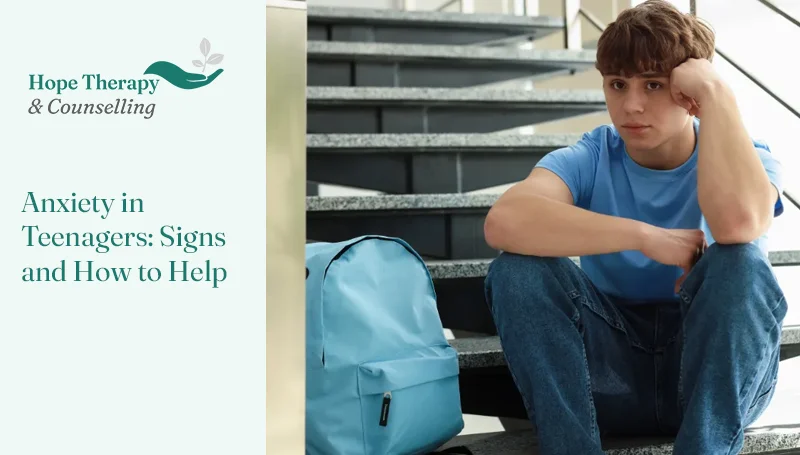
Anxiety in Teenagers: Signs and How to Help
- By Jayne
- Person-Centred Counsellor
- 11th August 2026
- 7–11 minutes

You’ve noticed the worry that won’t switch off. The stomach aches before school, the overthinking, the way ordinary things- a text left on read, a class presentation- seem to loom far larger than they should.
Anxiety in teenagers can be genuinely hard to spot, partly because so much of it hides behind irritability, withdrawal, or a flat ‘I’m fine’. And once you do notice it, knowing how to help is another question entirely.
This guide walks through the signs of anxiety in teenagers, what tends to sit behind it, the different forms it takes, and the practical things that actually help.
This article is intended for general information and educational purposes only and should not be considered medical, psychiatric, psychological, or therapeutic advice. Every person’s circumstances are unique, and reading this article does not create a therapeutic relationship with Hope Therapy & Counselling Services. If you are concerned about your mental health or emotional wellbeing, we encourage you to seek support from a suitably qualified healthcare or mental health professional. Hope Therapy & Counselling Services offers a free 15-minute consultation – book yours now.
What does anxiety in teenagers look like?
Some anxiety is a normal, even useful, part of being a teenager, it’s the mind’s way of flagging something that matters. It tips into a problem when it becomes frequent, feels out of proportion, and starts shrinking a young person’s world: pulling back from situations, dropping activities, or struggling to get through ordinary days.
The tricky thing about anxiety in teenagers is that it rarely announces itself as ‘anxiety’. A worried young person often looks irritable, exhausted, or withdrawn rather than obviously frightened. They might refuse things that seem small to you but feel enormous to them, or seek constant reassurance about the same worry.
Recognising anxiety for what it is, rather than reading it as laziness, moodiness, or being difficult, is often the first and most important step.
It also helps to separate anxiety the feeling from anxiety the problem. Every teenager feels anxious sometimes, before an exam, a first date, a big match, and that’s healthy. The question isn’t whether your teenager gets anxious, but whether anxiety is running the show: dictating what they will and won’t do, and leaving them distressed more often than not.
What are the signs of anxiety in a teenager?
The signs of anxiety in teenagers aren’t always obvious.
Alongside visible worry, anxiety often shows up as irritability, tiredness, trouble sleeping, physical complaints like stomach aches, or pulling away from things they used to manage. In many young people, and especially in some teenage girls, it hides behind perfectionism or people-pleasing.
Emotional and behavioural signs
These are the ones most easily mistaken for something else. Look for persistent worry or catastrophising, irritability and a short fuse, stepping around specific situations, endless reassurance-seeking, difficulty concentrating, and withdrawal from friends or activities.
Anxiety and anger often travel together, so a teenager who seems angry may in fact be overwhelmed. Perfectionism and a fear of getting things wrong are also common threads.
Physical signs
Anxiety lives in the body as much as the mind. Stomach aches, headaches, a racing heart, feeling sick, tiredness, and changes to sleep or appetite are all common.
Some young people have panic attacks, sudden surges of intense fear with physical symptoms like a pounding heart, breathlessness, or dizziness. They’re frightening but not dangerous, and they do pass.
None of these signs is proof of anxiety on its own, stomach aches and tiredness have plenty of other causes. What points towards anxiety is the pattern: several signs together, tied to particular situations or worries, and a change from how your teenager usually is.
When physical complaints keep appearing before school or social events with no medical cause, anxiety is often part of the story.
Why are so many teenagers anxious?
Teenagers today face a great deal at once, exams, friendships lived out both on and offline, constant comparison, and a developing brain that feels everything intensely. Add social media, disrupted routines, and a genuinely uncertain world, and it isn’t surprising that anxiety among young people has been rising.
Part of it is developmental: the teenage brain is wired to feel emotions strongly while the systems that calm those emotions are still maturing.
On top of that sits real pressure, academic expectations, the relentless visibility of social media, shifting friendships, and sometimes stress or change at home. For some young people there’s a clear trigger; for others, anxiety builds without an obvious cause. Both are common, and neither means anyone has done anything wrong.
It’s also worth knowing you’re not imagining a trend. Rates of teenage anxiety have been climbing for years, and while the reasons are debated, most people who work with young people recognise the picture.
That context matters, because it means your teenager isn’t unusual or weak for struggling, they’re responding to a genuinely demanding set of pressures, many of which didn’t exist a generation ago.
Different kinds of teenage anxiety
Anxiety isn’t one single thing. Some teenagers worry about almost everything (generalised anxiety); some dread being judged in social situations (social anxiety); some feel intense distress when apart from home or a parent (separation anxiety); and others experience sudden, frightening panic attacks.
Knowing which pattern fits helps you respond to the right thing.
Generalised anxiety is perhaps the most common pattern, a background hum of worry that jumps from topic to topic, never quite settling. Because it’s so diffuse, it can be the hardest to spot; there’s no single fear to point to, just a young person who seems permanently on edge.
A good deal of anxiety in teens sits here, in the everyday rather than the dramatic.
Social anxiety
Social anxiety is more than shyness. It’s a strong fear of being watched, judged, or embarrassed, and it can lead a young person to stay away from school, speaking in class, parties, or even ordinary conversations.
Because stepping around the fear brings short-term relief, social anxiety tends to grow when it’s accommodated, which is why gentle, supported steps back towards the feared situation usually help more than letting it be sidestepped.
Panic and separation anxiety
Panic attacks are sudden waves of overwhelming fear that peak quickly and then subside; understanding what they are can take some of their power away.
Separation anxiety isn’t only a feature of early childhood; some teenagers feel genuine dread when away from home or a parent, which can show up as reluctance to go to school, sleepovers, or trips. Both respond well to steady, patient support.
How to help a teenager with anxiety
Helping a teenager with anxiety is less about removing the worry and more about helping them face it in manageable steps. Staying calm, taking their fear seriously without feeding it, and gently encouraging them towards the thing they’re anxious about rather than around it tend to help far more than reassurance alone.
What helps day to day
Listen and take the worry seriously, even when it seems out of proportion, being dismissed makes anxiety worse, not better. Validate the feeling, then gently encourage small steps towards the thing they fear rather than around it.
Steady routines, decent sleep, movement, and your own calm presence all help. So does letting them experience that they can cope with discomfort, rather than rushing to remove it for them.
Your own steadiness does a lot of quiet work here. Teenagers borrow calm from the adults around them, so the more regulated you can stay when their anxiety spikes, the safer the situation feels.
That doesn’t mean having all the answers, just being a reassuringly unflappable presence while they ride the wave.
What tends not to help
It rarely helps to say ‘just relax’ or ‘there’s nothing to worry about’, lines like these can leave a young person feeling unheard. Endless reassurance can quietly feed anxiety rather than settle it, as can arranging life so they never have to face the feared thing.
Taking over completely removes the chance to build confidence. The aim is a supported nudge, not a push and not a rescue.
Are you concerned about anxiety in your teenager?
A free 15-minute consultation is a chance to talk it through and ask questions, no commitment, and no pressure either way.
When to seek more support
It’s worth seeking support when anxiety is persistent, distressing, or stopping your teenager doing the things they want or need to do. Your GP can talk through the options, and talking therapies, CBT in particular, are well suited to anxiety in young people.
You don’t need to wait until things reach crisis point. A GP is a sensible first step and can refer on to NHS services where needed. Counselling gives a young person a space to understand their anxiety and build practical ways of managing it; CBT (cognitive behavioural therapy) is an evidence-based approach often used for anxiety, and our guide to counselling for teenagers explains what to expect.
Our anxiety pages cover the wider picture too. Counselling for young people is one option among several, and not a replacement for NHS care.
Ready to Take the First Step?
If your teenager’s anxiety has started to get in the way of everyday life, talking it through can help you feel clearer about what might help.
Hope Therapy offers a free, no-obligation 15-minute consultation, a chance to ask questions and explore whether counselling might support your teenager, at their pace and only if the time feels right.
There’s no commitment, and no pressure in either direction. When you’re ready, we’re here.
- Free 15-minute consultation
- No commitment
- Qualified & registered therapists
- LGBTQIA+ affirming support
- NCPS organisational member
- Online nationwide
- Face-to-face across England
- Established 2014
This article is intended for general information and educational purposes only and should not be considered medical, psychiatric, psychological, or therapeutic advice. Every person’s circumstances are unique, and reading this article does not create a therapeutic relationship with Hope Therapy & Counselling Services. If you are concerned about your mental health or emotional wellbeing, we encourage you to seek support from a suitably qualified healthcare or mental health professional. Hope Therapy & Counselling Services offers a free 15-minute consultation – book yours now.
Frequently Asked Questions
What are the signs of anxiety in a teenager?
Common signs include persistent worry, irritability, trouble sleeping, tiredness, physical complaints like stomach aches, pulling back from situations, and reassurance-seeking. Anxiety can also hide behind anger or perfectionism, so it’s worth looking at the pattern as a whole rather than any single sign.
Is anxiety in teenagers normal?
Some anxiety is completely normal and even helpful. It becomes something to act on when it’s frequent, feels out of proportion, causes real distress, or starts stopping a young person from doing everyday things. That’s the point at which extra support is worth exploring.
How can I help my teenager with anxiety?
Stay calm, listen without dismissing the worry, and gently encourage small steps towards feared situations rather than around them. Support steady routines and sleep, and model your own calm. If anxiety is persistent or getting in the way of daily life, speak with your GP about further support.
Find the Right Support for You
Our general counselling services page can help you determine what sort of therapy may be suitable for you.
Get Help With Other Conditions
Our general conditions page is a great place to start.
THE AUTHOR

Jayne Russell
- MBACP
Person-Centred Counsellor — Hope Therapy & Counselling Services
MBACP · Diploma in Therapeutic Counselling (L4) · MA (JNC) Youth & Community Studies · Foundation Degree Working with Young People
Before qualifying as a counsellor, Jayne spent more than 16 years working with young people in organisational and community settings, gaining extensive experience supporting their emotional wellbeing, development, and resilience. Her background gives her a deep understanding of the challenges facing young people, alongside the skills to support adults through life’s difficulties.
Jayne is a qualified Person-Centred counsellor and coach, holding a Diploma in Therapeutic Counselling, an MA (JNC) in Youth & Community Studies, and a Foundation Degree in Working with Young People. She is a Registered Member of the BACP and has completed additional training in CBT, Mindfulness, the Freedom Programme, Solution-Focused Brief Therapy, and suicide awareness. Her specialist interests include young people (14+), ADHD, anxiety, trauma, and domestic violence and abuse.
Jayne provides a warm, supportive, and collaborative environment where clients can explore their experiences at their own pace. Alongside counselling, she also offers coaching to help people navigate personal and professional change with greater confidence and clarity.
- MBACP Registered
- MA (JNC)
- Diploma L4 Counselling
- Freedom Programme Trained
- Person-Centred Counsellor
- ADHD Support
- Young People (14+)
- Counsellor & Coach
Free 15-minute consultation
A no-pressure conversation to find the right therapist for you. No commitment needed.
ABOUT THE AUTHOR
Jayne Russell
MBACP
Person-Centred counsellor, coach, and youth specialist with 16+ years’ experience supporting young people, adults, and those affected by domestic abuse.
ABOUT HOPE THERAPY
Qualified registered therapists
Online nationwide across UK
Face-to-face across England
LGBTQIA+ & neurodivergent affirming
Mon–Sun, 9am–9pm
NCPS organisational member
Est 2014
Published: 11th August 2026 | Written by a registered MBACP counsellor | Reviewed for clinical accuracy before publishing | Review due: August 2028