
BLOG
‘My Teenager Is Making Me Depressed’: Why It Happens and What Helps
- By Paule
- Integrative Counsellor
- 15th August 2026
- 8–11 minutes
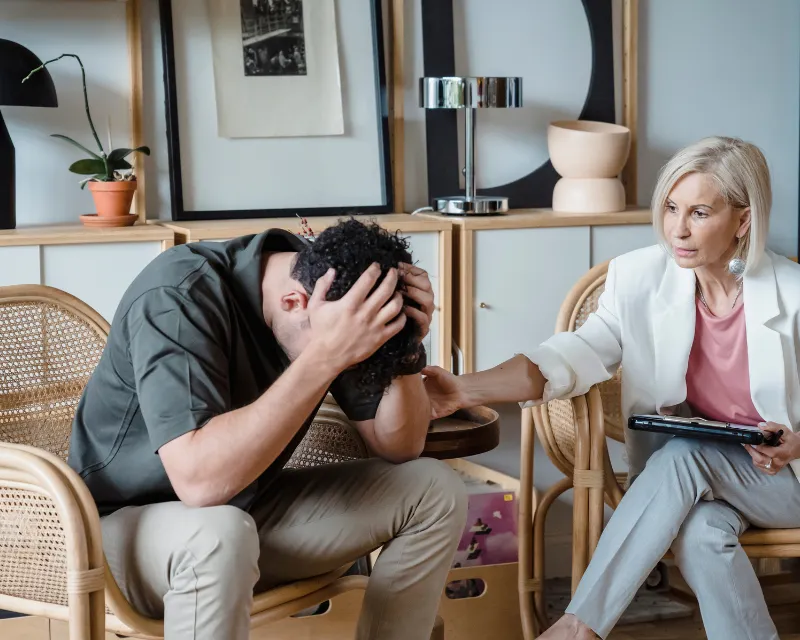
It’s a thought that arrives with a heavy dose of guilt: ‘my teenager is making me depressed’. Maybe you’ve typed those exact words into a search bar late at night, half-ashamed to admit it. If so, please know two things straight away, you are far from alone, and thinking it does not make you a bad parent.
Living alongside a teenager who is struggling, angry, withdrawn, or in constant conflict with you can genuinely wear down your own mental health. This guide looks at why that happens, how to tell ordinary strain from something more serious, and what can help, for them, and for you.
This article is intended for general information and educational purposes only and should not be considered medical, psychiatric, psychological, or therapeutic advice. Every person’s circumstances are unique, and reading this article does not create a therapeutic relationship with Hope Therapy & Counselling Services. If you are concerned about your mental health or emotional wellbeing, we encourage you to seek support from a suitably qualified healthcare or mental health professional. Hope Therapy & Counselling Services offers a free 15-minute consultation – book yours now.
‘My teenager is making me depressed’: you’re not alone
If you’ve found yourself thinking ‘my teenager is making me depressed’, you’re part of a very large and very quiet group of parents. Few say it aloud, because it feels disloyal, or like an admission of failure. It is neither. It’s an honest description of how much parenting a struggling teenager can take out of you.
You can love your child fiercely and still be worn thin by them. The two aren’t in competition. Feeling low, resentful, or exhausted doesn’t mean you love them any less, and it doesn’t make them a bad person either.
It means you’re a human being under sustained pressure. Naming that honestly, rather than swallowing it, is the first step towards doing something about it, for both of you.
It’s worth repeating, because the guilt is so common: thinking ‘my teenager is making me depressed’ is not a betrayal of your child.
It’s information. It tells you the strain has reached a point where it’s affecting you, and that’s worth taking as seriously as a warning light on the dashboard, not ignoring, and not judging yourself for.
Why does parenting a teenager affect your mental health?
Parenting a teenager who is struggling or in conflict with you is a form of chronic stress, and chronic stress is one of the things that most reliably wears down mental health. Add worry, broken sleep, and the loss of the easy closeness you used to share, and low mood is not surprising.
None of this is a sign of weakness. It’s how human beings respond to prolonged stress with no clear end date.
Recognising it as a genuine strain on your wellbeing, rather than something you ought to be able to just absorb, is what makes it possible to do something about it.
The daily strain
Some of it is simply relentless. Constant tension, unpredictable moods, arguments that flare from nowhere, and the sense of walking on eggshells in your own home leave little room to recover. When there’s no let-up, no evening off from the worry, no easy conversation to look forward to, your nervous system stays braced.
Sleep often suffers too, whether you’re lying awake worrying or waiting up to know they’re home safe. That kind of steady, low-grade stress is exhausting in a way that’s easy to underestimate.
The worry and the grief
Underneath the day-to-day, there’s often something deeper. Real fear for their safety, their happiness, or their future. And a quiet grief, too, for the closeness you used to have, for the child you knew, and for the version of these years you’d imagined.
Many parents also feel isolated, because this isn’t easy to talk about without feeling judged. Fear, grief, and isolation together are a heavy load, and carrying them silently makes them heavier still.
Is it strain, or depression?
There’s a difference between feeling worn down and being clinically depressed, and it matters, because the second needs proper support. If low mood, exhaustion, loss of interest, or hopelessness have settled in for more than a couple of weeks and follow you beyond the situation with your teenager, it’s worth speaking to your GP.
Strain tends to ease when the pressure does, a good day with your teenager lifts it. Depression is stickier. It doesn’t reliably lift when things go well, it drains the colour out of things that used to matter, and it can bring hopelessness, poor sleep, changes in appetite, and a sense of just going through the motions.
If that’s where you are, you deserve support in your own right, our depression page explains more, and getting help for yourself is not selfish. It’s sensible.
It can be hard to judge this from the inside, especially when you’re tired. A useful question is whether you still feel like yourself in the moments when things are calm.
If even the good patches feel flat, or you’ve stopped looking forward to things you used to enjoy, that’s a sign the low mood has taken on a life of its own beyond the situation at home, and a sign to get it looked at.
It’s not your fault, and it’s not all theirs either
Two things are true at once. Your distress is real and valid, and your teenager is usually not being difficult in order to hurt you. Challenging behaviour in a young person very often signals their own struggle, rather than a character flaw or a deliberate campaign against you.
That reframe matters, because it takes some of the sting out of it. A teenager who is withdrawn, explosive, or impossible to reach is frequently a teenager who is themselves overwhelmed, by anxiety, low mood, or feelings they can’t manage.
It can help to look past the behaviour to the red flags in teenage behaviour that might sit underneath it, and where conflict is the main theme, to understand why teenage anger so often lands on a parent. None of this means you have to accept being treated badly. It simply means the situation is rarely about blame, yours or theirs, and holding it that way protects your own wellbeing.
It can also help to remember that a difficult teenager is very rarely difficult on purpose, and almost never difficult forever. For most families this is a season, an intense and draining one, but a season.
Holding on to that can make the day-to-day feel a little less like a verdict on you as a parent, and a little more like weather you’re getting through together.
Looking after your own mental health
You cannot pour from an empty cup, and a depleted parent has less to give a teenager who needs them. Looking after your own mental health, through boundaries, support, and time that’s genuinely yours, isn’t a luxury or a betrayal. It’s part of holding the whole family steady.
Boundaries and support
Two things carry a lot of weight here: limits, and not being alone with it. You’re allowed calm, consistent boundaries on how you’re spoken to and treated, they protect the relationship as much as they protect you.
And try not to shoulder this in silence: a partner, a trusted friend, your GP, or a counsellor can share the weight, and simply saying it out loud tends to shrink it. Counselling in particular offers a space that’s entirely yours, with no one else’s needs in the room.
The basics, and self-compassion
The unglamorous basics still matter, sleep, movement, food, and small pockets of time that are just for you, however hard those are to protect right now. So does lowering the bar. You don’t have to parent perfectly through a genuinely hard stretch; offering yourself the compassion you’d give a friend in your position isn’t giving up, it’s staying steady enough to keep helping.
Is your teenager’s struggle affecting your mental health?
A free 15-minute consultation is a chance to talk through what you’re carrying, no commitment, and no pressure either way.
When should you get help for yourself?
If low mood has lasted, is affecting your daily life, or you’re struggling to cope, please treat that as a reason to get support for yourself. Your GP is a good first step, and counselling can give you a space to offload and steady yourself, quite apart from anything your teenager needs.
Support tends to work best on both fronts: help for you, and help for your teenager. For you, a GP can talk through options, and counselling for adults offers somewhere to think, grieve, and rebuild your own reserves.
For your teenager, their GP, school, or NHS services can help with whatever is going on underneath their behaviour. Counselling for teenagers is one option among several, and not a replacement for NHS or urgent care, but you do not have to keep white-knuckling your way through this on your own.
There’s no threshold of suffering you have to reach before you’re ‘allowed’ to ask for help. If you’ve been running on empty for a while, that’s reason enough.
Getting support for yourself often turns out to be one of the most useful things you can do for your teenager too, because a steadier you is easier to lean on.
Ready to Take the First Step?
If parenting through this has left you low, exhausted, or not quite yourself, you don’t have to carry it alone.
Hope Therapy offers a free, no-obligation 15-minute consultation, a chance to talk through what you’re facing and explore whether counselling might help you feel steadier. This one’s about support for you, not just your teenager. There’s no commitment, and no pressure in either direction. When you’re ready, we’re here.
- Free 15-minute consultation
- No commitment
- Qualified & registered therapists
- LGBTQIA+ affirming support
- NCPS organisational member
- Online nationwide
- Face-to-face across England
- Established 2014
This article is intended for general information and educational purposes only and should not be considered medical, psychiatric, psychological, or therapeutic advice. Every person’s circumstances are unique, and reading this article does not create a therapeutic relationship with Hope Therapy & Counselling Services. If you are concerned about your mental health or emotional wellbeing, we encourage you to seek support from a suitably qualified healthcare or mental health professional. Hope Therapy & Counselling Services offers a free 15-minute consultation – book yours now.
Frequently Asked Questions
Is it normal to feel depressed because of my teenager?
Feeling worn down, low, or overwhelmed by a struggling or conflict-heavy relationship with your teenager is extremely common, even if few parents admit it. It doesn’t make you a bad parent. If the low mood is persistent or affecting your daily life, though, it’s worth treating as depression and speaking to your GP.
Am I a bad parent for feeling this way?
No. You can love your child deeply and still be exhausted and low because of how hard things are right now. The feeling is a signal that you’re under real strain and need some support yourself, not evidence of failure.
How do I cope with a difficult teenager?
Hold calm, consistent boundaries, try to look past the behaviour to what might be driving it, and, crucially, look after your own wellbeing so you’re not running on empty. Sharing the load with a partner, friend, GP, or counsellor makes a real difference, as does getting your teenager the right support for whatever they’re facing..
Find the Right Support for You
Our general counselling services page can help you determine what sort of therapy may be suitable for you.
Get Help With Other Conditions
Our general conditions page is a great place to start.
THE AUTHOR

Paule Bhatowa
- MBACP
Integrative Counsellor — Hope Therapy & Counselling Services
MBACP · L4 Diploma Therapeutic Counselling · BSc (Hons) Psychology · PGC
Integrative counsellor, multilingual therapist, and former teacher offering culturally informed counselling for adults and young people. Specialising in LGBTQIA+ affirming therapy, neurodivergence, refugee support, and South Asian communities.
Before becoming a counsellor, Paule spent many years working in education, supporting young people from diverse backgrounds. Her background in teaching and psychology gives her a deep understanding of the emotional, cultural, and developmental challenges people can face throughout life.
As an integrative counsellor, Paule combines Person-Centred Therapy with CBT, Transactional Analysis, Gestalt, and Psychodynamic approaches, tailoring therapy to each individual. She is committed to providing an inclusive, culturally aware space where clients feel understood, respected, and accepted, whether they are seeking support in English, Punjabi, Hindi, or Urdu.
- MBACP Registered
- L4 Diploma Therapeutic Counselling
- BSc (Hons) Psychology
- PGCE Qualified
- Integrative Therapist
- Multilingual Counsellor
- Young People (14+)
- LGBTQIA+ Affirming
Free 15-minute consultation
A no-pressure conversation to find the right therapist for you. No commitment needed.
ABOUT THE AUTHOR
Paule Bhatowa
MBACP
Integrative counsellor, former teacher, and multilingual therapist supporting adults and young people through culturally informed, inclusive counselling.
ABOUT HOPE THERAPY
Qualified registered therapists
Online nationwide across UK
Face-to-face across England
LGBTQIA+ & neurodivergent affirming
Mon–Sun, 9am–9pm
NCPS organisational member
Est 2014
Published: 15th August 2026 | Written by a registered MBACP counsellor | Reviewed for clinical accuracy before publishing | Review due: August 2028


