BLOG
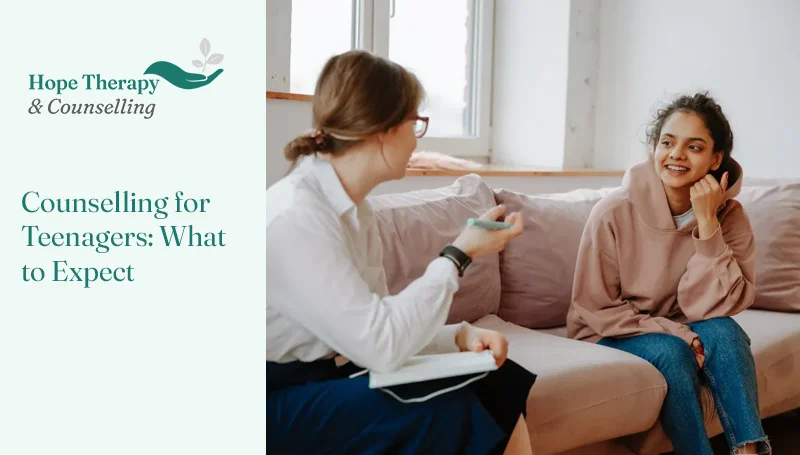
Counselling for Teenagers: What to Expect
- By Jayne
- Person-Centred Counsellor
- 13th August 2026
- 7–11 minutes

Deciding whether to look into counselling for your teenager can leave you second-guessing yourself.
Is this a phase, or something more? Would they even talk to someone? Are you overreacting, or leaving it too late? If you’ve been turning those questions over, you’re not alone, and not knowing what counselling actually involves makes the decision harder than it needs to be.
This guide walks through what counselling for teenagers looks like in practice: how to tell if it might help, what happens in a first session, the kinds of support available, and how you can help without taking over.
This article is intended for general information and educational purposes only and should not be considered medical, psychiatric, psychological, or therapeutic advice. Every person’s circumstances are unique, and reading this article does not create a therapeutic relationship with Hope Therapy & Counselling Services. If you are concerned about your mental health or emotional wellbeing, we encourage you to seek support from a suitably qualified healthcare or mental health professional. Hope Therapy & Counselling Services offers a free 15-minute consultation – book yours now.
What is counselling for teenagers?
Counselling for teenagers is a form of talking therapy designed around young people rather than adults. A trained counsellor offers a private, non-judgemental space to make sense of what a teenager is feeling and going through. The pace, the language and the approach are all shaped around where a young person actually is.
It differs from adult counselling in some important ways. Teenagers are still working out who they are, often can’t easily put feelings into words, and may not have chosen to come themselves. A good teenage counsellor expects all of that. Sessions tend to be less about neat conversation and more about slowly building enough trust for the real things to surface.
Counselling for teenagers can happen through the NHS, through school, or privately, and it covers everything from anxiety and low mood to friendships, family change, identity, and the ordinary but heavy business of growing up.
It also doesn’t have to be reserved for a crisis. Plenty of young people benefit from counselling for things that wouldn’t look dramatic from the outside, a run of low confidence, trouble sleeping, or simply feeling stuck.
Sessions can be online or face to face, and for a lot of teenagers, talking from their own room over a video call feels less exposing than sitting in an unfamiliar waiting room..
How do you know if your teenager needs counselling?
There’s no single sign that a teenager needs counselling, but ongoing changes are worth noticing, persistent low mood, withdrawal, anxiety, changes to sleep or appetite, anger, or struggling at school. If something has shifted and stayed shifted for a few weeks, it can be worth exploring support.
The tricky part is that a lot of what worries parents also overlaps with completely normal teenage development. Wanting more privacy, pulling away from family, big feelings, none of those on their own mean something is wrong.
What tends to matter more is change and duration: a noticeable shift from how your teenager usually is, lasting longer than a couple of weeks, and getting in the way of everyday life.
Ongoing anxiety or low mood that isn’t lifting is a common reason families start looking. You don’t need to be certain before asking, uncertainty is a perfectly good reason to explore it.
It can also help to notice how your teenager is coping, not just how they’re feeling. Are they still doing the things they used to enjoy? Can they talk to anyone about it?
Everyone has hard weeks; what’s worth paying attention to is when the usual ways a young person steadies themselves stop working, and nothing seems to be filling the gap.
What happens in a first counselling session?
A first counselling session is mostly about getting comfortable, not diving into the hardest things straight away. The counsellor will usually explain how sessions work, talk through confidentiality, and let your teenager set the pace. There’s no pressure to share everything at once, and often nothing is.
Before the first session
It helps to keep the build-up low-key. A teenager who feels marched to counselling as a problem to be corrected will arrive defensive; one who understands it’s a space that’s theirs, with no obligation to perform, tends to arrive more open.
Being honest that you don’t expect them to love the idea, and that trying one session commits them to nothing, usually lands better than selling it. Practical things, like knowing whether the session is online or in person, can quietly take the edge off.
During the first session
Most first sessions are gentle. The counsellor might ask a little about what’s brought the young person there, what they enjoy, and what they’d want to be different, but they’ll follow the teenager’s lead rather than pushing.
Some young people talk a lot; others say very little at first, and that’s completely fine. The aim of a first session isn’t breakthrough. It’s the beginning of a relationship, and that takes more than an hour to build.
What kinds of counselling help teenagers?
Different approaches suit different young people. Person-centred counselling follows the young person’s lead; CBT looks at the links between thoughts, feelings and behaviour; and other approaches draw on creativity, play or mindfulness. A good counsellor fits the approach to the teenager, not the other way round.
Person-centred counselling
Person-centred counselling puts the young person at the heart of the process. Rather than directing, the counsellor offers steady, genuine attention and lets the teenager guide where the work goes.
For a young person who feels talked at or managed by most of the adults in their life, being properly listened to, without an agenda, can be a relief in itself, and often the thing that makes them willing to keep coming back.
CBT and other approaches
CBT, cognitive behavioural therapy, is a more structured, practical approach that looks at how thoughts, feelings and behaviour feed into one another. It can be useful for anxiety, low mood, and unhelpful patterns that have taken hold.
Many counsellors blend approaches, drawing on creative or mindfulness-based work where it fits. What matters most isn’t the label on the method, but whether the young person feels understood by the person using it.
Will my teenager actually talk to a counsellor?
It’s one of the most common worries, that a teenager will sit in silence, or refuse to go at all. In practice, many young people open up more easily to someone outside the family, precisely because there’s no shared history and no judgement.
A skilled counsellor doesn’t force conversation; they build trust first, and let the talking follow.
Reluctance at the start is normal, and it isn’t a sign counselling won’t help. Some young people need a few sessions before they say much of substance. Others test whether the counsellor can be trusted before they risk anything real.
None of that is failure, it’s part of how trust gets built with someone who has learned to keep their guard up. What helps most from your side is patience, and not treating early quiet as proof it isn’t working.
If a teenager flatly refuses, it rarely helps to force it. What often works better is leaving the door open, letting them know the option is there, without making it a battle, and coming back to it later.
Sometimes agreeing to a single, no-strings first session is enough to get past the fear of the unknown. Other times, a young person needs to feel it was partly their own decision before they’ll walk in.
Want to know more about counselling for teenagers?
A free 15-minute consultation is a chance to talk it through and ask questions, no commitment, and no pressure either way.
How to support your teenager through counselling
Supporting a teenager through counselling is mostly about staying steady and giving them room. That means respecting the privacy of their sessions, not interrogating them afterwards, and letting them know you’re there. Your role is to make the support possible, not to manage it for them.
Confidentiality is part of what makes counselling work. What a young person shares with their counsellor is generally kept private between them, and knowing that is often what lets them speak freely. The main exception is safety: if a counsellor is worried a young person or someone else is at risk of serious harm, they may need to share that, and a good counsellor is open about those limits from the start.
At 16, a young person can usually consent to counselling themselves, which also shapes how much is shared with parents. If you’re looking into options, our counselling for young people service explains how we work with this age group, and the NHS route through CAMHS is worth understanding too.
It’s worth remembering your own support matters too. Watching a teenager struggle is genuinely hard, and carrying that worry alone can wear you down. Having your own outlet, a friend, your GP, or your own counselling, helps you stay the steady presence your teenager needs, rather than absorbing all of it yourself.
Ready to Take the First Step?
If you’re weighing up counselling for your teenager, talking it through first can help you feel clearer about whether it’s the right move.
Hope Therapy offers a free, no-obligation 15-minute consultation, a chance to ask questions and explore whether counselling might help, at your teenager’s pace and only if the time feels right. There’s no commitment, and no pressure in either direction. When you’re ready, we’re here.
- Free 15-minute consultation
- No commitment
- Qualified & registered therapists
- LGBTQIA+ affirming support
- NCPS organisational member
- Online nationwide
- Face-to-face across England
- Established 2014
This article is intended for general information and educational purposes only and should not be considered medical, psychiatric, psychological, or therapeutic advice. Every person’s circumstances are unique, and reading this article does not create a therapeutic relationship with Hope Therapy & Counselling Services. If you are concerned about your mental health or emotional wellbeing, we encourage you to seek support from a suitably qualified healthcare or mental health professional. Hope Therapy & Counselling Services offers a free 15-minute consultation – book yours now.
Frequently Asked Questions
How do I know if my teenager needs counselling?
Look for change that lasts. A noticeable shift from how your teenager usually is — in mood, sleep, behaviour, or how they cope — that continues for more than a couple of weeks and affects daily life is worth exploring. You don’t have to be certain; uncertainty is reason enough to ask.
What happens in teenage counselling?
Sessions are a regular, private space where a young person can talk, at their own pace, with a trained counsellor. Early sessions focus on building trust and explaining how things work. Over time, the counsellor helps the young person make sense of what they’re feeling and find ways of coping.
Can my teenager have counselling without me involved?
Often, yes. At 16, a young person can usually consent to their own counselling, and much of what they share stays private between them and their counsellor, within the usual limits around safety. Many counsellors still welcome sensible parental involvement, agreed openly with the young person..
Find the Right Support for You
Our general counselling services page can help you determine what sort of therapy may be suitable for you.
Get Help With Other Conditions
Our general conditions page is a great place to start.
THE AUTHOR
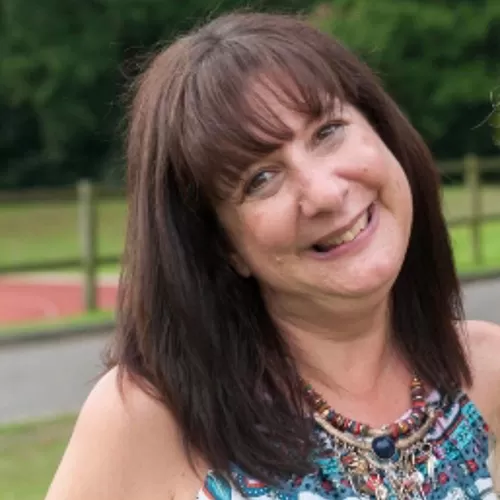
Jayne Russell
- MBACP
Person-Centred Counsellor — Hope Therapy & Counselling Services
MBACP · Diploma in Therapeutic Counselling (L4) · MA (JNC) Youth & Community Studies · Foundation Degree Working with Young People
Before qualifying as a counsellor, Jayne spent more than 16 years working with young people in organisational and community settings, gaining extensive experience supporting their emotional wellbeing, development, and resilience. Her background gives her a deep understanding of the challenges facing young people, alongside the skills to support adults through life’s difficulties.
Jayne is a qualified Person-Centred counsellor and coach, holding a Diploma in Therapeutic Counselling, an MA (JNC) in Youth & Community Studies, and a Foundation Degree in Working with Young People. She is a Registered Member of the BACP and has completed additional training in CBT, Mindfulness, the Freedom Programme, Solution-Focused Brief Therapy, and suicide awareness. Her specialist interests include young people (14+), ADHD, anxiety, trauma, and domestic violence and abuse.
Jayne provides a warm, supportive, and collaborative environment where clients can explore their experiences at their own pace. Alongside counselling, she also offers coaching to help people navigate personal and professional change with greater confidence and clarity.
- MBACP Registered
- MA (JNC)
- Diploma L4 Counselling
- Freedom Programme Trained
- Person-Centred Counsellor
- ADHD Support
- Young People (14+)
- Counsellor & Coach
Free 15-minute consultation
A no-pressure conversation to find the right therapist for you. No commitment needed.
IN THIS ARTICLE
ABOUT THE AUTHOR
Jayne Russell
MBACP
Person-Centred counsellor, coach, and youth specialist with 16+ years’ experience supporting young people, adults, and those affected by domestic abuse.
ABOUT HOPE THERAPY
Qualified registered therapists
Online nationwide across UK
Face-to-face across England
LGBTQIA+ & neurodivergent affirming
Mon–Sun, 9am–9pm
NCPS organisational member
Est 2014
Published: 13th August 2026 | Written by a registered MBACP counsellor | Reviewed for clinical accuracy before publishing | Review due: August 2028