
BLOG
PMDD and Perimenopause: How to Tell the Difference
- By Ian Stockbridge
- Founder & Clinical Director, Hope Therapy & Counselling Services
- 17 August 2026
- 7–10 minutes
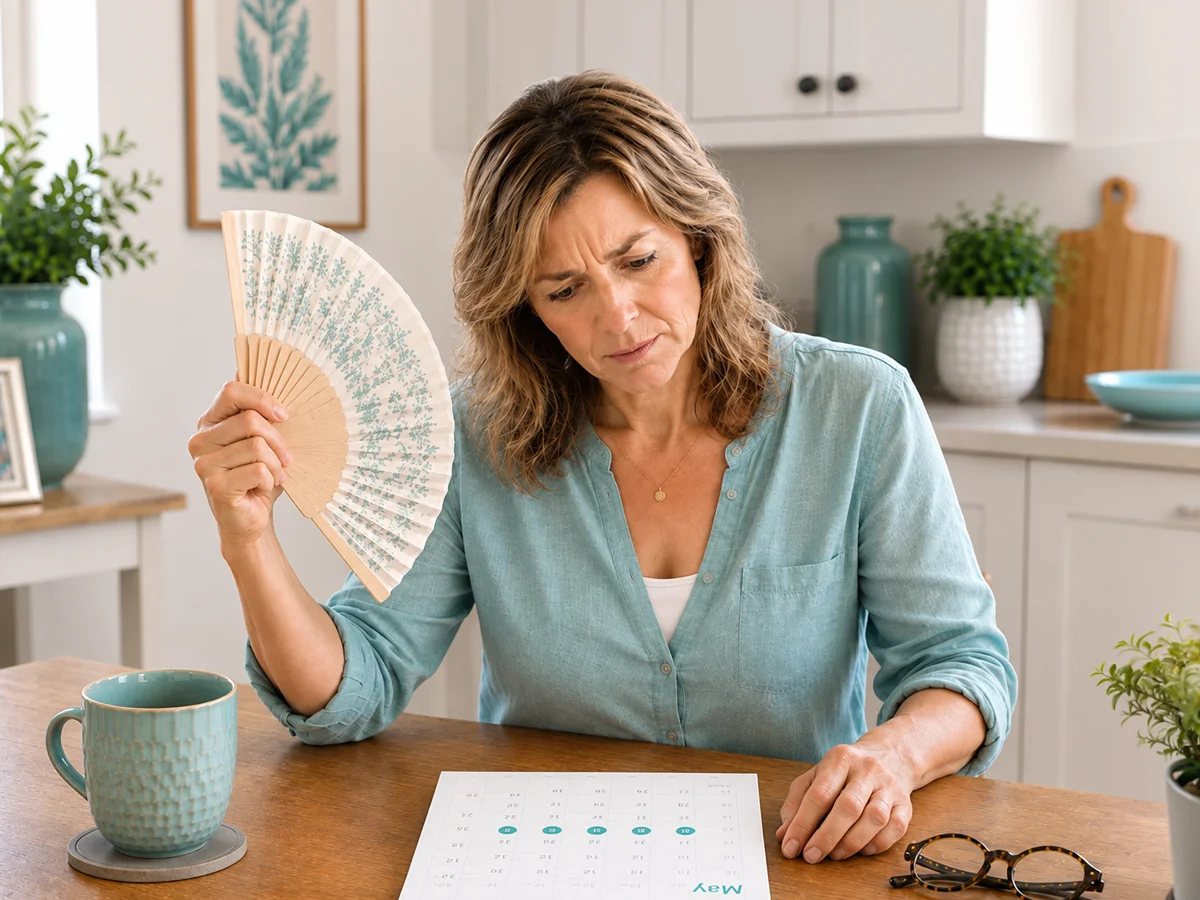
If you have lived with PMDD for years and something has started to feel different — symptoms shifting in timing or intensity, new experiences arriving alongside familiar ones, a sense that the pattern you thought you understood has changed — you are not imagining it. The convergence of PMDD and perimenopause is one of the most confusing experiences in hormonal mental health. Both conditions are driven by hormonal fluctuations. Both produce mood symptoms. Both are cyclical in some sense. And in the years when they overlap, they can be genuinely difficult to separate — not just for the person experiencing them, but for clinicians too. Understanding what each condition is, how they interact, and what the experience of their overlap typically looks like is where clarity begins.
This article is intended for general information and educational purposes only and should not be considered medical, psychiatric, psychological, or therapeutic advice. Every person’s circumstances are unique, and reading this article does not create a therapeutic relationship with Hope Therapy & Counselling Services. If you are concerned about your mental health or emotional wellbeing, we encourage you to seek support from a suitably qualified healthcare or mental health professional. Hope Therapy & Counselling Services offers a free 15-minute consultation – book yours now.
Is It PMDD or Perimenopause? Understanding the Overlap
PMDD is driven by an unusual sensitivity to the hormonal fluctuations of the menstrual cycle — specifically to changes in progesterone and its metabolites during the luteal phase. Its defining feature is cyclical predictability: symptoms appear in the week or two before menstruation and lift within a few days of it starting. This on-off quality is what distinguishes PMDD from other mood conditions.
Perimenopause is the transition phase before menopause, typically beginning in the early to mid 40s though sometimes earlier. During perimenopause, the menstrual cycle becomes increasingly irregular as oestrogen and progesterone levels fluctuate more widely and unpredictably than before. The mood symptoms of perimenopause — irritability, anxiety, tearfulness, cognitive changes, sleep disruption — overlap significantly with PMDD symptoms. The key difference is that perimenopausal mood symptoms are less tightly tied to a predictable luteal window: they can occur at different points in the cycle and may not lift reliably with menstruation.
When both are occurring at the same time, the picture becomes more complex. A woman with pre-existing PMDD entering perimenopause may find that her familiar luteal pattern is disrupted — symptoms arriving at different points in the month, lasting longer, or intensifying beyond what she previously experienced. The predictability that characterised her PMDD begins to break down, replaced by a more chaotic pattern that is harder to track and harder to plan around.
Can You Develop PMDD in Perimenopause?
Yes. While PMDD typically begins earlier in reproductive life — often in the late teens or twenties — some women first experience PMDD-like symptoms during perimenopause, when the increased hormonal volatility of the transition appears to trigger the same neurological sensitivity that underlies the condition. Research on late-onset PMDD is still developing, but clinical experience consistently points to perimenopause as a period when previously manageable hormonal sensitivity can escalate significantly.
This means that not everyone who experiences severe mood symptoms in the luteal phase during perimenopause has had PMDD throughout their reproductive life. For some women, perimenopause is the first time the hormonal disruption is severe enough to produce the full PMDD presentation. Accurate diagnosis requires the same approach as at any other stage: prospective daily symptom tracking across multiple cycles, to establish whether symptoms are cyclical and luteal-phase-specific or more diffuse.
Does PMDD Get Worse in Perimenopause?
For many women with established PMDD, yes — perimenopause tends to intensify symptoms. As the menstrual cycle becomes more variable during the perimenopausal transition, the hormonal fluctuations that trigger PMDD become less predictable and often more extreme. A condition that produced reliable but manageable symptoms during the regular reproductive years can become significantly more disruptive during perimenopause, when the underlying hormonal volatility increases.
There is also a compounding factor: perimenopause itself produces mood symptoms through mechanisms independent of PMDD, including falling oestrogen levels that affect serotonin and dopamine systems. For women with PMDD, this means two overlapping sets of neurological effects on mood — the PMDD mechanism activated by luteal progesterone changes, and the perimenopausal mechanism activated by declining oestrogen. The combination can produce an experience that feels qualitatively more severe than either condition in isolation.
The clinical picture during this phase often requires a multi-disciplinary approach: psychological support to manage the mood and identity dimensions, and medical input from a GP or gynaecologist to assess whether hormonal treatment for perimenopause — including HRT — is appropriate. These are medical decisions that sit outside the scope of counselling and should be discussed with a doctor.
When PMDD and perimenopause overlap, two sets of neurological effects on mood converge. The experience can feel qualitatively more severe than either condition in isolation — and it deserves to be understood as such.
Navigating PMDD and perimenopause together is disorienting
Ian and the Hope Therapy team work with women at every stage of their experience with PMDD — including the perimenopausal transition. A free 15-minute consultation is a no-pressure first step.
Why Is PMDD Worse in Winter? Seasonal Patterns and Mood
Many people with PMDD notice that their symptoms intensify during winter months — a pattern that is real and has a plausible neurological basis, though the research on it is less developed than research on PMDD’s core mechanisms.
The most likely explanation involves the interaction between PMDD’s serotonin-disrupting mechanisms and the serotonin-suppressing effects of reduced light exposure during winter. Serotonin production is influenced by light — shorter days and reduced sunlight tend to suppress serotonin levels in a way that can compound the serotonin dysregulation already occurring during the PMDD luteal phase. For some people, this produces a noticeable amplification of luteal-phase mood symptoms in autumn and winter.
This is distinct from Seasonal Affective Disorder, which involves persistent low mood during winter months regardless of the menstrual cycle. PMDD that worsens in winter retains its cyclical quality — symptoms still peak in the luteal phase — but the baseline from which those symptoms elevate is lower during darker months, making each cycle harder. People who notice this pattern may benefit from discussing light therapy with their GP, alongside any other PMDD management approaches they are using.
Managing Seasonal Variation in PMDD Symptoms
Practical responses to seasonal PMDD amplification tend to build on the same foundations as general PMDD management — sleep consistency, blood sugar stability, moderate aerobic exercise — with additional attention to light exposure during the months when this appears to be a factor.
Tracking symptoms across the calendar year, rather than only within each cycle, helps identify whether seasonal variation is a genuine pattern or coincidental. A symptom diary that records both cycle phase and time of year over twelve months produces a clearer picture than shorter-term tracking alone. For people whose PMDD shows a consistent winter intensification, that pattern is useful information both for personal planning and for any medical consultation about PMDD management.
The Psychological Dimension: Identity, Uncertainty, and Change
One of the most significant but least discussed dimensions of PMDD in the perimenopausal years is the psychological experience of not knowing what is happening. A woman who has lived with PMDD for decades and built a relationship with its pattern — however difficult that pattern was — can find the destabilisation of perimenopause deeply disorienting. The condition she understood has changed. The tracking and planning strategies she relied on no longer work as reliably. She may feel like she is losing the framework she used to navigate her own emotional life.
Counselling in this context does not primarily address the hormonal dimension — that requires medical input. What counselling can offer is support for the psychological experience of that uncertainty: the grief of losing a pattern that was at least predictable, the anxiety about what the coming years might look like, and the identity work of navigating a transition that affects mood, relationships, and sense of self simultaneously.
Ian’s clinical work with people at the intersection of PMDD and perimenopause, and the framework he explores in his book PMDD Uncovered: Understanding the Storm Within, consistently returns to this dimension — the psychological relationship with the condition, not just its management. For broader support around women’s mental health across life transitions, our women’s mental health counselling page covers this territory. Our PMDD counselling page explains the therapeutic approaches available. And for those whose winter mood pattern raises broader questions about seasonal low mood, our seasonal depression (SAD) page may also be useful.
When to Act and When to Wait
One of the most practical implications of understanding PMDD’s effect on relational perception is the guidance it provides about timing. Major relationship decisions — whether to address a concern directly with the partner, whether to have a significant conversation about the relationship’s future, whether to act on a doubt or a conviction — are almost always better made outside the luteal phase.
This is not because the concerns that arise during the luteal phase are necessarily invalid. It is because the relational processing system during the luteal phase is systematically biased, and major decisions made during that phase are made with information that has been processed inaccurately. The same concern, assessed from the follicular phase, may look very different — either less significant and more manageable, or still present but now assessable with a more accurate instrument.
Ready to Take the First Step?
Whether you are trying to understand the convergence of PMDD and perimenopause, managing seasonal shifts in your symptoms, or looking for psychological support during a period of hormonal transition, Hope Therapy offers a free 15-minute consultation — no obligation, no commitment required.
- Free 15-minute consultation
- No commitment
- Online across England
- No GP Referral needed
- Qualified & registered therapists
- LGBTQIA+ affirming support
- NCPS organisational member
- Online nationwide
- Face-to-face across England
- Established 2014
This article is intended for general information and educational purposes only and should not be considered medical, psychiatric, psychological, or therapeutic advice. Every person’s circumstances are unique, and reading this article does not create a therapeutic relationship with Hope Therapy & Counselling Services. If you are concerned about your mental health or emotional wellbeing, we encourage you to seek support from a suitably qualified healthcare or mental health professional. Hope Therapy & Counselling Services offers a free 15-minute consultation – book yours now.
Find the Right Support for You
Our general counselling services page can help you determine what sort of therapy may be suitable for you.
Get Help With Other Conditions
Our general conditions page is a great place to start.
THE AUTHOR

Ian Stockbridge
- MBACP (Senior Accredited)
Founder & Clinical Director — Hope Therapy & Counselling Services
MBACP (Senior Accredited) · SNCPS (Acc) · BSc (Hons) CBT · PGCert Clinical Supervision
Founder of Hope Therapy, published author, clinical supervisor, and co-presenter of The Talk Room Podcast. Practising therapist with 25+ years of senior leadership experience.
Before Ian Stockbridge was a therapist, he was a leader. For more than 25 years he worked in senior management and directorial roles across commercial organisations — at times managing teams of more than 200 people. He was effective at it. But the longer he did it, the harder something became to ignore. The people around him were struggling. Capable, committed, often high-achieving people carrying invisible weight that had nowhere to go. Stress accumulated quietly across months and years. Anxiety managed behind professionalism. Relationships and mental health dealt with in the margins of a working life that left little room for either.
- SCoPEd Band C
- SNCPS (Acc)
- BSc (Hons) CBT
- PGCert Clinical Supervision
- Diploma — Person-Centred Counselling
- Diploma — Mindfulness-Based Cognitive Therapy
- Certificate — Acceptance & Commitment Therapy
- Certificate — Trauma
- Certificate — CBT for Insomnia
- 25+ Years Leadership
- Clinical Supervisor
- Published Author
- Podcast Co-Host
- LGBTQIA+ Affirming
Free 15-minute consultation
A no-pressure conversation to find the right therapist for you. No commitment needed.
ABOUT THE AUTHOR
Ian Stockbridge
MBACP (Senior Accredited)
Founder of Hope Therapy, published author, clinical supervisor, and co-presenter of The Talk Room Podcast. Practising therapist with 25+ years of senior leadership experience.
ABOUT HOPE THERAPY
Qualified registered therapists
Online nationwide across UK
Face-to-face across England
LGBTQIA+ & neurodivergent affirming
Mon–Sun, 9am–9pm
NCPS organisational member
Est 2014
Published: 17 August 2026 | Written by Ian Stockbridge | Reviewed for clinical accuracy before publishing | Review due: August 2028
More Articles About PMDD

PMDD and ADHD: When Your Cycle Turns Up the Volume

PMDD and PCOS: Understanding the Link and Its Emotional Impact

What Is PMDD? Symptoms, Causes & How Counselling Helps
More Articles About Perimenopause & Menopause

Menopause and Relationships: How Hormonal Change Affects How You Connect

Perimenopause Rage: Understanding the Anger That Seems to Come From Nowhere