
BLOG
Perimenopause Rage: Understanding the Anger That Seems to Come From Nowhere
- By Lisa Capper
- Integrative Counsellor, Hope Therapy & Counselling Services
- 8th September 2026
- 6–8 minutes
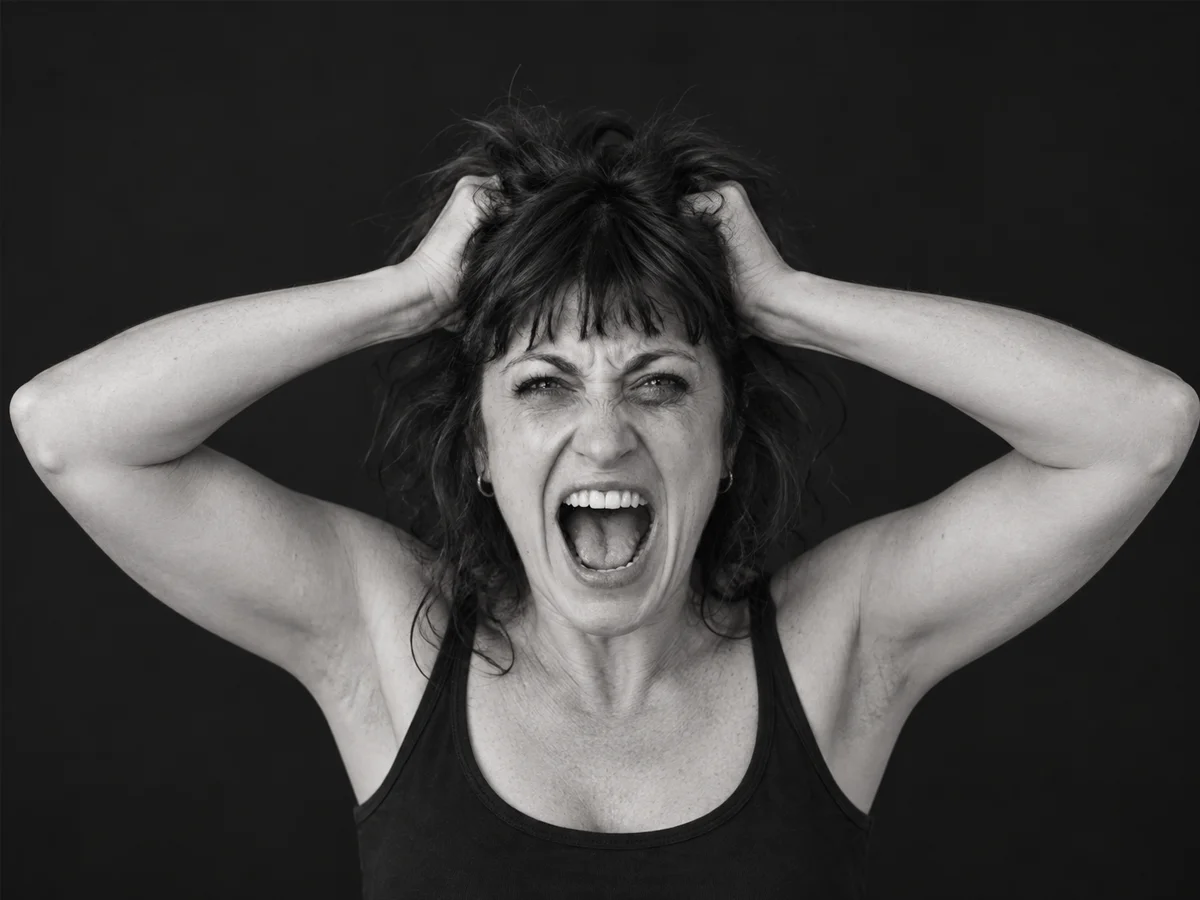
The word rage is the right word. Not frustration, not irritability, not being short-tempered, the full-body, out-of-proportion anger that seems to arrive from nowhere and disappear just as quickly, leaving confusion and sometimes shame in its wake. If you have been experiencing perimenopause rage and wondering whether something has fundamentally changed about who you are, this post is for that moment.
This article is intended for general information and educational purposes only and should not be considered medical, psychiatric, psychological, or therapeutic advice. Every person’s circumstances are unique, and reading this article does not create a therapeutic relationship with Hope Therapy & Counselling Services. If you are concerned about your mental health or emotional wellbeing, we encourage you to seek support from a suitably qualified healthcare or mental health professional. Hope Therapy & Counselling Services offers a free 15-minute consultation – book yours now.
What Is Perimenopause Rage?
Perimenopause rage is the experience of intense, disproportionate anger during the perimenopausal transition. It is characterised by responses that feel out of scale with what provoked them, snapping at a partner for a minor irritation, feeling genuine fury at something that would previously have produced only mild annoyance, or experiencing a sudden flood of anger that has no identifiable trigger at all.
It is distinct from ordinary irritability in its intensity and its apparent arbitrariness. Many women describe it as arriving from nowhere, a switch that flips without warning and flips back again with equal speed. The experience can be frightening, particularly for those who have always thought of themselves as calm or patient people. It can also be damaging to relationships and leave behind real guilt and confusion.
Is perimenopause rage normal?
Perimenopause rage is a recognised and common feature of the hormonal transition. It affects a significant proportion of women during perimenopause and is not a sign of a personality disorder, a mental health crisis, or a fundamental change in character. It is a biological response to hormonal fluctuation, and it makes clinical sense once the mechanism is understood.
This does not make it acceptable to let it cause harm in relationships, and it does not mean nothing can be done about it. But it does mean that the shame and self-blame that frequently accompany it are not warranted.
What Causes Rage in Perimenopause?
The rage of perimenopause has the same root cause as perimenopause anxiety: fluctuating oestrogen and declining progesterone. Oestrogen plays a significant role in regulating the brain’s emotional processing systems, including the amygdala ,the region responsible for detecting and responding to threat and danger. As oestrogen fluctuates unpredictably, the amygdala becomes more reactive.
This means the brain’s threat-detection system is more easily triggered. A minor frustration that would previously have been processed and resolved quickly is now more likely to produce a full emotional alarm response, the physical and psychological experience of significant threat, even when the actual threat is someone leaving a mug on the wrong shelf.
Progesterone’s role matters here too. In addition to its calming effect on anxiety, progesterone supports emotional buffering, the capacity to absorb and modulate emotional input before responding. As progesterone declines, this buffering reduces. The gap between trigger and response shortens, and the intensity of the response increases.
How Does Perimenopause Rage Feel?
The physical experience of perimenopause rage often mirrors the adrenaline response: sudden heat, rapid heartbeat, a feeling of pressure in the chest or throat, shaking, and an overwhelming urge to react. It comes quickly and often without the build-up that characterises ordinary anger.
The emotional experience afterwards is frequently difficult. Many women describe a disconnect between the intensity of the response and any genuine grievance, they were angry, they know they were angry, but looking back they cannot fully locate where it came from. This disconnect is itself distressing, particularly for women who place value on being emotionally measured and reliable.
Relationships bear the brunt of perimenopause rage more than most other areas of life. Partners, children, and close colleagues are most likely to be in proximity when the anger arrives, and most likely to receive it.
If you are struggling with perimenopause
A free 15-minute consultation is a good first step if any of this feels familiar. No preparation needed, no commitment required.
Why Does Perimenopause Rage Target the People Closest to Us?
Perimenopause rage is most likely to emerge in contexts that feel safe, with partners, children, and family members rather than colleagues or acquaintances. This is not a coincidence. In environments where there is no social performance required, the emotional regulation that is used to manage public behaviour can relax, and what has been suppressed emerges.
This pattern is important to understand, because it means the people who are most affected by perimenopause rage are often the ones who were not the actual source of the frustration. The anger that has been contained through a demanding day arrives home and finds a smaller trigger to attach to. Recognising this pattern is part of what makes it possible to interrupt it.
Perimenopause rage and the impact on relationships
The relational impact of perimenopause rage is significant and often underestimated. Repeated episodes of intense, disproportionate anger, even when followed by genuine remorse, can erode trust and closeness in ways that do not immediately repair themselves. Partners who do not understand the hormonal context may take the anger personally, withdraw, or respond defensively, which can intensify the cycle rather than interrupt it.
Understanding that perimenopause rage has a physiological cause is important for both the woman experiencing it and the people around her. It does not remove responsibility for how the anger is expressed, but it changes the frame, from personal failing to biological process, in a way that makes it possible to address rather than simply endure.
What Actually Helps With Perimenopause Rage?
Understanding the hormonal mechanism behind perimenopause rage is the first genuinely helpful thing. It reframes an experience that has been frightening and shaming into something that makes sense, a predictable response to an identifiable cause. That reframing does not make the anger harmless, but it removes the additional distress of not knowing why it is happening.
Counselling can help with perimenopause rage in several practical ways. It can offer a space to understand the specific patterns, what situations, times of day, or relational dynamics tend to precede the rage. It can support the development of early-warning awareness, noticing the physical signals that the emotional response is building before it becomes explosive. It can also help address the relationship damage that perimenopause rage may have caused and the guilt that often accompanies it.
Support from Hope Therapy & Counselling Services is available online nationwide and face-to-face across England. If the anger feels connected to wider mood changes, practitioners experienced in women’s mental health and emotional regulation work with women across the perimenopausal transition.
Ready to Take the First Step?
Perimenopause rage is one of the least talked-about and most isolating experiences of this transition, partly because the shame that follows it can make it very hard to admit to.
A free, no-obligation 15-minute conversation is a good place to start. No preparation needed and no pressure to commit.
- Free 15-minute consultation
- No commitment
- Qualified & registered therapists
- LGBTQIA+ affirming support
- NCPS organisational member
- Online nationwide
- Face-to-face across England
- Established 2014
This article is intended for general information and educational purposes only and should not be considered medical, psychiatric, psychological, or therapeutic advice. Every person’s circumstances are unique, and reading this article does not create a therapeutic relationship with Hope Therapy & Counselling Services. If you are concerned about your mental health or emotional wellbeing, we encourage you to seek support from a suitably qualified healthcare or mental health professional. Hope Therapy & Counselling Services offers a free 15-minute consultation – book yours now.
Frequently Asked Questions
What is perimenopause rage?
Perimenopause rage is intense, disproportionate anger that arrives during the perimenopausal transition. It is characterised by responses that feel out of scale with what provoked them, often arriving very suddenly. It is not a personality disorder or character change, it is a recognised biological response to hormonal fluctuation.
What causes rage in perimenopause?
Fluctuating oestrogen and declining progesterone are the primary causes. Oestrogen regulates the amygdala, which becomes more reactive as oestrogen fluctuates. Declining progesterone reduces emotional buffering, shortening the gap between trigger and emotional response.
Is perimenopause rage normal?
Yes. Perimenopause rage is a recognised and common feature of the hormonal transition, affecting a significant proportion of women. It is a predictable biological response to hormonal change, not a personality disorder or fundamental character change.
Find the Right Support for You
Our general counselling services page can help you determine what sort of therapy may be suitable for you.
Get Help With Other Conditions
Our general conditions page is a great place to start.
THE AUTHOR

Lisa Capper
- MNCPS
Integrative Counsellor, Clinical Supervisor & Coach — Hope Therapy & Counselling Services
Accredited Member of the NCPS · L4 Diploma in Therapeutic Counselling · Advanced CBT Diploma · Certificate in Supervision · Certificate in Rewind Therapy · Certificate in Transactional Analysis · Certificate in EFT · Certificate in Life Coaching
Lisa is an experienced integrative counsellor, clinical supervisor, and coach with a background in the care sector, where she developed a deep understanding of supporting neurodivergent individuals and their families. Her experience enables her to adapt therapy to each person’s unique needs and life circumstances.
Lisa holds an L4 Diploma in Therapeutic Counselling, an Advanced CBT Diploma, and additional qualifications in Clinical Supervision, Rewind Therapy, Transactional Analysis (TA), Emotionally Focused Tapping (EFT), and Life Coaching. She is an Accredited Member of the National Counselling & Psychotherapy Society (NCPS) and is committed to ongoing professional development.
Her specialist interests include PMDD, perimenopause and menopause, neurodivergence, bereavement, domestic and narcissistic abuse, anxiety, and trauma. Lisa also brings lived experience of PMDD to her work, combining professional expertise with personal insight into the challenges of hormonal mental health.
Lisa provides a warm, compassionate, and collaborative environment where clients can explore their experiences safely and without judgement. Drawing on an integrative approach, she tailors therapy to each individual, helping clients better understand themselves, overcome life’s challenges, and create lasting positive change.
- NCPS Accredited Member
- L4 Diploma in Therapeutic Counselling
- Advanced CBT Diploma
- Clinical SupervisorIntegrative Counsellor
- PMDD Specialist
- Women’s Hormonal Mental Health
- Neurodivergent-Affirming
Free 15-minute consultation
A no-pressure conversation to find the right therapist for you. No commitment needed.
ABOUT THE AUTHOR
Lisa Capper
MNCPS
Integrative counsellor, clinical supervisor, and coach specialising in PMDD, neurodivergence, trauma, and women’s hormonal mental health.
ABOUT HOPE THERAPY
Qualified registered therapists
Online nationwide across UK
Face-to-face across England
LGBTQIA+ & neurodivergent affirming
Mon–Sun, 9am–9pm
NCPS organisational member
Est 2014
Published: 8th September 2026 | Written by Lisa Capper | Reviewed for clinical accuracy before publishing | Review due: September 2028
More Articles About Perimenopause & Menopause
Perimenopause Anxiety: Why It Happens and What Actually Helps
PMDD and Perimenopause: How to Tell the Difference
