
BLOG
What Is CAMHS? A Guide for Parents
- By Paule Bhatowa
- Integrative Counsellor
- 21st August 2026
- 7–11 minutes
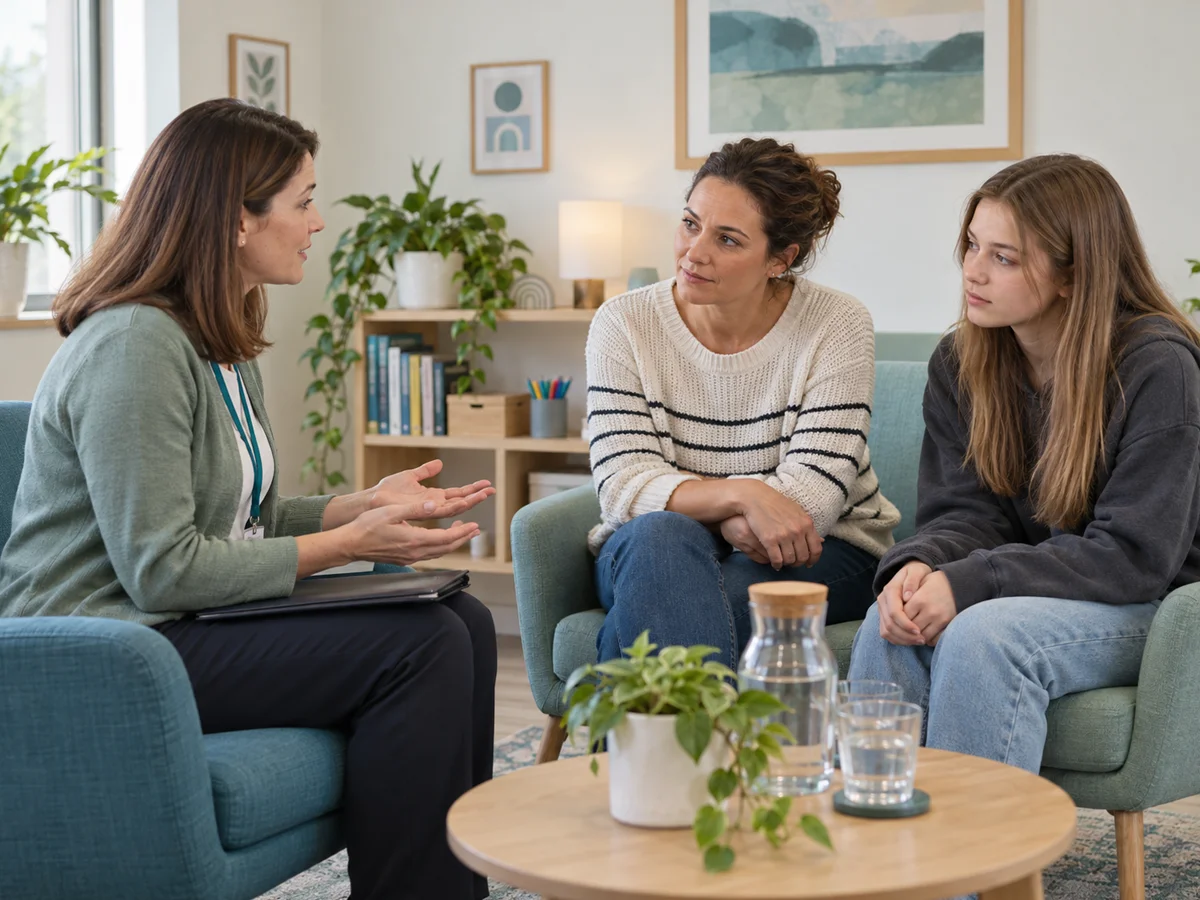
If a teacher, GP, or friend has mentioned CAMHS, you might have nodded along while quietly wondering what it actually is. When you’re worried about your teenager, a new acronym is the last thing you need, especially one that seems to carry so much weight.
CAMHS comes up a lot in conversations about young people’s mental health, and knowing what CAMHS is, and what it isn’t, makes everything else easier to understand. So, what is CAMHS?
This guide explains what CAMHS stands for, what it does, who it’s for, and how support is usually accessed.
This article is intended for general information and educational purposes only and should not be considered medical, psychiatric, psychological, or therapeutic advice. Every person’s circumstances are unique, and reading this article does not create a therapeutic relationship with Hope Therapy & Counselling Services. If you are concerned about your mental health or emotional wellbeing, we encourage you to seek support from a suitably qualified healthcare or mental health professional. Hope Therapy & Counselling Services offers a free 15-minute consultation – book yours now.
What is CAMHS, and what does it stand for?
CAMHS stands for Child and Adolescent Mental Health Services. It’s the part of the NHS that supports children and young people, usually up to the age of 18, with their emotional wellbeing and mental health. You’ll sometimes see it written out in full, but most people, professionals included, simply say CAMHS, pronounced ‘cams’.
It isn’t a single national organisation so much as a network of local NHS services. That’s why the exact name, structure, and way in can differ depending on where you live, some areas have rebranded it as something like an Emotional Wellbeing Service or a Children and Young People’s Mental Health Service.
The role, though, stays broadly the same: specialist NHS mental health support for young people. If the acronym has felt vaguely intimidating, it’s worth knowing that behind it are ordinary clinical teams, psychologists, therapists, nurses, psychiatrists, doing much the same work you’d hope for.
It helps to know where CAMHS sits in the wider picture. For most young people, mental health support is layered: everyday help from family and school, then services like school counselling or early-help teams, and then specialist NHS services like CAMHS for more significant needs.
CAMHS is the specialist tier, which is part of why not everyone is referred there, and why the route in matters.
What does CAMHS do?
CAMHS assesses and supports young people whose mental health is affecting their daily life. That can mean talking therapies, family work, medication where appropriate, and support for more complex or higher-risk difficulties. The exact mix depends on the young person and what they need.
The difficulties CAMHS helps with
CAMHS works across a wide range of concerns, anxiety, depression and low mood, self-harm, disordered eating, obsessive-compulsive difficulties, trauma, and the emotional side of conditions like ADHD and autism.
Some teams also handle assessments for neurodevelopmental conditions, though in many areas those sit with a separate service. What tends to unite the young people CAMHS works with isn’t a particular label, it’s that something has become distressing or disruptive enough to need specialist help.
What support can look like
Support usually starts with an assessment, a conversation about what’s been happening and what would help. From there it might involve a course of therapy, such as CBT, sessions that include the family, or input from different members of the team. For some young people it’s short and focused; for others it’s longer-term.
CAMHS also works alongside schools, GPs, and other services rather than in isolation, which is often part of what makes it effective.
It’s also worth knowing what an assessment is not. It isn’t a test to pass or fail, and it doesn’t commit your teenager to anything. It’s a structured conversation designed to work out what would help. Being offered an assessment doesn’t automatically mean a diagnosis follows, sometimes the outcome is a short piece of work, or a signpost to somewhere better suited.
Who is CAMHS for?
CAMHS is for children and young people, usually up to 18, whose mental health difficulties are having a real impact on their lives. It tends to focus on moderate to significant needs, which means not every young person who is struggling will meet the threshold for CAMHS support, and that isn’t a judgement on how real their difficulties are.
This is one of the things parents find hardest to make sense of. A young person can clearly be having a difficult time and still be told CAMHS isn’t the right service for them right now.
When that happens, it usually means the team has judged that another kind of support fits better, school-based help, an early-help team, or your GP. It doesn’t mean the distress isn’t valid. If school avoidance is part of the picture, our guide to school refusal looks at that specific difficulty in more depth.
Thresholds also change over time. A young person who isn’t accepted at one point can be referred again if things change or get harder, so an initial ‘not right now’ isn’t the final word. Keeping a simple note of what you’re seeing, and when, can help if you need to go back.
How do you get CAMHS support?
Most young people reach CAMHS through a referral, usually from a GP or school, and in some areas through self-referral. The referral describes what’s been happening and how it’s affecting daily life, and the service then decides whether it meets the threshold for support.
The process has a few more steps than that summary suggests, and it can vary from area to area. Rather than repeat it all here, our step-by-step guide to how a CAMHS referral works walks through the GP route, self-referral, what happens after a referral, and typical waiting times.
If you’re at the very start of this and not sure where to begin, your GP is almost always a sensible first conversation.
If your teenager is 16 or 17, it’s also worth checking how your local service handles the age boundary with adult mental health services, as the point of transition varies and can affect which team picks things up.
What if you’re waiting, or CAMHS isn’t the right fit?
A referral to CAMHS isn’t the only source of support, and it often isn’t the fastest. Whether you’re waiting for an appointment or have been told CAMHS isn’t the right service, there are other things that can genuinely help in the meantime, and no need to sit with it alone.
While you wait
Your GP stays a point of contact and can review things if they change. Schools and colleges often have pastoral teams, counsellors, or wellbeing support that can help day to day.
Charities add another layer: the YoungMinds Parents Helpline () is there for parents specifically, and Samaritans () is available any time, for you or your teenager.
Keeping some steadiness at home, sleep, routine, connection, matters more than it can feel like it does when you’re worried.
None of these replace specialist care, but together they can make a real difference to how a young person copes in the meantime, and they mean the waiting period isn’t simply empty time.
Other kinds of support
Some families also look into private counselling, either while waiting, or where CAMHS isn’t the right fit. It’s one option among several, and not a replacement for NHS care.
The right choice depends on the young person, what they’re dealing with, and what feels manageable for your family. There’s no single correct route, and mixing NHS, school, and other support is completely normal.
Not sure where to turn for support?
A free 15-minute consultation is a chance to talk things through and ask questions, no commitment, and no pressure either way.
How counselling can help
Counselling gives a young person a space to understand what they’re feeling and to build ways of coping with it, at their own pace. It isn’t a quick answer or a substitute for NHS care where that’s needed, it’s one form of support that can sit alongside the rest.
For some young people, talking to someone outside the family and the school, an adult with no agenda beyond understanding them, is what makes it possible to open up. A good counsellor works gently with the anxiety, low mood, or pressure underneath, without rushing.
Our young people’s mental health page explain a little more about how support at this age tends to work, and the free consultation below is simply a way to ask questions with no obligation to go further.
Counselling can also help the people around a young person. Parents often carry a lot of worry and uncertainty, and having somewhere to think it through, how to respond, what to say, when to step in, can steady the whole household. Support that includes the family, not just the young person, is often the most useful kind.
Ready to Take the First Step?
If you’re trying to make sense of the options for your teenager, talking it through can help you feel clearer and less alone with the decision.
Hope Therapy offers a free, no-obligation 15-minute consultation, a chance to ask questions and explore whether counselling might help, at your teenager’s pace and only if the time feels right. There’s no commitment, and no pressure in either direction. When you’re ready, we’re here.
- Free 15-minute consultation
- No commitment
- Qualified & registered therapists
- LGBTQIA+ affirming support
- NCPS organisational member
- Online nationwide
- Face-to-face across England
- Established 2014
This article is intended for general information and educational purposes only and should not be considered medical, psychiatric, psychological, or therapeutic advice. Every person’s circumstances are unique, and reading this article does not create a therapeutic relationship with Hope Therapy & Counselling Services. If you are concerned about your mental health or emotional wellbeing, we encourage you to seek support from a suitably qualified healthcare or mental health professional. Hope Therapy & Counselling Services offers a free 15-minute consultation – book yours now.
Frequently Asked Questions
What does CAMHS stand for?
CAMHS stands for Child and Adolescent Mental Health Services, the NHS services that support the mental health of children and young people, usually up to age 18. It’s pronounced ‘cams’, and in some areas it goes by a slightly different local name.
Is CAMHS free?
Yes. CAMHS is an NHS service, so it’s free at the point of use for young people who are referred and accepted. There’s no charge for assessment or treatment. Waiting times, rather than cost, are usually the main practical hurdle families come up against.
What age is CAMHS for?
CAMHS generally supports children and young people up to the age of 18, though the exact upper age and the move to adult services can vary by area. Around 16 to 18, it’s worth asking your local service how they handle the transition.
Find the Right Support for You
Our general counselling services page can help you determine what sort of therapy may be suitable for you.
Get Help With Other Conditions
Our general conditions page is a great place to start.
THE AUTHOR

Paule Bhatowa
- MBACP
Integrative Counsellor — Hope Therapy & Counselling Services
MBACP · L4 Diploma Therapeutic Counselling · BSc (Hons) Psychology · PGC
Integrative counsellor, multilingual therapist, and former teacher offering culturally informed counselling for adults and young people. Specialising in LGBTQIA+ affirming therapy, neurodivergence, refugee support, and South Asian communities.
Before becoming a counsellor, Paule spent many years working in education, supporting young people from diverse backgrounds. Her background in teaching and psychology gives her a deep understanding of the emotional, cultural, and developmental challenges people can face throughout life.
As an integrative counsellor, Paule combines Person-Centred Therapy with CBT, Transactional Analysis, Gestalt, and Psychodynamic approaches, tailoring therapy to each individual. She is committed to providing an inclusive, culturally aware space where clients feel understood, respected, and accepted, whether they are seeking support in English, Punjabi, Hindi, or Urdu.
- MBACP Registered
- L4 Diploma Therapeutic Counselling
- BSc (Hons) Psychology
- PGCE Qualified
- Integrative Therapist
- Multilingual Counsellor
- Young People (14+)
- LGBTQIA+ Affirming
Free 15-minute consultation
A no-pressure conversation to find the right therapist for you. No commitment needed.
ABOUT THE AUTHOR
Paule Bhatowa
MBACP
Integrative counsellor, former teacher, and multilingual therapist supporting adults and young people through culturally informed, inclusive counselling.
ABOUT HOPE THERAPY
Qualified registered therapists
Online nationwide across UK
Face-to-face across England
LGBTQIA+ & neurodivergent affirming
Mon–Sun, 9am–9pm
NCPS organisational member
Est 2014
Published: 21st August 2026 | Written by Paule Bhatowa | Reviewed for clinical accuracy before publishing | Review due: August 2028