BLOG
Dysfunctional Family Dynamics: What They Are and How They Affect Adults
- By Ian Stockbridge
- Founder & Clinical Director, Hope Therapy & Counselling Services
- 29 July 2026
- 9–14 minutes
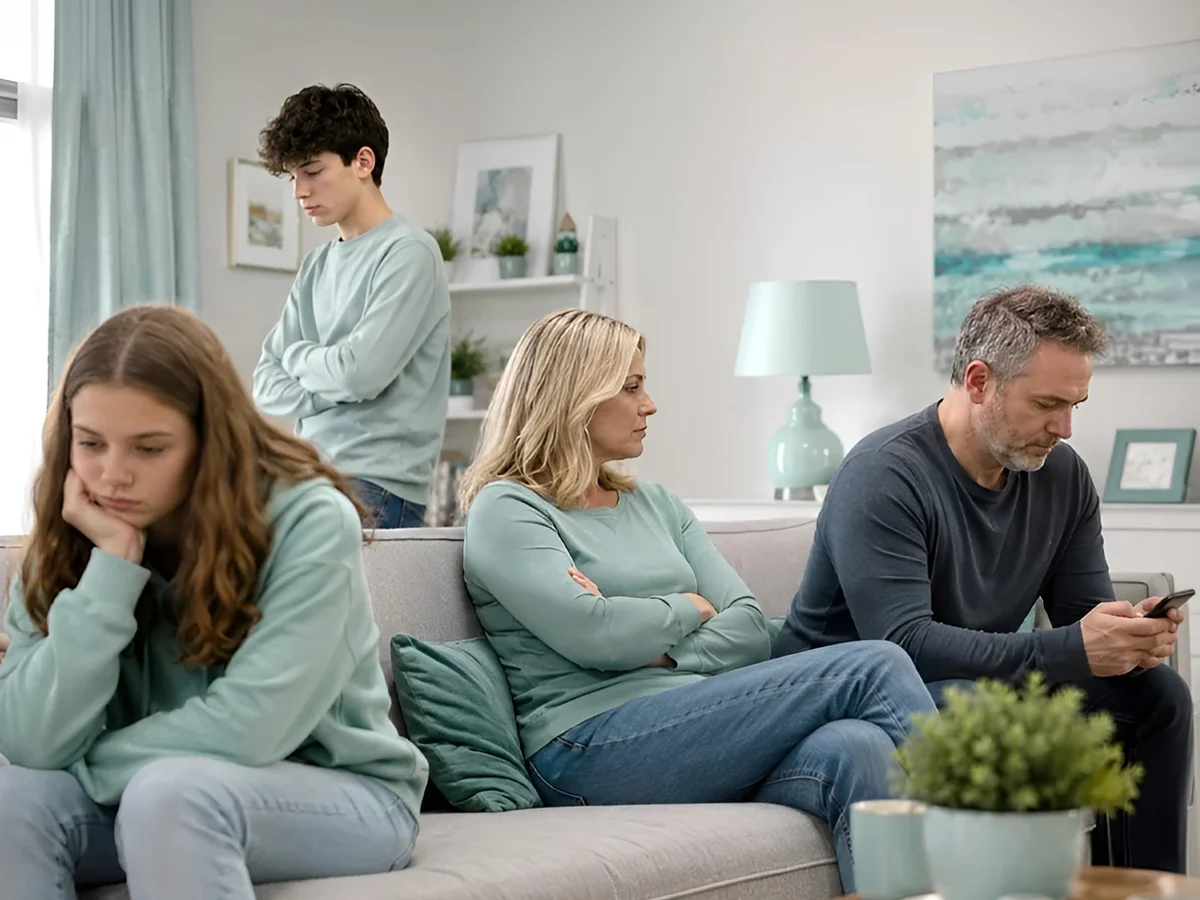
Most families have periods of difficulty. Conflict, stress, miscommunication, and the occasional failure of care are normal features of family life, not evidence of dysfunction. What distinguishes a dysfunctional family from one that is simply going through a hard time is the persistence and the pattern: the way in which certain dynamics repeat, certain needs go consistently unmet, and certain ways of relating become so established that they feel like the only possible way for that family to function.
What is a dysfunctional family?
A dysfunctional family is one in which the patterns of interaction between family members consistently fail to meet the emotional, psychological, or developmental needs of one or more members — typically the children — over a sustained period. This may involve chronic conflict, emotional unavailability, inconsistent or unpredictable care, role reversals in which children take on inappropriate responsibility for adults’ emotional needs, the suppression of honest communication, or the presence of unaddressed difficulties in the parents or caregivers. The defining feature is not drama or crisis but pattern: the way in which the family system consistently organises around something other than the genuine wellbeing of its members.
This article is intended for general information and educational purposes only and should not be considered medical, psychiatric, psychological, or therapeutic advice. Every person’s circumstances are unique, and reading this article does not create a therapeutic relationship with Hope Therapy & Counselling Services. If you are concerned about your mental health or emotional wellbeing, we encourage you to seek support from a suitably qualified healthcare or mental health professional. Hope Therapy & Counselling Services offers a free 15-minute consultation – book yours now.
What Makes a Family Dysfunctional
The word dysfunctional is sometimes used loosely, and it is worth being specific about what it describes. A family can be imperfect, struggling, or under significant stress without being dysfunctional in the sense that causes lasting psychological harm. The distinguishing features of dysfunctional family dynamics tend to involve not just what happens but what does not happen: the absence of consistent emotional attunement, of honest communication, of the repair that allows ruptures to be healed, and of the basic psychological safety that allows children to develop a secure sense of self.
Emotional Environment
The emotional environment of a dysfunctional family is typically characterised by one or more of the following: chronic tension that is never fully resolved, emotional volatility in caregiving adults that produces unpredictability for children, emotional unavailability — caregivers who are physically present but psychologically absent — or the systematic suppression of certain emotions. Children who grow up in emotionally unsafe environments learn, quickly and thoroughly, to adapt: to suppress their own needs, to read the room rather than express themselves, and to manage the emotional states of the adults around them rather than being cared for by them.
Communication Patterns
Dysfunctional families typically have characteristic communication patterns that serve to maintain the existing dynamic rather than to allow genuine exchange. These may include the denial of obvious problems — family members being expected to pretend that difficulties that everyone can see are not happening — the invalidation of emotional experience, in which a child’s expressed feelings are dismissed, corrected, or punished, or the use of communication as a means of control rather than connection. The child who grows up in an environment where honest communication is unsafe learns to be indirect, to conceal their genuine experience, and to be alert to what the other person needs to hear rather than to what is true.
Patterns That Children Adopt
Children in dysfunctional families develop adaptive strategies — ways of surviving emotionally in an environment that does not consistently meet their needs. These strategies are not pathological; they are intelligent responses to the environment as it actually is. The difficulty is that the same strategies that protect a child in a dysfunctional family tend to cause significant problems in adult relationships, where the environment is different but the adaptive strategies continue to run.
Over-Responsibility and Caretaking
One of the most common patterns in children from dysfunctional families is the assumption of a caretaking role — becoming the person responsible for managing the emotional state of one or both parents, for keeping the peace, or for meeting the needs that the adults in the family cannot meet for each other. This over-responsibility is often praised as maturity, which reinforces it. The child who learns that being needed is the safest way to be valued becomes an adult who finds it difficult to receive care, to have needs without immediately meeting others’ needs, or to be in a relationship without taking responsibility for the other person’s emotional state.
Minimising and Withdrawal
Another common adaptive pattern is the minimising of one’s own needs and the withdrawal of emotional expression: learning not to need, not to feel, or at least not to show feeling in ways that attract negative attention. The child who discovers early that having needs produces rejection or dismissal learns to manage their own experience internally rather than seeking external support. This self-sufficiency is often interpreted positively — as independence, as capability — while concealing a profound difficulty with vulnerability that tends to affect adult relationships significantly.
The Unspoken Rules of Dysfunctional Families
Dysfunctional family systems are typically maintained by a set of unspoken rules — implicit expectations about what can and cannot be said, felt, or acknowledged within the family. These rules are rarely stated explicitly; they are learned through experience, through the responses that certain behaviours reliably produce, and through the gradual internalisation of what is acceptable and what is not.
Do Not Talk, Do Not Trust, Do Not Feel
One widely recognised formulation of the unspoken rules common in dysfunctional family systems describes them as: do not talk about what is actually happening; do not trust that others will be reliably safe or present; and do not feel, or at least do not express feeling in ways that disrupt the family’s equilibrium. A child who grows up absorbing these rules learns that honest communication is dangerous, that depending on others is risky, and that their emotional experience is an inconvenience rather than a legitimate part of who they are. These internalised rules follow the person into adulthood and tend to show up wherever close relationships are involved.
Loyalty and the Prohibition on Naming
A particular feature of dysfunctional family dynamics is the prohibition on naming them as dysfunctional — the expectation of loyalty that presents itself as a rule against honest assessment. Family members who acknowledge that the dynamics of the family are harmful, or who seek support outside the family for their effects, are often experienced as betraying the family. This prohibition on naming can be one of the most lasting effects of a dysfunctional family background: the internalised voice that says something is wrong with the person for thinking that something was wrong, which makes it much harder to reach for support.
Recognising these patterns in your own experience?
Hope Therapy offers individual counselling for adults working through the effects of difficult family backgrounds. Online across England.
How Dysfunctional Family Dynamics Affect Adult Life
The effects of growing up in a dysfunctional family do not end when the person leaves home. The patterns learned in childhood — the adaptive strategies, the emotional habits, the ways of relating to others — tend to persist into adult life unless they are actively addressed. This is not a reflection of weakness; it is how human development works. The relational patterns learned through formative experience are not simply reset when the original environment changes.
Adult Relationships
The most commonly reported effect of dysfunctional family background is difficulty in adult close relationships. The specific difficulty varies depending on what the person adapted to in childhood: someone who learned to be a caretaker may find themselves consistently in relationships in which they give more than they receive. Someone who learned to minimise their needs may find genuine intimacy threatening. Someone who grew up with unpredictable care may find that the anxiety produced by any hint of withdrawal in an adult relationship is disproportionate to what is actually happening — because the nervous system is responding to the pattern it learned, not to the current reality.
Self-Esteem and Self-Worth
Children in dysfunctional families often absorb, through thousands of small interactions over years, a message about their own worth that is directly connected to the dynamics of the family system. A child who is consistently blamed, dismissed, or made to feel responsible for the adults’ difficulties tends to internalise a negative self-concept that persists in adult life regardless of what external achievements might suggest. The person who consistently achieves and is externally successful while feeling fundamentally inadequate is often working against an internalised self-concept formed in a dysfunctional family environment.
Mental Health in Adulthood
Growing up in a dysfunctional family is a significant risk factor for a range of adult mental health difficulties including anxiety, depression, and difficulty regulating emotion. This is not to say that everyone who grew up in a dysfunctional family will experience significant mental health difficulties. It is to say that the effects of a psychologically unsafe childhood environment on mental health, attachment, and emotional functioning are well-documented and real — and that understanding this connection is often an important part of addressing the mental health difficulties themselves.
The Patterns Are Not Fixed
One of the most important things to understand about the effects of dysfunctional family dynamics is that they are not permanent. The patterns learned in childhood are not destiny. They are adaptive responses that made sense in the context in which they were learned, and they can be understood, examined, and changed — with the right support.
This does not mean the work is easy or quick. The patterns described in this article are often deeply ingrained precisely because they were learned in the most formative period of development, were reinforced over years, and became so familiar that they feel like personality rather than learned adaptation. But the fact that they are learned means they can be worked through: replaced by more flexible and more adaptive ways of relating that serve the person’s actual adult life rather than the childhood environment that no longer exists.
What Counselling Addresses
Individual counselling for adults affected by dysfunctional family backgrounds works at several levels. It provides a space to understand the specific patterns that were learned and the specific dynamics of the family of origin that produced them. It directly addresses the emotional effects: the anxiety, the depression, the difficulty with intimacy and trust, the self-concept that was formed in an environment of insufficient care. And it works at the level of the relational patterns themselves — not simply understanding them intellectually but developing the capacity to respond differently in adult relationships.
Ready to Take the First Step?
If the effects of dysfunctional family dynamics are showing up in your adult life — in your relationships, your self-esteem, or your mental health — the counsellors at Hope Therapy can help. We offer individual counselling online across England, with no waiting list and no GP referral required. Your first 15-minute consultation is free.
- Free 15-minute consultation
- No commitment
- Online across England
- No GP Referral needed
- Qualified & registered therapists
- LGBTQIA+ affirming support
- NCPS organisational member
- Online nationwide
- Face-to-face across England
- Established 2014
This article is intended for general information and educational purposes only and should not be considered medical, psychiatric, psychological, or therapeutic advice. Every person’s circumstances are unique, and reading this article does not create a therapeutic relationship with Hope Therapy & Counselling Services. If you are concerned about your mental health or emotional wellbeing, we encourage you to seek support from a suitably qualified healthcare or mental health professional. Hope Therapy & Counselling Services offers a free 15-minute consultation – book yours now.
Frequently Asked Questions About Growing Up in a Dysfunctional Family
How do I know if my family was dysfunctional?
The most useful indicator is often not any single event but the consistent pattern of how the family organised itself and its persistent effect on your sense of self and safety. A dysfunctional family dynamic typically produces, over time, a characteristic internal state: the sense of not being quite safe to be yourself, of needing to manage the emotional environment rather than simply live in it, of your needs being an inconvenience rather than a normal part of family life. If you consistently felt as a child that you needed to suppress or adapt your authentic experience in order to manage the emotional environment, that is a significant indicator.
Can I recover from growing up in a dysfunctional family?
Yes. Understanding and working through the effects of a dysfunctional family background is one of the most common and most well-supported areas of therapeutic work. Recovery does not mean erasing the past or eliminating the effects of early experience; it means developing a different relationship with those effects — understanding them rather than being driven by them, choosing responses rather than being pulled into automatic reactions, and developing the internal conditions for a different quality of relationship and self-experience in adult life.
Do I need to confront my family or cut contact to recover?
No. The work of understanding and addressing the effects of a dysfunctional family background does not require any particular external action in relation to the family itself. Some people find that understanding the dynamics of their family of origin changes how they relate to family members in the present; others find that some degree of distance is helpful for their own wellbeing; others maintain close relationships with their family while doing the internal work that changes their experience of those relationships. The decision about how to manage current relationships with family members is the person’s own, and good therapeutic support holds that decision with care rather than pushing towards a particular outcome.
Find the Right Support for You
Our general counselling services page can help you determine what sort of therapy may be suitable for you.
Get Help With Other Conditions
Our general conditions page is a great place to start.
ABOUT THE AUTHOR

Ian Stockbridge
- MBACP (Senior Accredited)
Founder & Clinical Director — Hope Therapy & Counselling Services
Founder of Hope Therapy, published author, clinical supervisor, and co-presenter of The Talk Room Podcast. Practising therapist with 25+ years of senior leadership experience.
Before Ian Stockbridge was a therapist, he was a leader. For more than 25 years he worked in senior management and directorial roles across commercial organisations — at times managing teams of more than 200 people. He was effective at it. But the longer he did it, the harder something became to ignore. The people around him were struggling. Capable, committed, often high-achieving people carrying invisible weight that had nowhere to go. Stress accumulated quietly across months and years. Anxiety managed behind professionalism. Relationships and mental health dealt with in the margins of a working life that left little room for either.
- SCoPEd Band C
- SNCPS (Acc)
- BSc (Hons) CBT
- PGCert Clinical Supervision
- Diploma — Person-Centred Counselling
- Diploma — Mindfulness-Based Cognitive Therapy
- Certificate — Acceptance & Commitment Therapy
- Certificate — Trauma
- Certificate — CBT for Insomnia
- 25+ Years Leadership
- Clinical Supervisor
- Published Author
- Podcast Co-Host
- LGBTQIA+ Affirming
Free 15-minute consultation
A no-pressure conversation to find the right therapist for you. No commitment needed.
THE AUTHOR
Ian Stockbridge
MBACP (Senior Accredited)
Founder of Hope Therapy, published author, clinical supervisor, and co-presenter of The Talk Room Podcast. Practising therapist with 25+ years of senior leadership experience.
ABOUT HOPE THERAPY
Qualified registered therapists
Online nationwide across UK
Face-to-face across England
LGBTQIA+ & neurodivergent affirming
Mon–Sun, 9am–9pm
NCPS organisational member
Est 2014
Published: 29 July 2026 | Written by Ian Stockbridge | Reviewed for clinical accuracy before publishing | Review due: July 2028
More Articles About Mental Health
Men’s Mental Health Month: What It’s For, and What Actually Helps

Menopause and Relationships: How Hormonal Change Affects How You Connect