BLOG
Men’s Mental Health Month: what it’s for, and what actually helps
- By Ian Stockbridge
- Founder & Clinical Director, Hope Therapy & Counselling Services
- 11th November 2026
- 7–11 minutes
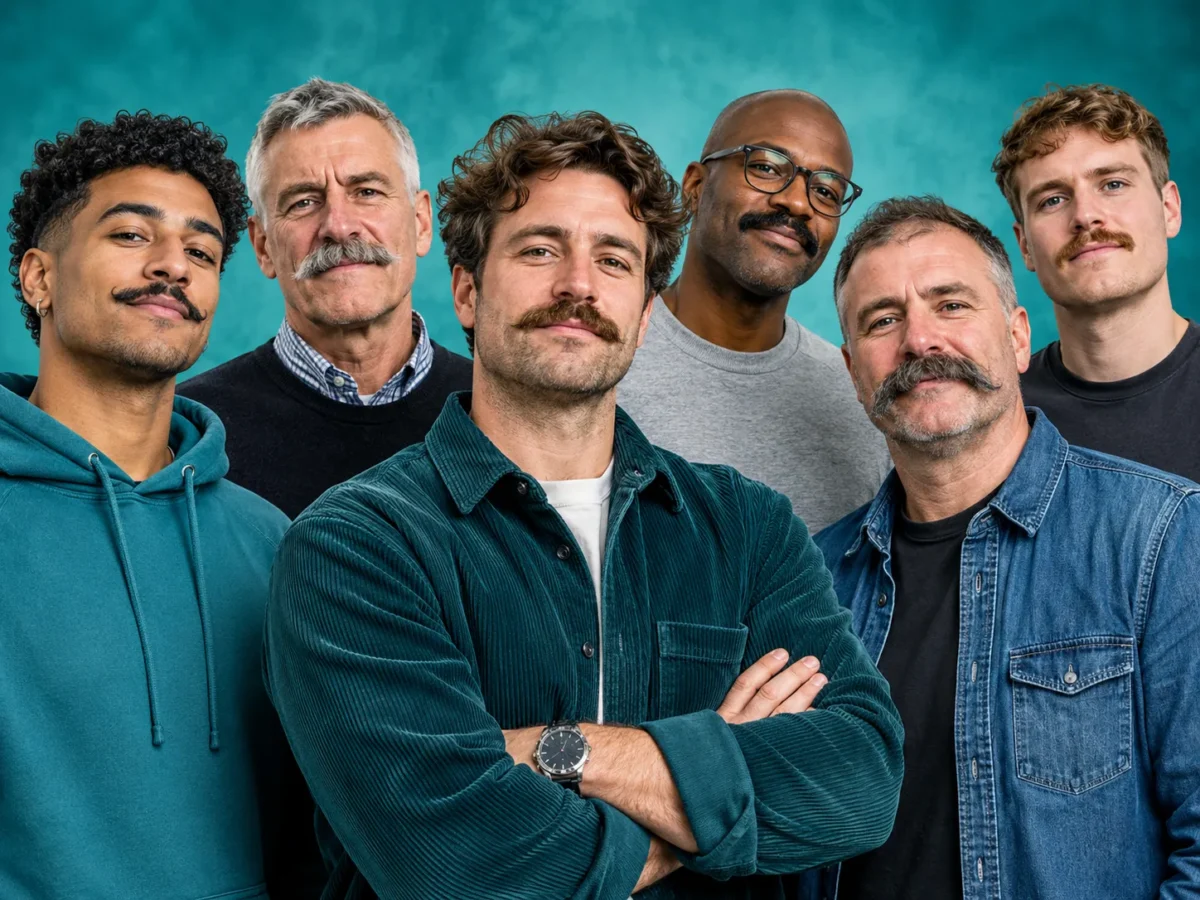
Men’s Mental Health Month runs through November, alongside Movember and International Men’s Day on the 19th. It exists because men are less likely to ask for help, and more likely to wait until something breaks.
This post is about what the month is actually for, why ‘fine’ is the word so many men hide behind, and the small, practical things that help, whether you’re the man in question or the person next to him. If you’ve been fine for a while now, this is written for you. If you’re reading it because of someone else, it’s written for you too.
This article is intended for general information and educational purposes only and should not be considered medical, psychiatric, psychological, or therapeutic advice. Every person’s circumstances are unique, and reading this article does not create a therapeutic relationship with Hope Therapy & Counselling Services. If you are concerned about your mental health or emotional wellbeing, we encourage you to seek support from a suitably qualified healthcare or mental health professional. Hope Therapy & Counselling Services offers a free 15-minute consultation – book yours now.
When is Men’s Mental Health Month in the UK?
In the UK, Men’s Mental Health Month is November. It sits alongside Movember, the charity campaign that by its own account started in Australia in 2003, and International Men’s Day on 19 November. You’ll also see June mentioned online, because the United States marks Men’s Health Month then and the UK holds Men’s Health Week in June.
So if you’ve searched ‘is it June or November’ and found both answers, both are right in different places. Here, the month that matters is November, and most of what you’ll see over the next few weeks, from the moustaches to the workplace talks, points at it.
The date matters less than what you do with it. A month is long enough to notice something you’ve been putting off, say it to one person and find out what happens next. For most men, that first sentence is the hard part. The rest tends to follow on from it.
What is Men’s Mental Health Month actually for?
Men’s Mental Health Month is for giving men a reason to talk that doesn’t have to be an emergency. Awareness campaigns can feel like noise, but this one does a specific job: it gives you a date, a prompt and some company, so that saying ‘I’ve not been great’ lands as normal rather than dramatic.
By Movember’s own account it began with 30 men in Melbourne growing moustaches for a laugh, and became a global men’s health charity. The moustache was never the point. It was a way of getting a question asked, ‘what’s that about?’, that led somewhere.
The month works the same way. It isn’t there to tell you something is wrong with you. It’s there so that if something has been wrong for a while, this is as good a time as any to say so. Workplaces run talks, friends share posts, and for a few weeks the subject is simply in the air.
Why do so many men wait so long to talk to someone?
Most men don’t wait because they don’t care. They wait because ‘fine’ is working, more or less, and because asking for help can feel like admitting that it isn’t. The men who come to counselling have usually been managing alone for years, and are good at it, right up until they aren’t.
‘Fine’ is a holding pattern, not a lie
When someone asks how you are, ‘fine’ is quick, true enough and closes the subject. The trouble is that it can stay true enough for months. You keep turning up, keep doing the job, keep the house ticking over, and the thing underneath never gets a name. The signs and pressures that build up in men’s mental health are often quiet: a shorter temper, worse sleep, hours lost to a screen, going quiet in company. None of them looks like a crisis. All of them are worth a conversation.
Carrying it alone can look like coping
A lot of men were taught, without anyone saying it out loud, that handling things yourself is what being reliable looks like. So carrying it alone feels like strength, and talking feels like putting it on someone else. That’s a habit rather than a character flaw, and habits change one small step at a time. The month exists partly to interrupt that habit, by making the conversation ordinary for a few weeks and showing you that plenty of other men are having it too.
What actually helps, if you’re the man in question?
What helps most is saying one true sentence to one person. Not the whole story, not a diagnosis, just ‘I’ve not been right for a while.’ The second thing that helps is making it easy on yourself: a walk rather than a sit-down chat, a text rather than a call, a 15-minute conversation rather than a commitment.
Pick the person before you pick the words. It might be a friend you’ve known for years, a brother, your partner or your GP. It doesn’t need to be the person closest to you, just someone who’ll listen without trying to sort it out in the same breath.
If the people around you aren’t the right place to start, counselling for men is built for exactly this. There’s nothing you need to have worked out beforehand. A free 15-minute call is simply a conversation about what’s been going on, and many men find that call is the hardest and most useful part of the whole thing.
What helps if you’re the person next to him?
If you’re worried about a man in your life, the most useful thing you can do is ask twice. The first answer is almost always ‘fine’. Leave a gap, then ask again, differently: ‘You’ve seemed a bit flat lately. What’s going on?’ Then listen, without rushing to solutions.
Side by side works better than face to face for a lot of men, which is why so many of these conversations happen in cars, on walks and over a job that needs two pairs of hands. You don’t need to know what’s wrong to ask about it, and you don’t need to solve it to have helped.
Keep an eye on what you can see rather than what he’s saying. Irritability, pulling away from friends and losing interest in things he used to enjoy can be how depression in men shows up. Restlessness, forgetfulness and a short fuse are sometimes signs of ADHD in men that have gone unnoticed for decades. You’re not there to diagnose. You’re there to notice, and to keep the door open.
What happens when Men’s Mental Health Month is over?
The campaign ends on 30 November. The conversation doesn’t have to. If this month got you as far as noticing something, the next step is the same in December as it is now. Say it to someone, and if that someone could usefully be a counsellor, book the call when you’re ready. Next November the moustaches will be back, and you don’t need to wait for them. If you’ve been fine since the summer, that’s a long time to be fine. It’s also the kind of thing people say in the first ten minutes of a first session, often with some relief.
If this resonates, a free 15-minute consultation is a good place to start.
No preparation, no commitment, and nothing you need to have worked out before you pick up the phone. Our counsellors work with men online and by telephone across the UK, and face-to-face in selected locations across England, and we work with anyone aged 16 and over. When you’re ready, we’re here
Need urgent help? Our service is not a crisis line. If you or someone you know is in immediate danger please: call ; call the Samaritans on (free, confidential, 24/7); text SHOUT to 85258; or call Childline on (under 19 — free and confidential, any time).
- Qualified & registered therapists
- LGBTQIA+ affirming support
- NCPS organisational member
- Online nationwide
- Face-to-face across England
- Established 2014
This article is intended for general information and educational purposes only and should not be considered medical, psychiatric, psychological, or therapeutic advice. Every person’s circumstances are unique, and reading this article does not create a therapeutic relationship with Hope Therapy & Counselling Services. If you are concerned about your mental health or emotional wellbeing, we encourage you to seek support from a suitably qualified healthcare or mental health professional. Hope Therapy & Counselling Services offers a free 15-minute consultation – book yours now.
Frequently Asked Questions
When is Men’s Mental Health Month in the UK?
November. In the UK, Men’s Mental Health Month runs through November alongside Movember, with International Men’s Day on 19 November. June is Men’s Health Month in the United States, which is why both dates appear online.
What is International Men’s Day about?
International Men’s Day, on 19 November each year, highlights men’s health and wellbeing, positive male role models and the pressures men face. In the UK the day sits inside Men’s Mental Health Month, so the two are usually talked about together.
Why do men wait so long to talk to someone?
Most men wait because ‘fine’ is working well enough to get by, and because asking for help can feel like admitting it isn’t. A lot of men also learned early that handling things alone is what reliability looks like. Neither is a flaw. Both are habits, and habits can change
What are the signs a man is struggling?
Often the quiet ones: a shorter temper, worse sleep, pulling away from friends, losing interest in things he enjoyed, or being ‘fine’ for a suspiciously long time. None of these is a diagnosis. They’re reasons to ask twice and listen to the second answer.
Do men need a different kind of counselling?
Not a different kind, but counselling that understands how men tend to arrive: late, unsure what to say and half expecting to be told what to do. Many men find a practical, plain-speaking approach helps. The first session is about finding what fits you.
Find the Right Support for You
Our general counselling services page can help you determine what sort of therapy may be suitable for you.
Get Help With Other Conditions
Our general conditions page is a great place to start.
ABOUT THE AUTHOR

Ian Stockbridge
- MBACP (Senior Accredited)
Founder & Clinical Director — Hope Therapy & Counselling Services
Founder of Hope Therapy, published author, clinical supervisor, and co-presenter of The Talk Room Podcast. Practising therapist with 25+ years of senior leadership experience.
Before Ian Stockbridge was a therapist, he was a leader. For more than 25 years he worked in senior management and directorial roles across commercial organisations — at times managing teams of more than 200 people. He was effective at it. But the longer he did it, the harder something became to ignore. The people around him were struggling. Capable, committed, often high-achieving people carrying invisible weight that had nowhere to go. Stress accumulated quietly across months and years. Anxiety managed behind professionalism. Relationships and mental health dealt with in the margins of a working life that left little room for either.
- SCoPEd Band C
- SNCPS (Acc)
- BSc (Hons) CBT
- PGCert Clinical Supervision
- Diploma — Person-Centred Counselling
- Diploma — Mindfulness-Based Cognitive Therapy
- Certificate — Acceptance & Commitment Therapy
- Certificate — Trauma
- Certificate — CBT for Insomnia
- 25+ Years Leadership
- Clinical Supervisor
- Published Author
- Podcast Co-Host
- LGBTQIA+ Affirming
Free 15-minute consultation
A no-pressure conversation to find the right therapist for you. No commitment needed.
IN THIS ARTICLE
THE AUTHOR
Ian Stockbridge
MBACP (Senior Accredited)
Founder of Hope Therapy, published author, clinical supervisor, and co-presenter of The Talk Room Podcast. Practising therapist with 25+ years of senior leadership experience.
ABOUT HOPE THERAPY
Qualified registered therapists
Online nationwide across UK
Face-to-face across England
LGBTQIA+ & neurodivergent affirming
Mon–Sun, 9am–9pm
NCPS organisational member
Est 2014
Published: 11th November 2026 Written by Ian Stockbridge | Reviewed for clinical accuracy before publishing | Review due: November 2028
More Articles About Men’s Mental Health
REMOVE THIS PARA BEFORE PUBLISHING – category slugs for use in shortcode and button link can be found at https://www.hopefulminds.co.uk/post-category-slugs/ – If an article covers two topics, this block can be duplicated eg for articles about AuDHD you can use one block for more ADHD articles and a duplicated second block for more Autism articles, for articles comparing two different therapies you could a add block for each therapy, for LGBTQIA you could include a block for LGBTQIA articles and a second block for LGBTQIA counselling. However, always bear in mind that blocks may select any articles from that category – eg so adding Counselling as a additional block on a condition-specific article will display counselling articles that may relate to other conditions, so should be avoided.
Financial Stress and Men’s Mental Health

International Men’s Day: Why Only 25% of Men Would Talk to a Friend About Their Mental Health — And What Needs to Change
