BLOG
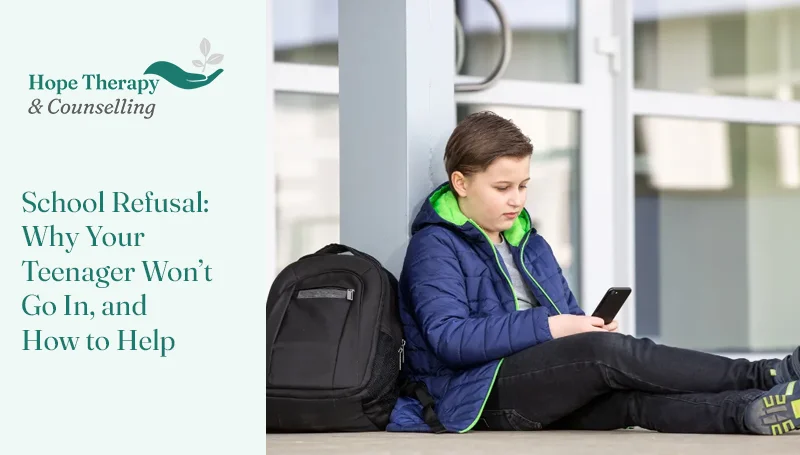
School Refusal: Why Your Teenager Won’t Go In, and How to Help
- By Paule
- Integrative Counsellor
- 17th August 2026
- 7–11 minutes
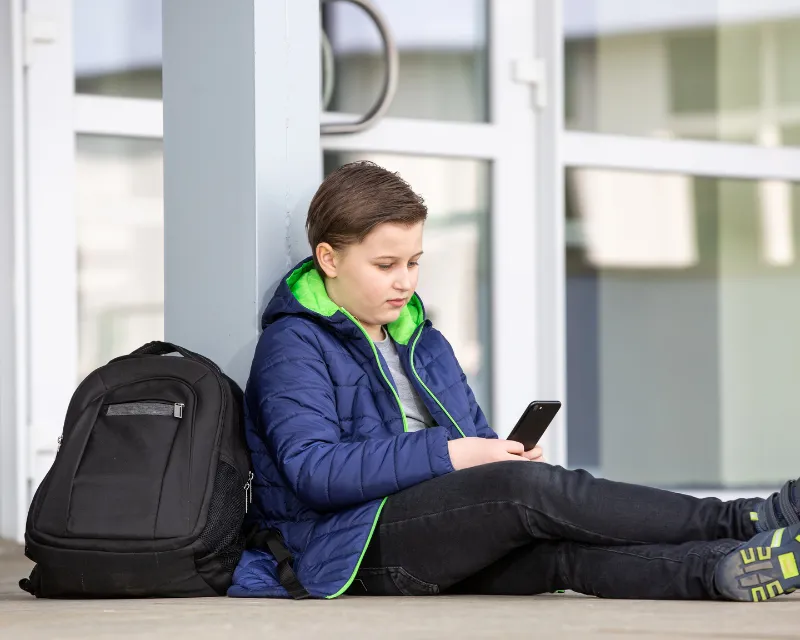
The morning battle. The stomach aches that appear at 8am and ease by mid-morning. The teenager who was managing fine, and now can’t get through the school gates, or won’t leave their room.
If this is your house right now, you’re probably exhausted, worried, and quietly wondering whether you’re handling it wrong.
School refusal is more common than most parents realise, and it’s rarely about defiance or laziness. More often, it’s a sign that something has become genuinely too much to manage.
This guide looks at what school refusal is, why it happens, and what actually helps. None of it is about blame, not yours, and not your teenager’s.
This article is intended for general information and educational purposes only and should not be considered medical, psychiatric, psychological, or therapeutic advice. Every person’s circumstances are unique, and reading this article does not create a therapeutic relationship with Hope Therapy & Counselling Services. If you are concerned about your mental health or emotional wellbeing, we encourage you to seek support from a suitably qualified healthcare or mental health professional. Hope Therapy & Counselling Services offers a free 15-minute consultation – book yours now.
What is school refusal?
School refusal describes a young person’s persistent difficulty attending school, driven by emotional distress rather than defiance. It’s sometimes called emotionally based school avoidance, or EBSA.
Unlike the odd reluctant Monday, it tends to be sustained, tied to real anxiety, and often comes with physical symptoms, stomach aches, headaches, nausea, or panic.
It can look different from one young person to the next. Some stop going altogether. Others get through the door but leave at lunchtime, or arrive later and later. Some manage the week and then fall apart on Sunday night. The common thread isn’t behaviour, it’s distress.
A teenager in the middle of it usually wants to be the kind of person who can just go in. They often can’t explain why they can’t, and that not-knowing can be frightening for them too.
It can feel isolating, as though every other family is managing something yours can’t. In reality, difficulty getting to school is one of the more common reasons parents of teenagers look for support, particularly around the move to secondary school and the exam years.
Naming it clearly, as distress rather than defiance, is often the first thing that lowers the pressure for everyone.
Why won’t my teenager go to school?
There’s rarely one single reason. School refusal usually sits on top of a mix of things, anxiety, something difficult happening at school, low mood, sensory overload, or changes at home. Working out the why matters more than pushing for attendance, because the reason shapes what helps.
Anxiety and overwhelm
For many teenagers, the feeling underneath it is anxiety. School is loud, social, and relentless, corridors, deadlines, changing rooms, group work, the constant low hum of being watched and judged. When a young person’s anxiety is already high, all of that can tip from manageable into unbearable.
Staying away brings relief, and that relief makes it more likely the next day. It becomes a loop, and the loop is hard to break by willpower alone. Ongoing anxiety is one of the most common threads running underneath it.
What might be happening at school
Sometimes there’s a specific trigger. Bullying, a friendship that has broken down, feeling singled out by a teacher, or falling behind after time off can all make school feel unsafe rather than just hard.
Exam pressure builds its own kind of dread, especially for 16- and 17-year-olds facing GCSEs or A-levels. It’s worth staying curious rather than assuming, because a teenager often won’t volunteer the real reason until they trust that they won’t simply be told to push through it.
What might be happening underneath
It can also be the visible edge of something less visible, low mood or depression, undiagnosed neurodivergence, or the exhaustion of masking autism or ADHD all day. For a young person who has been holding themselves together at school and coming home depleted, the point where they can’t go in is often the point where the effort finally outweighs what they have left to give
Is it school refusal, or something else?
School refusal is not truancy. Truancy usually means staying off school for reasons unrelated to distress, often without the parents’ knowledge. It’s different, the young person is usually at home, the distress is real, and parents are very much aware and involved. Naming that distinction matters, because it changes the response.
It also frequently overlaps with other things. A teenager might be dealing with anxiety, low mood, a recent loss, or sensory needs all at once. You don’t have to untangle all of it yourself. What helps at this stage is noticing patterns, when it’s worse, what makes a difference, what the physical symptoms are doing, and holding those observations lightly rather than turning them into a diagnosis.
The physical symptoms are worth taking seriously rather than dismissing. Stomach aches, headaches, and nausea driven by anxiety are genuinely felt, the body responds to dread as if it were danger. Treating those symptoms as real, while staying gently curious about what sits behind them, tends to build more trust than treating them as an excuse.
What can you do as a parent?
The most useful early steps are usually calmer, not firmer. Lowering the conflict around mornings, working alongside the school, and taking small graded steps back towards attendance tend to help more than pressure, which often deepens the avoidance. None of this is quick, and progress rarely runs in a straight line.
Start by lowering the temperature
When mornings have become a daily battle, the first thing that helps is often taking the heat out of them. That doesn’t mean giving up on school, it means not turning every morning into a confrontation your teenager is bound to lose.
Staying calm when they can’t is hard, and it doesn’t come naturally at 8am. But a young person who feels less cornered has more room to talk about what’s actually going on.
Work with the school, not against your teenager
Schools and colleges have seen this before, and most have a pastoral lead, SENCo, or wellbeing team who can help. A shared, flexible plan, a later start, a reduced timetable, a safe place to go when things spike, tends to work better than an all-or-nothing return. The aim is to make school feel possible again in stages, rather than expecting a full week from a standing start.
Small, graded steps
Getting back in usually happens gradually. That might mean going in for one lesson, then a morning, then a day, with plenty of room for setbacks along the way.
Each small step that goes better than feared chips away at the fear itself. What looks like slow progress from the outside can be significant work for a young person who dreads the building.
When should you seek more support?
It’s worth reaching for more support when school refusal is persistent, when it comes with low mood, withdrawal, or any sign of self-harm, or when nothing you try seems to shift it. You don’t have to wait until things reach a crisis to ask for help, earlier is usually better.
Your GP is a good starting point and can talk through what might help, including a referral to NHS services. If mental health difficulties are part of the picture, our guide to how a CAMHS referral works walks through that route step by step. School itself can also draw in extra help, from in-school counselling to educational psychology. The point is simply that you don’t have to carry this on your own.
Do you need support with school refusal?
A free 15-minute consultation is a chance to talk things through and ask questions, no commitment, and no pressure either way.
How counselling can help
Counselling can give a young person a space to understand what’s driving the avoidance, and to build ways of coping with it, at their own pace, and without being told to simply try harder. It isn’t a quick answer, and it works alongside school and NHS support rather than replacing them.
A good counsellor doesn’t march a teenager back through the school gates. They help make sense of the anxiety or low mood underneath, and work gently with the patterns keeping it going.
For some young people, having one adult outside the family and the school, someone with no agenda beyond understanding them, is what makes the difference.
Our Teens’ mental health page explains a little more about how support at this age tends to work. Counselling is one option among several, chosen when and if the time feels right.
Support doesn’t only sit with the young person. Many parents find it helps to have somewhere to think through their own worry and work out how to respond, rather than carrying every decision alone.
Looking after your own wellbeing isn’t a luxury here, it’s part of what keeps you steady enough to help, and even a single conversation can make the next decision feel clearer.
Ready to Take the First Step?
If your teenager is struggling to get to school and you’re not sure what to do next, talking it through can help you feel less alone with it.
Hope Therapy offers a free, no-obligation 15-minute consultation, a chance to ask questions and explore whether counselling might help, at your teenager’s pace and only if the time feels right. There’s no commitment, and no pressure in either direction. When you’re ready, we’re here.
- Free 15-minute consultation
- No commitment
- Qualified & registered therapists
- LGBTQIA+ affirming support
- NCPS organisational member
- Online nationwide
- Face-to-face across England
- Established 2014
This article is intended for general information and educational purposes only and should not be considered medical, psychiatric, psychological, or therapeutic advice. Every person’s circumstances are unique, and reading this article does not create a therapeutic relationship with Hope Therapy & Counselling Services. If you are concerned about your mental health or emotional wellbeing, we encourage you to seek support from a suitably qualified healthcare or mental health professional. Hope Therapy & Counselling Services offers a free 15-minute consultation – book yours now.
Frequently Asked Questions
Is school refusal a mental health problem?
Not exactly, it’s a sign, not a diagnosis. School refusal is often driven by anxiety, low mood, or other difficulties, so it’s best understood as a signal that something needs attention rather than a condition in itself. Support usually focuses on what sits underneath it.
Can my teenager be forced to go to school?
Pressure tends to make school refusal worse, not better. While attendance matters legally, forcing a distressed young person through the gates rarely helps and often deepens the fear. Working with the school on a gradual, supported return is usually more effective than confrontation.
How long does school refusal last?
There’s no fixed timescale. Some young people turn a corner within weeks once the right support is in place; for others it takes longer and comes with setbacks. Early, calm support tends to help more than waiting for it to pass on its own.
Find the Right Support for You
Our general counselling services page can help you determine what sort of therapy may be suitable for you.
Get Help With Other Conditions
Our general conditions page is a great place to start.
THE AUTHOR

Paule Bhatowa
- MBACP
Integrative Counsellor — Hope Therapy & Counselling Services
MBACP · L4 Diploma Therapeutic Counselling · BSc (Hons) Psychology · PGC
Integrative counsellor, multilingual therapist, and former teacher offering culturally informed counselling for adults and young people. Specialising in LGBTQIA+ affirming therapy, neurodivergence, refugee support, and South Asian communities.
Before becoming a counsellor, Paule spent many years working in education, supporting young people from diverse backgrounds. Her background in teaching and psychology gives her a deep understanding of the emotional, cultural, and developmental challenges people can face throughout life.
As an integrative counsellor, Paule combines Person-Centred Therapy with CBT, Transactional Analysis, Gestalt, and Psychodynamic approaches, tailoring therapy to each individual. She is committed to providing an inclusive, culturally aware space where clients feel understood, respected, and accepted, whether they are seeking support in English, Punjabi, Hindi, or Urdu.
- MBACP Registered
- L4 Diploma Therapeutic Counselling
- BSc (Hons) Psychology
- PGCE Qualified
- Integrative Therapist
- Multilingual Counsellor
- Young People (14+)
- LGBTQIA+ Affirming
Free 15-minute consultation
A no-pressure conversation to find the right therapist for you. No commitment needed.
ABOUT THE AUTHOR
Paule Bhatowa
MBACP
Integrative counsellor, former teacher, and multilingual therapist supporting adults and young people through culturally informed, inclusive counselling.
ABOUT HOPE THERAPY
Qualified registered therapists
Online nationwide across UK
Face-to-face across England
LGBTQIA+ & neurodivergent affirming
Mon–Sun, 9am–9pm
NCPS organisational member
Est 2014
Published: 17th August 2026 | Written by a registered MBACP counsellor | Reviewed for clinical accuracy before publishing | Review due: August 2028