
BLOG
ADHD Masking: What It Is and Why It’s So Exhausting
- By Lisa Capper
- Integrative Counsellor, Hope Therapy & Counselling Services
- 6th September 2026
- 6–9 minutes

If you have ADHD and you have spent years watching yourself in social situations, adjusting your tone, slowing your speech, suppressing the impulse to interrupt, performing a version of attentiveness you do not actually feel, you may be masking. ADHD masking is the sustained effort of hiding or compensating for ADHD traits in order to meet neurotypical expectations. It happens in school, at work, in relationships, and in the ordinary moments of a day. It costs far more than it looks like from the outside.
This article is intended for general information and educational purposes only and should not be considered medical, psychiatric, psychological, or therapeutic advice. Every person’s circumstances are unique, and reading this article does not create a therapeutic relationship with Hope Therapy & Counselling Services. If you are concerned about your mental health or emotional wellbeing, we encourage you to seek support from a suitably qualified healthcare or mental health professional. Hope Therapy & Counselling Services offers a free 15-minute consultation – book yours now.
What Is ADHD Masking?
ADHD masking is when a person with ADHD deliberately or instinctively hides, suppresses, or compensates for their ADHD traits in order to appear neurotypical. It is not a choice in the way that other behavioural decisions are. For many people, masking becomes automatic, a learned survival response developed in childhood when ADHD was either undiagnosed or unacknowledged, and when fitting in required hiding the ways their brain worked differently.
Masking looks different across individuals and contexts. In conversation, it might mean scripting responses in advance, maintaining eye contact deliberately, suppressing the urge to interrupt or change the subject when interest drops. At work, it might mean building elaborate workaround systems to compensate for time blindness and poor task initiation while appearing organised and reliable. In social settings, it might mean performing enthusiasm or calm that does not reflect the internal experience.
What ADHD masking looks like in practice
Concrete examples of ADHD masking include: nodding along in meetings while no longer tracking the conversation; arriving early to compensate for knowing you will be distracted; using humour to deflect from confusion; staying very still to conceal restlessness; over-preparing for simple tasks to manage the anxiety of executive function difficulties; answering with excessive detail to disguise that you missed part of the question.
None of these require conscious planning. That is what makes masking so costly, it happens automatically, and the energy expenditure is continuous.
Why Is ADHD Masking So Exhausting?
Masking is exhausting because it requires simultaneous management of multiple mental processes: monitoring your own behaviour, reading the social environment, generating a response that fits neurotypical expectations, and suppressing whatever your brain is naturally inclined to do, all at the same time as whatever the actual task in front of you requires.
This is not an analogy. It is a genuine cognitive load that runs in parallel with ordinary life. Research into ADHD masking consistently finds elevated rates of anxiety, depression, and burnout among people who mask heavily, and this is unsurprising. Masking is not a neutral activity. It is a sustained expenditure of energy with no clear end point and no acknowledged cost.
The exhaustion tends to be invisible to others. The whole point of masking is that it works, people do not see the ADHD, which means they also do not see the effort required to conceal it. This invisibility makes it very difficult to explain and very easy to discount, including by the person doing it.
How ADHD Masking Leads to Burnout
ADHD masking and burnout are closely connected. When masking has been sustained over months or years without adequate rest or acknowledgement, the reserve it draws from eventually empties. This is ADHD burnout, and for many people, burnout is the moment at which masking stops working, not by choice but because it becomes impossible.
The arrival of burnout is often the first time people recognise that they have been masking at all. When the scaffolding collapses and the ADHD traits they have been suppressing become visible, the disorganisation, the emotional intensity, the inability to focus on demand, they may feel exposed, ashamed, and confused about why they can no longer do things that seemed manageable before.
Struggling with ADHD?
If any of this feels familiar, a free 15-minute consultation is a good starting point. No preparation needed, no commitment required.
ADHD Masking in Women
ADHD masking tends to be more pronounced and more prolonged in women, and this is reflected in late-diagnosis rates. Girls are socialised toward the precise behaviours that masking requires, attentiveness, social compliance, emotional management, which means their masking is often more effective and less visible to teachers, parents, and clinicians. The result is that ADHD in women is frequently missed entirely, or misdiagnosed as anxiety, depression, or personality difficulties, for years or decades.
For women who receive a late ADHD diagnosis, the realisation that masking has been a feature of their lives since childhood can be significant. It reframes years of exhaustion, self-blame, and the persistent feeling that everyone else was managing things more easily. Many describe it as both a relief, finally having language for the experience, and a grief for the time and energy spent compensating without support.
She may have been the one who always seemed to have everything together. The preparation behind that appearance, invisible to everyone including sometimes herself, was the masking.
Why late diagnosis is so common in women
The late-diagnosis rate in women with ADHD is substantially higher than in men, partly because the hyperactive presentation that draws clinical attention is less common in women, and partly because masking disguises the difficulties that would otherwise prompt referral. A girl who sits quietly, manages socially, and keeps her internal chaos largely invisible does not match the clinical picture that teachers and GPs have been trained to look for.
By the time diagnosis arrives, often in the thirties or forties, frequently following a child’s diagnosis, decades of unacknowledged effort have accumulated. The burnout that often accompanies late diagnosis is not just emotional. It is the physical weight of a life spent compensating without support.
Can Counselling Help With ADHD Masking?
Counselling cannot and should not aim to remove masking entirely, in many contexts, some degree of adaptive behaviour is a part of everyday life. What it can do is help a person understand where masking is happening, at what cost, and where it is safe to reduce it.
Working with a counsellor who understands ADHD and neurodivergent experience means not having to mask in the session. The session itself can model what it feels like to be in a space where ADHD traits do not need to be managed or hidden. For many people, this is a genuinely unfamiliar experience, and one that points toward what more sustainable daily life might involve.
Support from Hope Therapy & Counselling Services is available online nationwide and face-to-face across England. If you are experiencing ADHD burnout alongside the exhaustion of masking, practitioners experienced across both presentations are available.
Ready to Take the First Step?
You do not need to have masking fully identified or understood before reaching out. Many people come to a first conversation knowing only that they are exhausted in a way they cannot explain.
A free, no-obligation 15-minute consultation is a good place to start. No pressure, no commitment, no preparation needed.
- Free 15-minute consultation
- No commitment
- Qualified & registered therapists
- LGBTQIA+ affirming support
- NCPS organisational member
- Online nationwide
- Face-to-face across England
- Established 2014
This article is intended for general information and educational purposes only and should not be considered medical, psychiatric, psychological, or therapeutic advice. Every person’s circumstances are unique, and reading this article does not create a therapeutic relationship with Hope Therapy & Counselling Services. If you are concerned about your mental health or emotional wellbeing, we encourage you to seek support from a suitably qualified healthcare or mental health professional. Hope Therapy & Counselling Services offers a free 15-minute consultation – book yours now.
Frequently Asked Questions
What is ADHD masking?
ADHD masking is when a person with ADHD hides, suppresses, or compensates for their ADHD traits in order to appear neurotypical. For many people it becomes automatic, a learned survival response rather than a conscious choice. Common examples include scripting conversations in advance, staying very still to conceal restlessness, and building elaborate systems to appear organised.
Why is ADHD masking so exhausting?
Masking requires simultaneous management of multiple mental processes, monitoring behaviour, reading social environments, suppressing natural ADHD traits, and generating neurotypical-appearing responses, all running in parallel with the actual task at hand. This continuous cognitive load is invisible to others, which makes it very difficult to explain and very easy for others to discount.
Does ADHD masking lead to burnout?
Yes, masking and ADHD burnout are closely connected. When masking is sustained over months or years without adequate rest or acknowledgement, the reserve it draws from eventually empties. Burnout is often the point at which masking stops working, not by choice, but because the energy to sustain it has run out. For many people, burnout is the first moment they recognise that they have been masking at all.
Find the Right Support for You
Our general counselling services page can help you determine what sort of therapy may be suitable for you.
Get Help With Other Conditions
Our general conditions page is a great place to start.
ABOUT THE AUTHOR
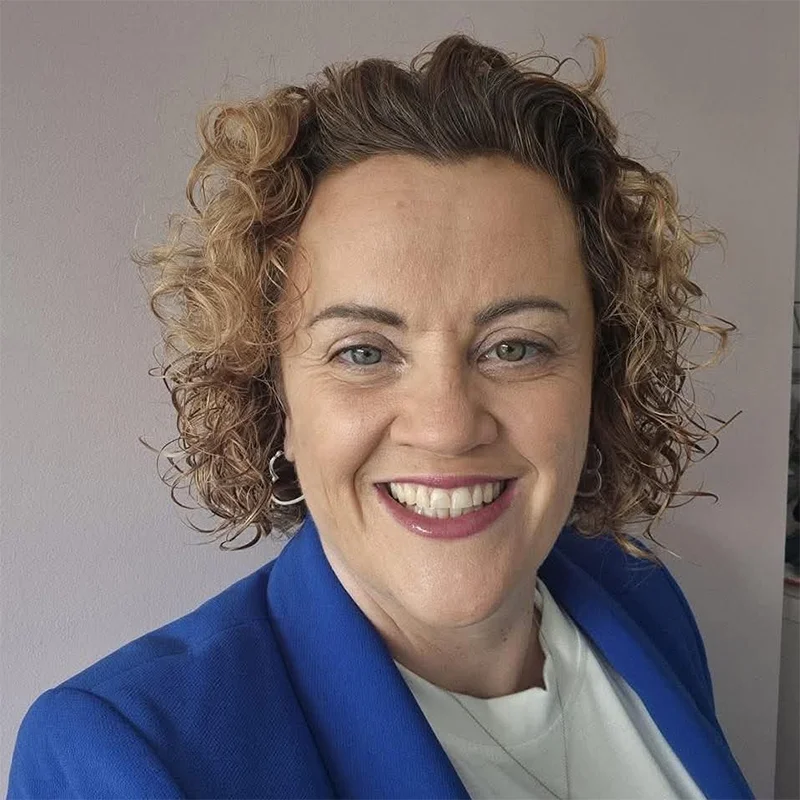
Lisa Capper
- MNCPS
Integrative Counsellor, Clinical Supervisor & Coach — Hope Therapy & Counselling Services
Lisa is an experienced integrative counsellor, clinical supervisor, and coach with a background in the care sector, where she developed a deep understanding of supporting neurodivergent individuals and their families. Her experience enables her to adapt therapy to each person’s unique needs and life circumstances.
Lisa holds an L4 Diploma in Therapeutic Counselling, an Advanced CBT Diploma, and additional qualifications in Clinical Supervision, Rewind Therapy, Transactional Analysis (TA), Emotionally Focused Tapping (EFT), and Life Coaching. She is an Accredited Member of the National Counselling & Psychotherapy Society (NCPS) and is committed to ongoing professional development.
Her specialist interests include PMDD, perimenopause and menopause, neurodivergence, bereavement, domestic and narcissistic abuse, anxiety, and trauma. Lisa also brings lived experience of PMDD to her work, combining professional expertise with personal insight into the challenges of hormonal mental health.
Lisa provides a warm, compassionate, and collaborative environment where clients can explore their experiences safely and without judgement. Drawing on an integrative approach, she tailors therapy to each individual, helping clients better understand themselves, overcome life’s challenges, and create lasting positive change.
- NCPS Accredited Member
- L4 Diploma in Therapeutic Counselling
- Advanced CBT Diploma
- Clinical SupervisorIntegrative Counsellor
- PMDD Specialist
- Women’s Hormonal Mental Health
- Neurodivergent-Affirming
Free 15-minute consultation
A no-pressure conversation to find the right therapist for you. No commitment needed.
THE AUTHOR
Lisa Capper
MNCPS
Integrative counsellor, clinical supervisor, and coach specialising in PMDD, neurodivergence, trauma, and women’s hormonal mental health.
ABOUT HOPE THERAPY
Qualified registered therapists
Online nationwide across UK
Face-to-face across England
LGBTQIA+ & neurodivergent affirming
Mon–Sun, 9am–9pm
NCPS organisational member
Est 2014
Published: 6th September 2026 | Written by Lisa Capper | Reviewed for clinical accuracy before publishing | Review due: September 2028