BLOG
Men and Anger: Why It Is So Hard to Ask for Help
- By Ian Stockbridge
- Founder & Clinical Director, Hope Therapy & Counselling Services
- 18th September 2026
- 9–13 minutes
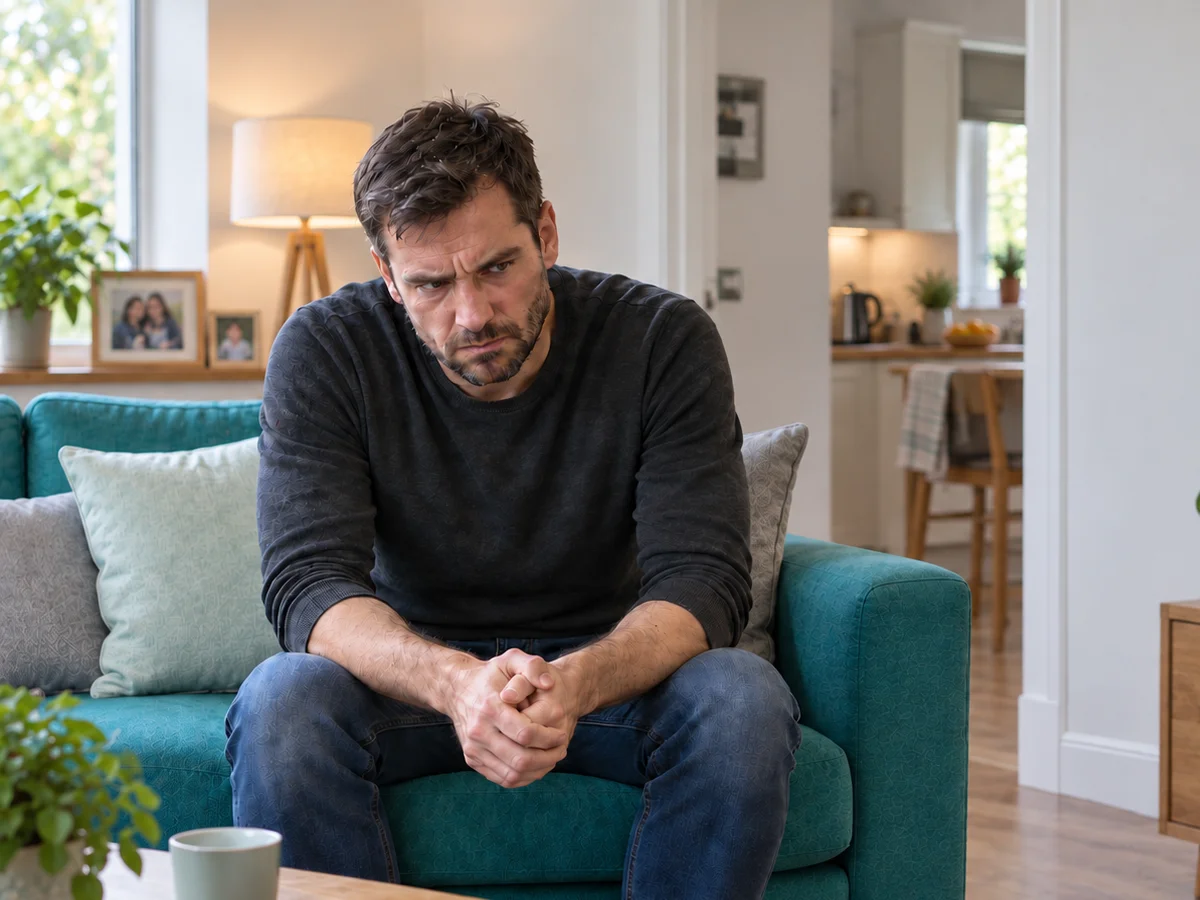
Men are considerably less likely to seek help for emotional difficulty than women, and considerably more likely to reach some kind of crisis before they eventually do. Anger sits close to the centre of that, for reasons that have very little to do with men being angrier by nature.
If you have been turning over the idea of anger management counselling for a while and have not yet actually done anything about it, this article is about why that gap exists, what tends to sit underneath the anger, and what really happens when men do finally pick up the phone.
This article is intended for general information and educational purposes only and should not be considered medical, psychiatric, psychological, or therapeutic advice. Every person’s circumstances are unique, and reading this article does not create a therapeutic relationship with Hope Therapy & Counselling Services. If you are concerned about your mental health or emotional wellbeing, we encourage you to seek support from a suitably qualified healthcare or mental health professional. Hope Therapy & Counselling Services offers a free 15-minute consultation – book yours now.
Why Is Anger So Often the Available Emotion?
Most boys learn, without anyone stating it, which feelings are acceptable to show. Fear is generally not among them. Sadness is tolerated briefly and under specific circumstances. Vulnerability tends to attract a response that teaches it should not be repeated.
Anger frequently survives that filtering. It is read as strength rather than weakness, and it produces a response, people take notice, things happen. Over years this produces a narrowing, where a wide range of internal states arrives at the surface as the one expression that was never discouraged.
The practical consequence is that anger in men is often not really anger. It is fear, or shame, or grief, or exhaustion, arriving in the only form that has ever been permitted. This is why men are sometimes genuinely baffled by their own reactions, the feeling underneath was never labelled, so there is no accurate account available of what actually happened.
None of this is an excuse for the effect on other people. It is an explanation of the mechanism, and mechanisms can be worked with in a way that character flaws cannot.
It is worth noticing how early this starts. The filtering is largely complete well before adolescence, which means most men are working from a set of rules they never consciously adopted and have never had occasion to examine. That is not a comfortable thing to look at, and it is considerably more workable than the alternative explanation, which is that you are simply an angry person.
“Anger in men is often not really anger. It is fear, shame, grief or exhaustion, arriving in the only form that was ever permitted.”
Why Is Asking for Help So Difficult?
The barriers are real and worth naming individually, because men who have been putting this off usually recognise at least one immediately.
Asking is coded as failure
Many men are working from a model in which handling things alone is the whole point, and needing help is not a neutral practical step but an admission about the kind of man you are. That is a considerable barrier and it does not respond to being told it is outdated. What tends to shift it is the recognition that the current approach has been tested extensively and the results are available for inspection.
The picture of what counselling involves
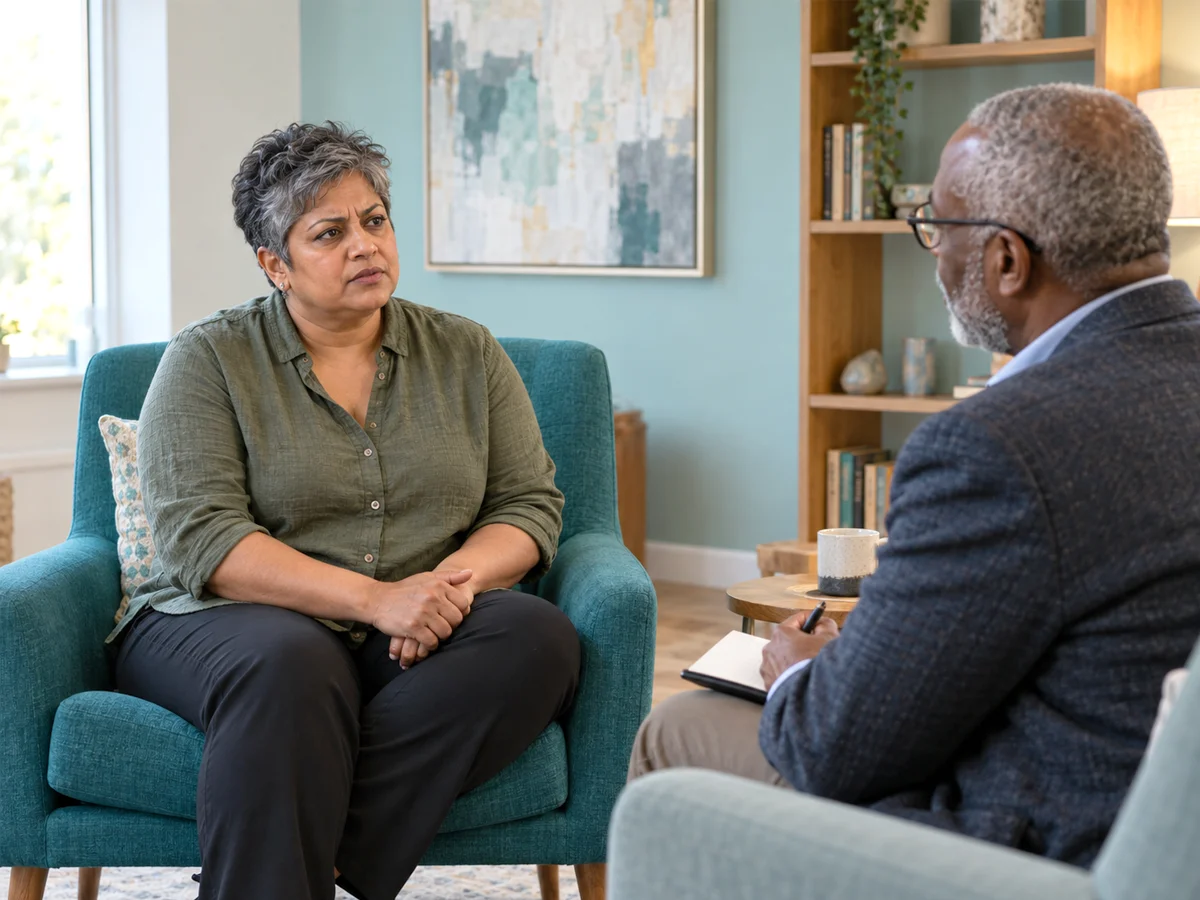
A common expectation is a room in which you are expected to cry, discuss your childhood at length, and be told the problem is you. It is worth being clear that this is not what happens. Counselling for anger tends to be practical and specific, what happened, what preceded it, what was going on in the hours beforehand. It works from the concrete towards the underlying, not the reverse, and nobody is going to insist you produce a feeling you do not have.
What Does Anger Management Counselling Actually Involve?
First, a distinction that stops a lot of men before they start. Anger management counselling at Hope Therapy is voluntary work that you have chosen. We do not run court-mandated programmes or employer-mandated courses. Nobody reports on your attendance and nobody is compiling anything.
Early sessions are mostly mapping. A counsellor will want a specific incident in detail, not to judge it, but because the useful information is in the sequence. What happened immediately before. What you noticed physically. The point at which it stopped being possible to interrupt. Most men have never been asked these questions and are surprised by what the answers reveal. Anger that felt instantaneous almost always turns out to have had a build-up that was simply never registered.
From there the work goes in two directions. The practical one is identifying the earlier warning signs and building genuine options at that stage, while options still exist. The deeper one is what the anger has been doing for you, because it is usually doing something, often protecting against a feeling that is harder to be in.
Our anger counselling page sets out how we work, and men’s mental health covers the wider picture.
Sessions are usually weekly or fortnightly at the start, and there is no fixed length. Some men do a focused piece of work over a couple of months; others continue longer where the anger connects to something older. Progress is rarely linear, and a setback is not evidence that it is not working — it is information about what the conditions were when it happened.
If this feels familiar
A great many men say the same thing in a first session: that the anger does not feel like them, and that they are frightened of what it might eventually cost. That is a difficult sentence to say out loud, and it is very often where things begin to change. A free 15-minute consultation is a conversation, not a commitment. Nobody is assessing you.
What Tends to Sit Underneath It?
The specifics vary, but certain themes recur often enough to be worth setting out.
Exhaustion and the lowered threshold
This is the most common contributor and the most consistently underestimated. Anger that appears from nowhere at home is frequently the residue of a working life spent holding everything in, released at the first point in the day where holding it is no longer required. Chronic stress lowers the threshold for everybody, and men who describe a sudden deterioration are usually describing a change in their circumstances rather than a change in who they are.
Humiliation, grief, and what was modelled
A great deal of explosive anger turns out, on inspection, to be a response to feeling small, exposed or not taken seriously, at work, in a relationship, or in front of the children. Grief surfaces as irritability far more often than as sadness, which is why bereaved men are sometimes startled by how furious they feel. And there is the more straightforward matter of what was modelled: if raised voices were how disagreement was conducted in the house you grew up in, the same pattern tends to reappear, frequently at the exact moment you had promised yourself it would not.
What About the Cost of Doing Nothing?
Men typically arrive at counselling later than women and after more has already happened, which is worth stating plainly rather than leaving implied.
The most common prompt is a relationship reaching a point of no return, or a partner making it a condition. By then a good deal of repair work is required that would not have been necessary a year earlier. Contact with children is another frequent trigger. Occasionally it is work.
The pattern in all of these is that the decision gets made by circumstances rather than by the person. That is a poor way to arrive at anything, and it forecloses options that were available earlier.
It is also worth saying that nothing dramatic is required to justify a conversation. You do not need an incident to point to. Noticing that you are becoming someone you would rather not be is a sufficient reason on its own, and it is one of the more common reasons men give.
There is one further pattern worth naming. Men frequently describe a specific moment that made the decision for them, a look on a child’s face, or catching their own reflection mid-argument. If you have had one of those, it tends to stay with you, and it is generally a more reliable signal than any reasoning you can construct around it afterwards.
When It Needs More Than Counselling
There are situations where weekly sessions are not the right or sufficient response, and it would be dishonest not to say so.
It is worth being specific about why. Counselling works with what a person can choose to do differently. Where someone else’s physical safety is the immediate issue, the priority is that safety first, and that is a different service with different expertise. A counsellor who proceeded regardless would be prioritising the appearance of helping over the thing that actually matters.
Where anger is being expressed physically towards a partner, a child, or anyone else, that requires a different and more urgent kind of help. Specialist services exist for this and a responsible counsellor will be direct with you about it rather than proceeding as though counselling alone were enough.
Where anger sits alongside significant difficulties with mood, or with alcohol, those generally need addressing in their own right rather than being treated as secondary to the anger.
And where episodes are frequent, extreme and markedly out of proportion, a conversation with your GP is sensible alongside anything else, sleep problems, pain, and some neurodevelopmental differences all affect emotional regulation, and a counsellor is not the person to assess them.
If you are having thoughts of ending your life, please contact your GP, call NHS 111, or call the Samaritans free on 116 123 at any hour. Hope Therapy does not provide crisis support. Men are statistically less likely to make that call, and it is worth knowing that doing so is not weakness, it is the thing that works.
Ready to Take the First Step?
Most men who eventually get in touch describe having thought about it for a long time first, often years. A free 15-minute consultation is simply a conversation, you describe what has been going on, we talk about whether it would help, and you decide afterwards. Nobody is assessing you, nobody will judge what you say, and there is no obligation to book anything at all.
- Free 15-minute consultation
- No commitment
- Qualified & registered therapists
- LGBTQIA+ affirming support
- NCPS organisational member
- Online nationwide
- Face-to-face across England
- Established 2014
This article is intended for general information and educational purposes only and should not be considered medical, psychiatric, psychological, or therapeutic advice. Every person’s circumstances are unique, and reading this article does not create a therapeutic relationship with Hope Therapy & Counselling Services. If you are concerned about your mental health or emotional wellbeing, we encourage you to seek support from a suitably qualified healthcare or mental health professional. Hope Therapy & Counselling Services offers a free 15-minute consultation – book yours now.
Frequently Asked Questions
Why is anger often the main emotion men express?
Most boys learn early which feelings are acceptable to show, and anger frequently survives that filtering when fear, sadness and vulnerability do not. Over years this produces a narrowing, where a wide range of internal states arrives at the surface as the one expression that was never discouraged. Anger in men is often fear, shame, grief or exhaustion in the only available form.
Is anger management counselling the same as a court-ordered programme?
No. Hope Therapy offers voluntary counselling that you have chosen, not court-mandated programmes or employer-mandated courses. Nobody reports on your attendance. Mandated programmes follow a fixed curriculum and measure attendance; counselling follows what is actually happening for you and begins with understanding rather than correction.
What actually happens in the first anger counselling session?
Mostly mapping. A counsellor will want a specific incident in detail, what happened immediately before, what you noticed physically, and the point at which it stopped being possible to interrupt. The work moves from the concrete towards the underlying, not the reverse, and nobody will insist you produce a feeling you do not have.
Do I need something serious to have happened before seeking help?
No. Men typically arrive later than women and after more has already happened, often prompted by a relationship reaching a crisis point. Noticing that you are becoming someone you would rather not be is a sufficient reason on its own, and it is one of the more common reasons men give for getting in touc.
Find the Right Support for You
Our general counselling services page can help you determine what sort of therapy may be suitable for you.
Get Help With Other Conditions
Our general conditions page is a great place to start.
THE AUTHOR

Ian Stockbridge
- MBACP (Senior Accredited)
Founder & Clinical Director — Hope Therapy & Counselling Services
MBACP (Senior Accredited) · SNCPS (Acc) · BSc (Hons) CBT · PGCert Clinical Supervision
Founder of Hope Therapy, published author, clinical supervisor, and co-presenter of The Talk Room Podcast. Practising therapist with 25+ years of senior leadership experience.
Before Ian Stockbridge was a therapist, he was a leader. For more than 25 years he worked in senior management and directorial roles across commercial organisations — at times managing teams of more than 200 people. He was effective at it. But the longer he did it, the harder something became to ignore. The people around him were struggling. Capable, committed, often high-achieving people carrying invisible weight that had nowhere to go. Stress accumulated quietly across months and years. Anxiety managed behind professionalism. Relationships and mental health dealt with in the margins of a working life that left little room for either.
- SCoPEd Band C
- SNCPS (Acc)
- BSc (Hons) CBT
- PGCert Clinical Supervision
- Diploma — Person-Centred Counselling
- Diploma — Mindfulness-Based Cognitive Therapy
- Certificate — Acceptance & Commitment Therapy
- Certificate — Trauma
- Certificate — CBT for Insomnia
- 25+ Years Leadership
- Clinical Supervisor
- Published Author
- Podcast Co-Host
- LGBTQIA+ Affirming
Free 15-minute consultation
A no-pressure conversation to find the right therapist for you. No commitment needed.
ABOUT THE AUTHOR
Ian Stockbridge
MBACP (Senior Accredited)
Founder of Hope Therapy, published author, clinical supervisor, and co-presenter of The Talk Room Podcast. Practising therapist with 25+ years of senior leadership experience.
ABOUT HOPE THERAPY
Qualified registered therapists
Online nationwide across UK
Face-to-face across England
LGBTQIA+ & neurodivergent affirming
Mon–Sun, 9am–9pm
NCPS organisational member
Est 2014
Published: 18th September 2026 | Written by Ian Stockbridge | Reviewed for clinical accuracy before publishing | Review due: September 2026 2028