BLOG
Hypervigilance: Why you can’t switch off
- By Ian Stockbridge
- Founder & Clinical Director, Hope Therapy & Counselling Services
- 15th October 2026
- 8–13 minutes
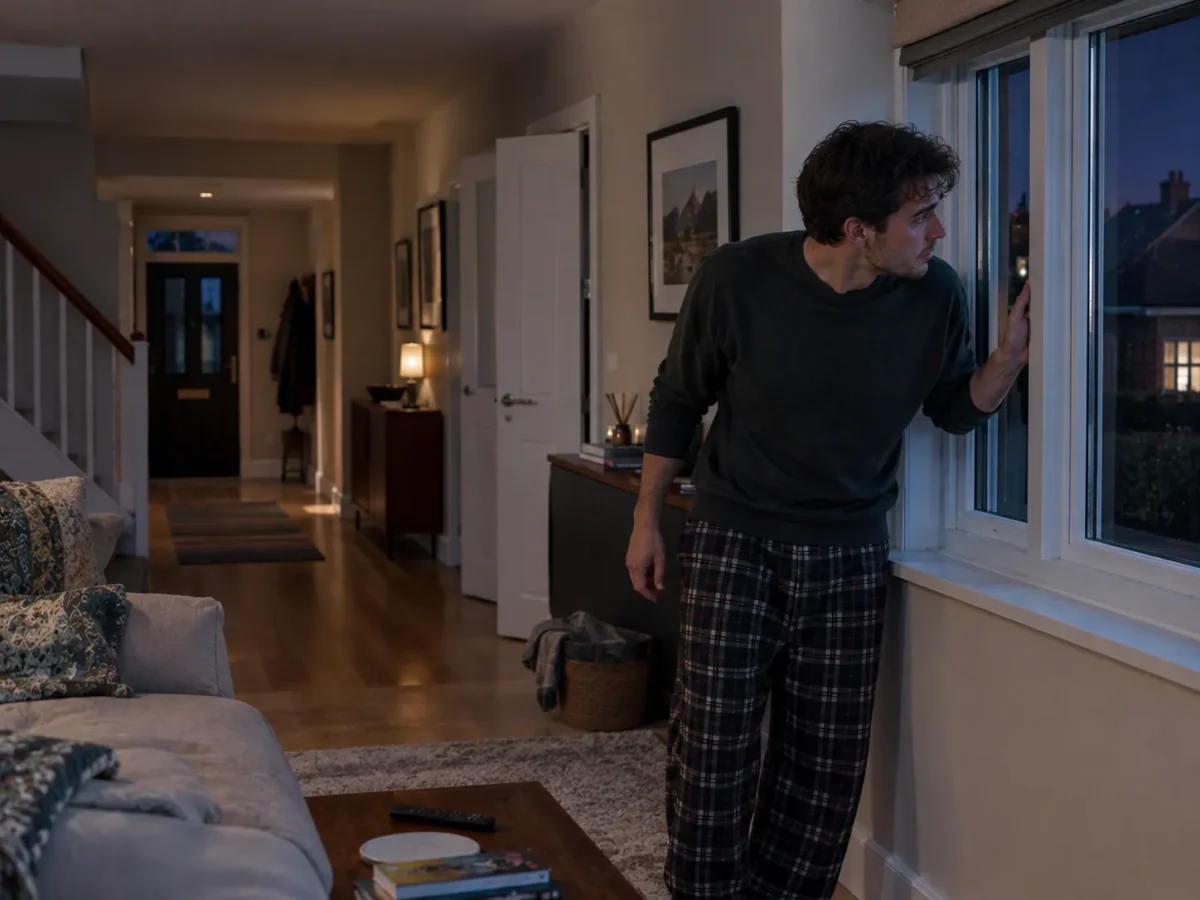
You walk into a room and immediately clock the exits. A door slams down the corridor and your heart leaps into your throat. A friend’s slightly flat tone keeps you awake, replaying the conversation for clues. Even on a quiet evening at home, part of you stays on duty, scanning for the next thing that might go wrong.
If that sounds familiar, you may be living with hypervigilance. It’s one of the most common, and most exhausting, ways that past stress and trauma can echo into the present. This article explains what it is, why it happens, what hypervigilance symptoms can look like and what may help.
This article is intended for general information and educational purposes only and should not be considered medical, psychiatric, psychological, or therapeutic advice. Every person’s circumstances are unique, and reading this article does not create a therapeutic relationship with Hope Therapy & Counselling Services. If you are concerned about your mental health or emotional wellbeing, we encourage you to seek support from a suitably qualified healthcare or mental health professional. Hope Therapy & Counselling Services offers a free 15-minute consultation – book yours now.
What Is Hypervigilance?
Hypervigilance is a state of heightened alertness in which your mind and body stay on the lookout for danger, even when you are safe. It often develops after trauma or long periods of stress. The brain’s threat system learns to stay switched on, constantly scanning people, places and situations for signs of risk.
The hypervigilance meaning is simple enough: being over-alert. The experience is anything but simple. It can affect sleep, concentration, relationships and how safe you feel in your own home.
It’s important to understand that hypervigilance isn’t a character flaw or a sign of being dramatic. It’s a protective response that once made sense. If you’ve lived through frightening, unpredictable or overwhelming experiences, staying alert may have helped you cope.
The difficulty is that the alarm doesn’t always switch off when the danger passes. Your body can go on behaving as though the threat is still there, long after your mind knows it isn’t. That gap between knowing and feeling safe is where so much of the exhaustion comes from.
What Are the Symptoms of Hypervigilance?
Common hypervigilance symptoms include constantly scanning your surroundings, being easily startled, difficulty relaxing or sleeping, overthinking conversations and reading danger into neutral situations. Many people also notice physical signs, such as muscle tension, a racing heart and feeling tired from being permanently on edge.
Not everyone experiences all of these signs, and they can come and go depending on your stress levels and circumstances. You might feel fairly settled for weeks, then find the old alertness roaring back after a difficult event.
It can also be surprisingly hard to notice in yourself. When you’ve been on alert for a long time, it simply feels normal. Sometimes other people spot it first: a partner who notices you always sit facing the door, or a friend who comments on how jumpy you are. The three areas below are where hypervigilance symptoms tend to show up most, although everyone’s mix is a little different.
In Your Body
Your body may feel as though it’s braced for impact. Shoulders tense, jaw clenched, breathing shallow. Loud noises or sudden movements can make you jump far more than other people. Sleep may be light and easily disturbed, and you might wake at the smallest sound. Over time, this constant state of readiness can lead to headaches, fatigue and a feeling of being worn out without having done anything particularly demanding. Your body is working hard, even when you’re sitting perfectly still.
In Your Mind
Your thoughts may constantly check for what could go wrong. You might plan escape routes, rehearse worst-case scenarios or struggle to concentrate because part of your attention is always elsewhere. Crowded or unfamiliar places can feel especially draining. Some people describe it as having a security guard in their head who never takes a break. That guard may once have been truly essential. Now it may be making everyday life much harder than it needs to be, and it may be ready for some relief.
In Your Relationships
Hypervigilance in relationships often shows up as reading tiny changes in tone, expression or mood. You might notice a partner’s sigh and immediately wonder what you’ve done wrong. Emotional hypervigilance can make it hard to trust, relax or believe that closeness is safe. You may find yourself people-pleasing to keep the peace at all costs, or pulling away before anyone can hurt you. These patterns make sense in light of the past, but they can be lonely and tiring to maintain.
Why Does Hypervigilance Happen?
Hypervigilance happens when the brain’s threat system adapts to past danger by staying on high alert. After trauma, repeated stress or growing up in an unpredictable environment, the nervous system can learn that the world is unsafe. It then keeps scanning for threats as a way of protecting you, even in situations that are actually safe.
Think of it as a smoke alarm that’s become too sensitive. Its job was to protect you from fire. Now it goes off every time someone makes toast.
Hypervigilance is closely linked to post-traumatic stress disorder (PTSD) and complex trauma, but you don’t need a diagnosis to experience it. Many people develop it after difficult relationships, bullying, a frightening event or years of chronic stress.
It can also link to anxiety, and sometimes to neurodivergence, where the brain already processes sensory input more intensely. Whatever its roots, hypervigilance is your system trying to keep you safe. Understanding that can make it easier to approach it with compassion rather than frustration.
How Does Hypervigilance Affect Everyday Life?
Living with hypervigilance can be exhausting. It can make it hard to concentrate at work, enjoy time with friends, sleep well or feel at ease in your own home. Many people also find it affects their relationships and self-esteem, because they feel constantly on edge and struggle to explain why to others.
You might avoid busy places, cancel plans at the last minute or feel drained after ordinary social events. Colleagues may see you as highly conscientious, not realising how much energy it takes to stay that alert.
At home, you might struggle to switch off in the evenings. Relaxing can even feel unsafe, as if letting your guard down invites something bad to happen.
Perhaps the hardest part is the loneliness. When nobody else seems to feel this way, it’s easy to believe something is wrong with you. Nothing is wrong with you. Your system learned to protect you, and now it may need help learning that it can rest.
If you’ve been living on high alert for a long time, you don’t have to keep carrying it alone
Our counsellors work with people affected by trauma and chronic stress online across England, and face to face where a suitable therapist is available. A free, no-obligation 15-minute conversation. No pressure — just a chance to explore whether we can help
What Can Help With Hypervigilance?
Many people find that hypervigilance eases gradually when they feel safer in their body, understand what’s driving it and have support to process the experiences behind it. Grounding techniques, gentle routines and trauma-informed counselling can all help. Change is usually slow and steady, rather than sudden, and that’s completely normal.
There’s no switch you can flip to turn hypervigilance off. The aim is to help your system learn, a little at a time, that it can stand down.
It helps to be patient with yourself. A nervous system that has been on alert for years won’t settle overnight. Small moments of feeling safe, repeated often, tend to add up. Over months, many people notice they startle a little less, sleep a little better or can sit with their back to a room without it feeling unbearable. Those small shifts are worth noticing and celebrating, because they show your system is learning. The ideas below can support that process.
Help Your Body Feel Safe
Grounding techniques bring your attention back to the present. You might press your feet into the floor, name five things you can see or breathe slowly with a longer out-breath. Gentle movement, such as walking or stretching, can also release tension. Creating predictable routines, especially around sleep and mealtimes, can help too, because predictability itself feels safe. These practices won’t stop every alarm, but they can give your body more moments of feeling settled, and those moments matter more than they might seem.
Be Kind to the Part of You That Keeps Watch
It’s easy to feel frustrated with yourself for being jumpy or on edge. Try, instead, to see the alertness as a loyal part of you that has worked very hard to keep you safe. You might even thank it, silently, when you notice it switching on. That can sound strange at first. Many people find that meeting the alarm with kindness, rather than irritation, helps it quieten more quickly than pushing against it ever did. It’s a small shift in attitude that can take real pressure off.
Talk to Someone Who Understands Trauma
Trauma and PTSD counselling can offer a safe, paced space to explore what’s behind the hypervigilance. Approaches such as trauma-focused CBT (Cognitive Behavioural Therapy) and EMDR, which stands for Eye Movement Desensitisation and Reprocessing, aim to help you process memories that feel stuck. Your counsellor will explain how confidentiality works, including its limits. Our dedicated page on trauma explains more about how trauma can affect you and those around you. Sessions can take place online across England, or face to face where available.
Where Could You Start?
You don’t need to understand every root of your hypervigilance to start feeling a little safer. You might begin by noticing the moments when you feel most on edge, and what seems to trigger them. A few notes on your phone can help you spot patterns over a week or two. You might try one grounding technique today, just to see how it feels in your body.
If hypervigilance is affecting your sleep, work or relationships, it’s also worth speaking to your GP. And whenever you’d like to talk it through, a short conversation with our team is a gentle first step, at a pace that feels right for you.
Ready to Take the First Step?
If part of you has been on duty for as long as you can remember, you deserve support that helps it finally rest. A free, no-obligation 15-minute conversation is a good place to start. No pressure — just a chance to explore whether we can help, online or face to face where available
- Free 15-minute consultation
- No commitment
Need urgent help? Our service is not a crisis line. If you or someone you know is in immediate danger please: call ; call the Samaritans on (free, confidential, 24/7); text SHOUT to 85258; or call Childline on (under 19 — free and confidential, any time).
- Qualified & registered therapists
- LGBTQIA+ affirming support
- NCPS organisational member
- Online nationwide
- Face-to-face across England
- Established 2014
This article is intended for general information and educational purposes only and should not be considered medical, psychiatric, psychological, or therapeutic advice. Every person’s circumstances are unique, and reading this article does not create a therapeutic relationship with Hope Therapy & Counselling Services. If you are concerned about your mental health or emotional wellbeing, we encourage you to seek support from a suitably qualified healthcare or mental health professional. Hope Therapy & Counselling Services offers a free 15-minute consultation – book yours now.
Frequently Asked Questions
What is hypervigilance?
Hypervigilance is a state of heightened alertness in which your mind and body stay on the lookout for danger, even when you are safe. It often develops after trauma or long periods of stress, when the brain’s threat system learns to stay switched on.
What are the symptoms of hypervigilance?
Common symptoms include constantly scanning your surroundings, being easily startled, difficulty relaxing or sleeping and reading danger into neutral situations. Many people also notice physical signs, such as muscle tension, a racing heart and feeling tired from being permanently on edge.
Why does hypervigilance happen?
It happens when the brain’s threat system adapts to past danger by staying on high alert. After trauma, repeated stress or an unpredictable environment, the nervous system can keep scanning for threats as a way of protecting you, even in situations that are safe.
What can help with hypervigilance?
Many people find it eases gradually when they feel safer in their body, understand what’s driving it and have support to process the experiences behind it. Grounding techniques, gentle routines and trauma-informed counselling can all help.
Find the Right Support for You
Our general counselling services page can help you determine what sort of therapy may be suitable for you.
Get Help With Other Conditions
Our general conditions page is a great place to start.
ABOUT THE AUTHOR

Ian Stockbridge
- MBACP (Senior Accredited)
Founder & Clinical Director — Hope Therapy & Counselling Services
Founder of Hope Therapy, published author, clinical supervisor, and co-presenter of The Talk Room Podcast. Practising therapist with 25+ years of senior leadership experience.
Before Ian Stockbridge was a therapist, he was a leader. For more than 25 years he worked in senior management and directorial roles across commercial organisations — at times managing teams of more than 200 people. He was effective at it. But the longer he did it, the harder something became to ignore. The people around him were struggling. Capable, committed, often high-achieving people carrying invisible weight that had nowhere to go. Stress accumulated quietly across months and years. Anxiety managed behind professionalism. Relationships and mental health dealt with in the margins of a working life that left little room for either.
- SCoPEd Band C
- SNCPS (Acc)
- BSc (Hons) CBT
- PGCert Clinical Supervision
- Diploma — Person-Centred Counselling
- Diploma — Mindfulness-Based Cognitive Therapy
- Certificate — Acceptance & Commitment Therapy
- Certificate — Trauma
- Certificate — CBT for Insomnia
- 25+ Years Leadership
- Clinical Supervisor
- Published Author
- Podcast Co-Host
- LGBTQIA+ Affirming
Free 15-minute consultation
A no-pressure conversation to find the right therapist for you. No commitment needed.
THE AUTHOR
Ian Stockbridge
MBACP (Senior Accredited)
Founder of Hope Therapy, published author, clinical supervisor, and co-presenter of The Talk Room Podcast. Practising therapist with 25+ years of senior leadership experience.
ABOUT HOPE THERAPY
Qualified registered therapists
Online nationwide across UK
Face-to-face across England
LGBTQIA+ & neurodivergent affirming
Mon–Sun, 9am–9pm
NCPS organisational member
Est 2014
Published: 15th October 2026 | Written by Ian Stockbridge | Reviewed for clinical accuracy before publishing | Review due: October 2028