
By Mya, MBACP
Integrative Counsellor & Clinical Hypnotherapist
Many LGBTQIA+ people go through life without experiencing identity-based trauma. Others, however, carry wounds that were never caused simply by life’s ordinary ups and downs, but by being treated differently because of who they are. Rejection by a family that struggled to accept them. Being targeted because of their gender identity or sexual orientation. Years of hearing, directly or indirectly, that who they are is somehow wrong, shameful or less worthy than other people.
These experiences can cause genuine psychological harm. Not because there is anything wrong with being LGBTQIA+, but because repeated rejection, discrimination or violence can change the way we experience ourselves, other people and the world around us. This form of harm has a name: identity-based trauma. Understanding it can often be the first step towards understanding ourselves with greater compassion, and recognising that healing is possible.
This article is intended for general information and educational purposes only and should not be considered medical, psychiatric, psychological, or therapeutic advice. Every person’s circumstances are unique, and reading this article does not create a therapeutic relationship with Hope Therapy & Counselling Services. If you are concerned about your mental health or emotional wellbeing, we encourage you to seek support from a suitably qualified healthcare or mental health professional. Hope Therapy & Counselling Services offers a free 15-minute consultation – book yours now.
What Identity-Based Trauma Is
Identity-based trauma refers to the psychological harm caused by experiences of discrimination, rejection, abuse, or violence that are specifically directed at a person’s identity — including their sexual orientation, gender identity, or gender expression. It is a form of trauma in the full clinical sense: an experience, or pattern of experiences, that overwhelms the person’s capacity to process and integrate what has happened, and that leaves lasting effects on how they think, feel, relate to others, and experience themselves.
Identity-based trauma is not a metaphor for finding life difficult. It describes genuine psychological harm with genuine and lasting consequences. Research consistently shows that LGBTQIA+ people are more likely than the general population to experience discrimination, harassment, rejection and, in some cases, violence because of their identity. Many people will never experience these events, while others may experience several across their lifetime. When identity-based trauma does occur, it is important to recognise that the harm is caused by what has happened to the person, not by who they are.
Sometimes the impact becomes easier to understand through someone’s own words.
“We were just walking home after a film, laughing and holding hands, when a group of people started shouting at us from across the street. The words weren’t just insults; they were aimed at who we were. When a bottle smashed nearby and we had to run, something inside me changed. If someone steals from you, they want your wallet. When someone targets you because you’re LGBTQIA+, it can feel as though they’re attacking your right to exist. Since then, I’ve found myself scanning every street, every stranger, wondering whether I’m safe.”
Experiences like this are sadly familiar for some LGBTQIA+ people. Others may never encounter anything similar. Identity-based trauma is not defined by one particular event but by the impact that experiences of rejection, discrimination or violence can have on a person’s sense of safety, identity and belonging.
Free 15-minute consultation
A calm, supportive and no-pressure conversation to help you find the right therapist for your needs.
The Forms It Takes
Family rejection and conditional acceptance
For many LGBTQIA+ people, the earliest and most significant source of identity-based harm is the family. Rejection — explicit or implicit, sudden or gradual — by parents, siblings, or the wider family network when a person’s LGBTQIA+ identity becomes known is one of the most consistently reported traumatic experiences in research with this community. It carries particular weight because it occurs within the relationship that is supposed to be the primary source of safety and unconditional acceptance. The harm of family rejection is not only in the practical consequences — though those can be severe — but in what it does to a person’s fundamental sense of whether they are safe to be who they are, and whether they are worthy of love as they actually are.
Discrimination, harassment, and harm
Experiences of discrimination in healthcare, education, and employment; harassment in public and social spaces; and harm motivated by anti-LGBTQIA+ prejudice all constitute forms of identity-based trauma. These experiences vary significantly in severity and type, and their effects depend on many factors — including how they are responded to, whether they occur in isolation or as part of a pattern, and what resources the person has available to them at the time. What they share is that they direct specific harm at a person’s identity, and that they leave traces in how a person subsequently relates to the world.
The cumulative harm of repeated smaller experiences
Not all identity-based trauma takes the form of dramatic, identifiable events. For many LGBTQIA+ people, the more significant harm is cumulative — built from a long series of smaller experiences that individually seem manageable but that accumulate over time into something more serious. The repeated comment that reveals an assumption. The space that does not quite acknowledge who you are. None of these is, on its own, a traumatic event in the clinical sense. The pattern of them, sustained over years, can produce effects that closely resemble those of more acute trauma: hypervigilance, difficulty trusting, a persistent sense of being at risk in social environments.
How Trauma Affects the Way We Function
Trauma — including identity-based trauma — affects the whole person, not only their memories of what happened. It changes how the body responds to perceived threat, often leaving the nervous system in a state of heightened readiness that persists long after the original source of danger has passed. It changes how a person relates to others, frequently making trust more difficult and the sense of safety in relationships harder to establish. It changes how a person relates to themselves: their sense of their own worth, their confidence in their right to take up space, their relationship to their own identity.
These effects can persist for years, operating largely below the level of conscious awareness. A person may not think of themselves as traumatised. They may simply notice that certain situations feel disproportionately threatening, that trust is harder than it perhaps should be, that a persistent background anxiety does not quite go away even when circumstances improve. Recognising the connection between these experiences and the identity-based harm they have encountered is often an important part of what counselling can offer.
What Trauma-Aware Counselling Can Offer
Trauma-informed counselling does not begin by asking a person to revisit in detail everything that has happened to them. It begins by establishing a therapeutic relationship that is itself safe — where the person feels understood, held, and not at risk of further harm. From that foundation, the work can develop at a pace the person can manage, in directions they can actually go, towards an understanding of what has happened and its effects that makes the present more navigable.
For identity-based trauma specifically, this means a counsellor who understands the particular forms that LGBTQIA+ trauma takes — who does not require the person to explain their identity before the work can begin, who grasps the significance of family rejection without having it described, who understands why certain environments feel threatening without needing a full account of what has happened in them. That grounded, informed understanding changes the quality of the space available.
What counselling cannot do is resolve what has happened or remove its traces entirely. What it can offer is a sustained, genuinely supported process of making sense of experience, rebuilding a different relationship with the self and with others, and finding ways of living that are less constrained by what has been done. That process takes time, and it does not follow a predictable path. For many people who have carried identity-based trauma for years, it is also a genuine relief to finally have a space in which all of it can be brought without the work of managing how it lands.
Free 15-minute consultation
A no-pressure conversation to find the right therapist for you. No commitment needed.
ABOUT THE AUTHOR
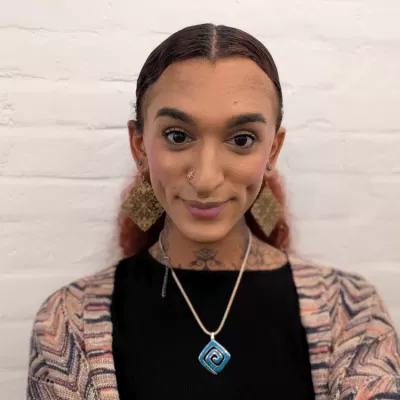
Mya Campbell
MBACP
Integrative counsellor, clinical hypnotherapist, and LGBTQIA+ charity counsellor specialising in identity, authenticity, men’s mental health, and neurodiversity-informed counselling.
- Explore whether same-sex or queer couples counselling may be a helpful option for communication, trust, intimacy, conflict or relationship strain
- Work with therapists who respect your relationship, identity, family context and lived experience without making assumptions about roles, labels or relationship structure
- Talk through differences in openness, family recognition, relationship expectations or repeated patterns in a steady and affirming therapeutic setting
- Free, no-commitment 15-minute consultation to ask questions and explore whether Hope Therapy feels like the right place for you both to begin
ABOUT HOPE THERAPY
Qualified registered therapists
Online nationwide across UK
Face-to-face across England
LGBTQIA+ & neurodivergent affirming
Mon–Sun, 9am–9pm
NCPS organisational member
Est 2014
Ready to Take the First Step?
Reaching out for support can feel difficult, especially when you have been carrying everything quietly for a long time. At Hope Therapy & Counselling Services, we offer calm, compassionate and professional support tailored to your needs — online across the UK and in-person at selected clinics.
- Free 15-minute consultation
- No pressure or obligation
- Online across the UK and in-person clinics
- Qualified & registered therapists
- LGBTQIA+ affirming support
- NCPS organisational member
- Online nationwide
- Face-to-face across England
- Established 2014
🌈 Pride Month Reflection
Pride is often associated with visibility and celebration, but for many LGBTQIA+ people it is also about feeling safe, understood and accepted. Finding a therapist who genuinely understands your experiences can be an important part of that journey.
Frequently Asked Questions
What is identity-based trauma?
Identity-based trauma is the psychological harm that can happen when someone is rejected, targeted, discriminated against or made unsafe because of who they are. For LGBTQIA+ people, this may relate to sexuality, gender identity or gender expression. The harm is not caused by being LGBTQIA+; it is caused by how someone has been treated.
Do all LGBTQIA+ people experience identity-based trauma?
No. Many LGBTQIA+ people do not experience identity-based trauma. Others may experience rejection, discrimination, harassment or fear in ways that leave a lasting impact.
How can identity-based trauma affect someone?
It can affect how safe someone feels in the world, how easily they trust others and how they relate to themselves. Some people may feel constantly on guard, avoid certain places, struggle with shame or feel anxious in situations that remind them of past harm.
Can counselling help with identity-based trauma?
Yes. Trauma-aware and LGBTQIA+ affirming counselling can provide a safe space to understand what has happened, process its impact and begin rebuilding a stronger sense of safety and self-compassion.
What does healing from identity-based trauma look like?
Healing does not mean forgetting what happened. It may mean feeling less constantly on guard, trusting yourself and others more, developing greater self-compassion and feeling that your identity is no longer defined by other people’s harm.
THE AUTHOR
Mya Campbell
- MBACP
Integrative Counsellor & Clinical Hypnotherapist
MBACP · First-Class BSc (Hons) Counselling · Diploma in Solution-Focused Clinical Hypnotherapy
Before training as a counsellor, Mya spent more than a decade in hairdressing and barbering, where she discovered that many clients came as much for the conversation as the haircut. Those experiences inspired her to pursue a career in counselling and supporting people’s emotional wellbeing.
Mya completed a First-Class BSc (Hons) in Counselling, is a Registered Member of the BACP, and is completing advanced training in Solution-Focused Clinical Hypnotherapy. She also works as a counsellor for an LGBTQIA+ charity in London.
Working integratively, Mya tailors therapy to each individual, drawing on a range of evidence-based approaches. She has a particular interest in supporting LGBTQIA+ clients, neurodivergent individuals, men’s mental health, identity, anxiety, burnout, and life transitions, providing a calm, collaborative space where clients feel genuinely understood.
- BSc (Hons) Counselling
- MBACP Registered
- Clinical Hypnotherapy
- Gendered Intelligence Trained
- LGBTQIA+ Charity Counsellor
- LGBTQIA+ Affirming
- Neurodivergent Affirming
📅 Published: June 2026 📄 Written by Mya