
BLOG
What Is an Exploitative Relationship? Signs and What to Do
- By Ian Stockbridge
- Founder & Clinical Director, Hope Therapy & Counselling Services
- 30 July 2026
- 8–12 minutes

Exploitation in relationships is one of those dynamics that is often easier to see from the outside than from within. The person in the relationship may have a sense that something is not right — that they are consistently giving more than they receive, that their needs are regularly deprioritised, that the other person benefits significantly from the relationship while they are gradually depleted by it — without quite being able to name what is happening.
What does exploitative mean?
Exploitative means treating another person primarily as a resource for your own benefit — using their time, emotional energy, money, effort, or goodwill in ways that serve your needs without adequate concern for their wellbeing. In a relationship context, an exploitative dynamic is one where one person consistently takes advantage of the other’s care, generosity, or vulnerability.
This article is intended for general information and educational purposes only and should not be considered medical, psychiatric, psychological, or therapeutic advice. Every person’s circumstances are unique, and reading this article does not create a therapeutic relationship with Hope Therapy & Counselling Services. If you are concerned about your mental health or emotional wellbeing, we encourage you to seek support from a suitably qualified healthcare or mental health professional. Hope Therapy & Counselling Services offers a free 15-minute consultation – book yours now.
What Makes a Relationship Exploitative?
Not all imbalanced relationships are exploitative. A relationship can be imbalanced for legitimate reasons — during illness, transition, or difficulty — without that imbalance constituting exploitation. What distinguishes exploitation is the consistent, sustained nature of the taking, and the degree to which one person’s needs, wellbeing, and dignity are disregarded in service of the other’s interests.
The Difference Between Exploitation and a Difficult Relationship
A difficult relationship is one that is painful, conflicted, or poorly matched. An exploitative relationship is one where the difficulty is primarily a product of one person systematically benefiting at another’s expense. The distinction matters because it points in different directions therapeutically. A difficult relationship where both people are struggling may benefit from couples work focused on communication and understanding. A relationship that is exploitative requires the person on the receiving end to develop a clearer understanding of the dynamic and their own choices within it before couples work can be productive.
Exploitation and Intent
Not all exploitative behaviour is intentional in the sense of being consciously planned or malicious. Some people exploit others in relationships because they have developed patterns — often rooted in personality or early experience — that orient them primarily towards their own needs without adequate awareness of or concern for others. The impact of the exploitation is not diminished by the absence of deliberate intent; what matters for the person on the receiving end is the pattern and its effect, not whether it was consciously chosen.
Signs of an Exploitative Relationship
The signs of an exploitative relationship are often gradual and cumulative, which makes them easy to miss or to rationalise individually even when the pattern is clear in aggregate.
Consistent One-Sidedness in Giving and Receiving
One of the clearest signs is a sustained pattern in which one person consistently gives — time, money, emotional support, effort, flexibility — and the other consistently receives without comparable return. This is not a temporary imbalance; it is the normal, stable state of the relationship. The person doing most of the giving typically has explanations for why things are this way — the other person is going through a hard time, they are not good at expressing appreciation, things will change — that have been running for longer than the circumstances they were supposed to explain.
Your Needs Are Routinely Disregarded
In an exploitative relationship, your needs — emotional, practical, or relational — are consistently treated as secondary or irrelevant. When you express a need or a difficulty, the response is minimal, dismissive, or redirected to the other person’s needs. Your preferences are not meaningfully considered when decisions are made. This is different from a partner who is occasionally self-absorbed — it is a consistent pattern that tells you something about the underlying orientation of the relationship.
You Feel Responsible for Their Wellbeing in a Way That Is Not Returned
A particularly common feature of exploitative relationships is a strong asymmetry in the sense of responsibility each person carries. The person being exploited often feels deeply responsible for the other’s happiness, stability, and wellbeing — and manages this responsibility at significant personal cost. The exploiting person does not carry an equivalent sense of responsibility for the other person. This asymmetry is often maintained through explicit or implicit pressure: the suggestion that the other person’s difficulties will worsen if the giving stops.
If this sounds familiar
The difficulty of seeing an exploitative pattern clearly from within it is not a personal failing. These dynamics are specifically structured in ways that make them hard to see — the gradual development, the genuine positive aspects, the hope that things will change. Recognising the pattern is the first step.
Recognising an exploitative pattern?
Hope Therapy offers individual counselling to help you understand the dynamic and decide what to do — online across England, free 15-minute consultation.
The Psychology of Exploitation in Relationships
People who are exploited in relationships are rarely simply naive or weak. They are typically people whose attachment patterns, empathy, sense of responsibility, or past experiences have shaped them in ways that make them particularly vulnerable to this kind of dynamic. People with anxious attachment may remain in exploitative relationships because the threat of the relationship ending is more distressing than the chronic discomfort of the exploitation itself. People with high empathy may be drawn into responsibility for another person’s wellbeing in ways that override attention to their own needs.
Why People Stay in Exploitative Relationships
People remain in exploitative relationships for many of the same reasons they remain in other painful situations: the relationship has real positive aspects alongside the exploitation; the history and investment create significant resistance to leaving; and the exploiting person may be particularly skilled at creating intermittent positive experiences that sustain hope. One particularly important factor is the gradual nature of exploitation — it typically develops slowly, in ways that are easy to accommodate at each step even when the cumulative picture is very different from how the relationship began.
The Exploiting Person’s Psychology
People who exploit in relationships typically have significant deficits in empathy combined with an orientation towards their own needs that overrides concern for others. This can be a relatively fixed aspect of personality, or it can reflect patterns that developed through experience and that respond, to some degree, to their own therapeutic work. Understanding this is relevant primarily because it affects the prognosis for change within the relationship, and therefore the decisions about what to do.
What Helps If You Are in an Exploitative Relationship
The most important first step if you recognise that your relationship is significantly exploitative is to develop a clearer understanding of what you are actually experiencing, separate from the explanations and rationalisations that tend to accumulate around these situations. Individual therapy — not couples therapy to start with — provides a space in which your own experience is the primary focus, and in which the pattern can be seen clearly without the distortion that the relationship dynamic tends to produce when it is examined inside the relationship.
Individual Therapy First
Couples therapy in the context of a significantly exploitative relationship can sometimes make things worse rather than better, because it provides the exploiting person with a space to reframe the dynamic and redirect responsibility, and because it positions both people’s perspectives as equally valid starting points in a situation that is not actually symmetrical. Individual therapy for the person on the receiving end — focused on understanding the pattern, developing a clearer sense of what you need, and building the internal resources to make considered decisions — is generally the more useful starting point.
When the Relationship Can Change
Some relationships in which exploitation has developed can change, when both people are genuinely motivated and when the person on the receiving end develops enough internal security to hold their own needs clearly alongside the other person’s. This typically requires individual work for both people and significant sustained change in the exploiting person’s behaviour over time. Where the exploiting person is unwilling to acknowledge the dynamic or resistant to sustained change, the question shifts from how to fix the relationship to how to take care of yourself within it or outside it.
Exploitation Beyond Romantic Relationships
Exploitation in relationships is not limited to romantic partnerships. Friendships can be exploitative — where one person consistently relies on the other’s time, emotional resources, or practical support without genuine reciprocity. Family relationships can involve exploitation, particularly where adult children exploit ageing parents, or where family dynamics established in childhood continue to produce one-sided obligations in adult life. Workplace relationships can involve exploitation where someone takes credit for others’ work, delegates without acknowledgement, or uses a position of seniority to extract disproportionate benefit.
Exploitation and Vulnerability
Exploitation is more common in relationships involving significant power differentials or vulnerability. People who are isolated, who have low self-esteem, who carry significant anxiety about rejection, or who are going through a period of difficulty are more vulnerable to exploitation because the conditions that make it easier to take advantage of someone are more present. This is not a statement about the character of the person being exploited; it is a statement about how exploitation tends to operate. It targets vulnerability, not weakness.
Ready to Take the First Step?
If you are recognising exploitation in your relationship — whether on the receiving end or questioning your own patterns — the counsellors at Hope Therapy can help. We offer individual and couples counselling online across England, with no waiting list and no GP referral required. Your first 15-minute consultation is free. If you are concerned about your safety in a relationship, please speak with your GP or contact a specialist service.
- Free 15-minute consultation
- No commitment
- Online across England
- No GP Referral needed
- Qualified & registered therapists
- LGBTQIA+ affirming support
- NCPS organisational member
- Online nationwide
- Face-to-face across England
- Established 2014
This article is intended for general information and educational purposes only and should not be considered medical, psychiatric, psychological, or therapeutic advice. Every person’s circumstances are unique, and reading this article does not create a therapeutic relationship with Hope Therapy & Counselling Services. If you are concerned about your mental health or emotional wellbeing, we encourage you to seek support from a suitably qualified healthcare or mental health professional. Hope Therapy & Counselling Services offers a free 15-minute consultation – book yours now.
Frequently Asked Questions About Exploitative Relationships
Is an exploitative relationship the same as an abusive one?
Not necessarily, though exploitation can be a component of abusive relationships. Exploitation refers specifically to the pattern of using another person’s resources without genuine concern for their wellbeing. Abuse involves additional elements — including coercion, control, and harm — that may or may not be present in an exploitative relationship. An exploitative relationship that does not involve coercion or fear may still be significantly damaging and may still warrant ending. An exploitative relationship that does involve coercion or fear is likely abusive, and in those situations seeking specialist support rather than couples counselling is the appropriate step.
Can I be in an exploitative relationship without realising it?
Yes — the gradual nature of exploitation, the genuine positive aspects of the relationship, and the psychological patterns that make people vulnerable to it all contribute to making it difficult to see clearly from within. Many people who recognise exploitation in their relationships describe the recognition as coming from outside — through a conversation with a trusted friend, through therapy, or through comparison with another relationship that showed them what non-exploitative looked like.
What should I do if I think I am the exploitative person?
Recognising that you may be exploiting someone in a relationship is itself a significant step. Individual therapy that specifically addresses empathy, relational patterns, and the way your own needs are calibrated against others’ is the most useful route. This work tends to be gradual and sometimes uncomfortable, but it produces genuine change in people who are motivated to undertake it.
Find the Right Support for You
Our general counselling services page can help you determine what sort of therapy may be suitable for you.
Get Help With Other Conditions
Our general conditions page is a great place to start.
ABOUT THE AUTHOR

Ian Stockbridge
- MBACP (Senior Accredited)
Founder & Clinical Director — Hope Therapy & Counselling Services
Founder of Hope Therapy, published author, clinical supervisor, and co-presenter of The Talk Room Podcast. Practising therapist with 25+ years of senior leadership experience.
Before Ian Stockbridge was a therapist, he was a leader. For more than 25 years he worked in senior management and directorial roles across commercial organisations — at times managing teams of more than 200 people. He was effective at it. But the longer he did it, the harder something became to ignore. The people around him were struggling. Capable, committed, often high-achieving people carrying invisible weight that had nowhere to go. Stress accumulated quietly across months and years. Anxiety managed behind professionalism. Relationships and mental health dealt with in the margins of a working life that left little room for either.
- SCoPEd Band C
- SNCPS (Acc)
- BSc (Hons) CBT
- PGCert Clinical Supervision
- Diploma — Person-Centred Counselling
- Diploma — Mindfulness-Based Cognitive Therapy
- Certificate — Acceptance & Commitment Therapy
- Certificate — Trauma
- Certificate — CBT for Insomnia
- 25+ Years Leadership
- Clinical Supervisor
- Published Author
- Podcast Co-Host
- LGBTQIA+ Affirming
Free 15-minute consultation
A no-pressure conversation to find the right therapist for you. No commitment needed.
THE AUTHOR
Ian Stockbridge
MBACP (Senior Accredited)
Founder of Hope Therapy, published author, clinical supervisor, and co-presenter of The Talk Room Podcast. Practising therapist with 25+ years of senior leadership experience.
ABOUT HOPE THERAPY
Qualified registered therapists
Online nationwide across UK
Face-to-face across England
LGBTQIA+ & neurodivergent affirming
Mon–Sun, 9am–9pm
NCPS organisational member
Est 2014
Published: 30 July 2026 | Written by Ian Stockbridge | Reviewed for clinical accuracy before publishing | Review due: August 2028
More Articles About Toxic Relationships

Toxic Relationships: Signs to Recognise and How to Find a Way Forward
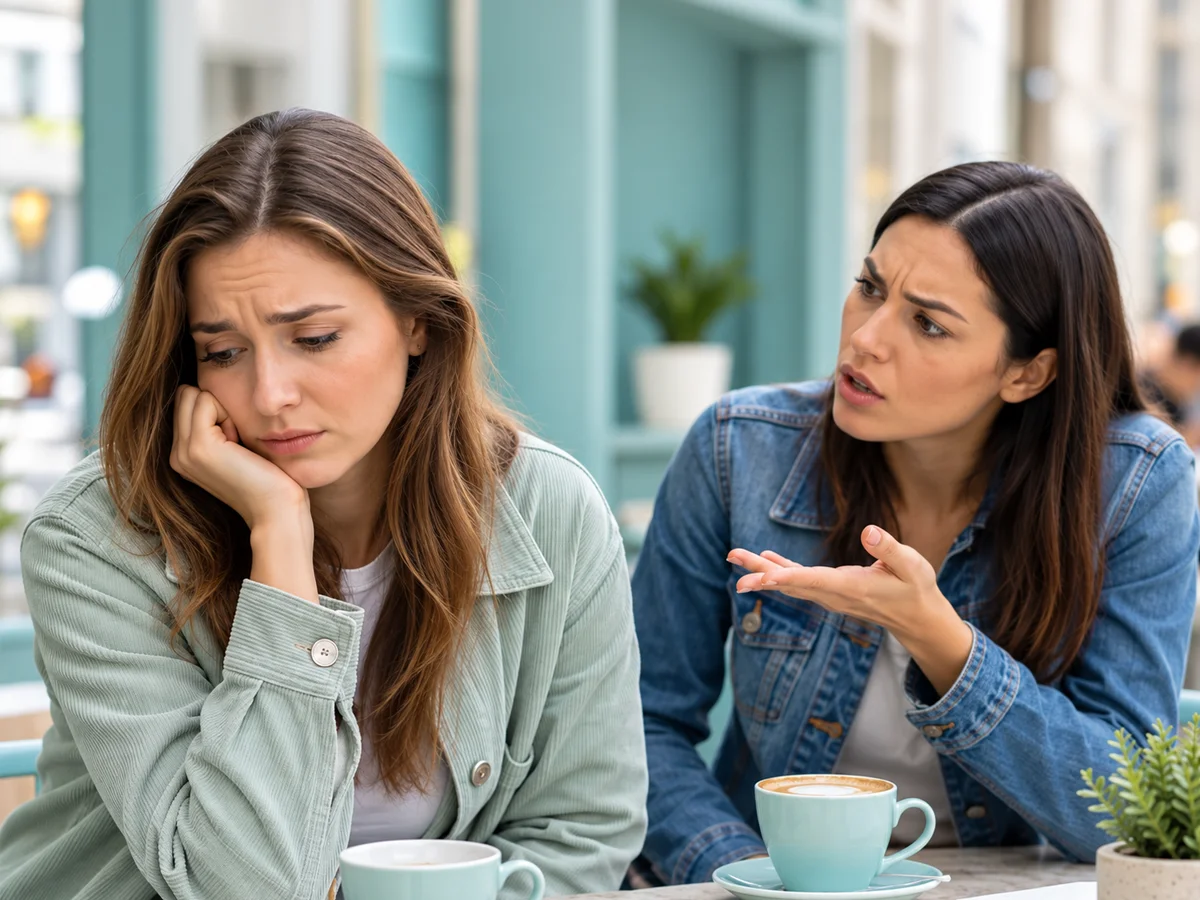
Signs of a Toxic Friendship — and What to Do About Them

I NEED HELP REAL BAD PLEASE ANYONE HAVE ANY RECOMMENDATIONS PLEASE HELP ME IM AT MY BREAKING POINT
Hi ALexandra,
Thank you so much for your comment.
If you are currently looking for counselling support, do feel free to book in for a free 15 minute telephone consultation via the following link.
Booking Link: https://calendly.com/hopetherapy/15-minute-consultation
You will get the opportunity to discuss your needs with a senior therapist within the team on a completely free of charge basis.
Very Best regards
Client Services Team