
BLOG
The 7 Stages of Grief: What They Really Mean
- By Ian Stockbridge
- Founder & Clinical Director, Hope Therapy & Counselling Services
- 7th August 2026
- 8–12 minutes
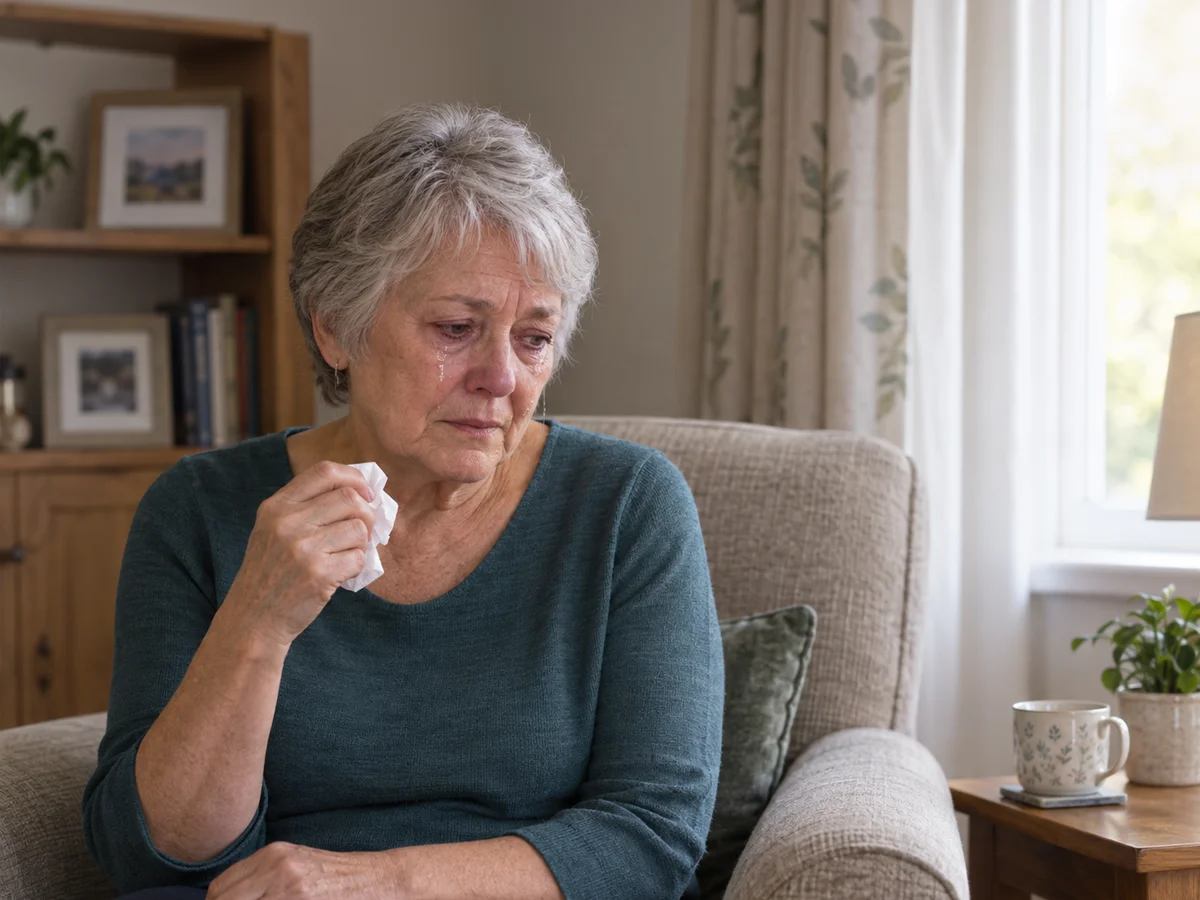
When someone you love dies, the ground can give way. In the middle of that, many people go looking for a map, something to explain what is happening and roughly what comes next. That search often leads to the 7 stages of grief.
There is real comfort in a list; it promises that this chaos has a shape, and an end. The truth is gentler, and messier, than the list suggests. The stages describe experiences genuinely common in grief, but they were never meant to be a timetable to follow, or a test you can pass or fail. Understanding what they really mean, and what they quietly leave out, can take some of the pressure off.
This article is intended for general information and educational purposes only and should not be considered medical, psychiatric, psychological, or therapeutic advice. Every person’s circumstances are unique, and reading this article does not create a therapeutic relationship with Hope Therapy & Counselling Services. If you are concerned about your mental health or emotional wellbeing, we encourage you to seek support from a suitably qualified healthcare or mental health professional. Hope Therapy & Counselling Services offers a free 15-minute consultation – book yours now.
What are the 7 stages of grief?
The 7 stages of grief are a way of describing common emotional experiences after a loss: shock, denial, anger, bargaining, depression, testing or reconstruction, and acceptance. They grew out of earlier work on how people face dying, later extended to bereavement, and you will sometimes see them listed as five, seven, or more, depending on who is describing them.
It helps to know where the model came from. The original idea described five responses observed in people who were dying, and it was never intended as a fixed sequence that everyone moves through in order. Over the years, later writers expanded and applied it to grief of all kinds, and the tidy numbered list took on a life of its own. That is worth holding lightly. The stages can give useful language for feelings that might otherwise seem frightening or shameful, but they are a description of what grief can contain, not a route you are meant to walk from one end to the other.
Walking through the seven stages
It can help to look at what each stage actually points to, as long as you hold the whole thing loosely. These are not steps to complete. They are more like weather that may pass through, in any order, more than once, or barely at all.
Shock, denial and anger
In the earliest days, shock can leave everything feeling unreal, muffled, or strangely calm, a kind of protective numbness while the mind catches up with something too large to take in at once. Denial is part of this: not a refusal to accept the facts, but a mind letting reality in only as fast as it can bear. Anger often follows, and it can be disorienting because it feels out of character.
It might land on doctors, on other people, on the person who died, or on yourself. Anger in grief is rarely about blame. It is love with nowhere to go. It can be quiet as easily as loud, and all of it belongs.
Bargaining, depression and acceptance
Bargaining is the mind’s attempt to undo what cannot be undone, the endless if only I had, the deals struck with a God you may not even believe in. The stage often called depression is the deep sadness that arrives when the reality of the loss settles in fully, and life can feel flat and pointless for a time. Acceptance is the most misunderstood of all.
It does not mean being at peace with the loss, or being glad, or moving on. It means slowly finding a way to carry it, to build a life that has room for both the grief and everything else, without the grief having to be the whole of it.
Are you recognising these signs of grief?
If you are in the middle of this, please be kind to yourself, there is no version of grief you are doing wrong. You do not have to carry it entirely alone, and talking to someone who understands can help. A free, no-obligation 15-minute conversation is a gentle place to start, whenever you feel ready.
Why do the stages of grief resonate?
The stages of grief resonate because they name real, recognisable experiences at a time when grief can feel formless and frightening. Having words for numbness, anger, or bargaining can be a genuine relief, proof that you are not losing your mind, and not grieving wrongly. When grief hits, many people are frightened by the sheer strangeness of it, the numbness, the flashes of anger, the way the mind keeps forgetting and re-learning the loss.
To find those very experiences described, and treated as normal, can be steadying in a way that is hard to overstate. For many people, the greatest value of the model is simply permission. If you have felt furious, or strangely nothing at all, or found yourself striking impossible bargains in the small hours, seeing those experiences named can ease the shame that so often rides alongside them. Grief is isolating partly because it can feel like no one else has ever felt quite this way, and partly because the world expects you to be moving on long before you are.
A shared language, even an imperfect one, pushes back against that loneliness. That is a real gift, and it is worth honouring even as we hold the model’s limits in view. Naming a feeling does not fix it, but it can make it feel survivable, a little less like drowning, a little more like weather that will, eventually, shift.
What the seven stages leave out
For all their usefulness, the stages leave out the single most important truth about grief: it is not linear. Real grief loops, doubles back, and arrives in waves. You can reach something like acceptance and then find yourself flattened again by a song, a smell, or an empty chair at Christmas. The model can also imply an endpoint, a final stage after which you are done. Grief does not really work that way. Most people do not get over a loss so much as gradually grow around it, carrying the person with them rather than leaving them behind.
The love does not end; it changes form. A bond with someone who has died can stay part of your life for the rest of it, and that is not a sign of being stuck, it is one of the truest things about grief. There is no set timeline here, no correct order, and no schedule you are somehow behind on.
Some stages may never appear for you, and others the list never mentions, guilt, relief, longing, a strange homesickness, may dominate instead. None of that means you are grieving incorrectly. It means grief is as individual as love is.
Is there a right way to grieve?
No. There is no single right way to grieve, and no fixed timeline you must keep to. Grief takes its shape from who you have lost, your relationship with them, your history, and a hundred things no model could ever account for. Some people cry constantly; others barely at all, and feel guilty for it. Some need to talk; others need to keep busy, or be alone.
Some feel the full weight immediately, while for others it arrives months later, long after everyone assumed they were fine and the casseroles stopped coming. Culture, family, and personality all shape how grief is expressed, and none of those ways is more valid than another. All of this is within the range of ordinary grief.
There is no membership test for grieving properly, and love is not measured in tears. The comparison that so often creeps in, that you should be further along, or sadder, or coping better, rarely helps, and it can add a layer of shame on top of pain that is already heavy enough. Your grief will follow its own shape, and that shape can look nothing like a numbered list.
When grief feels like too much
Grief is painful by nature, but sometimes it becomes something heavier and more stuck, a pain that does not soften at all over a long stretch of time, or that makes daily life feel impossible to face. If the fog never lifts even a little, if you feel unable to function for a prolonged period, or if you find yourself feeling that you cannot go on, please treat that as a sign to reach for support rather than to wait it out.
Speaking to your GP is a sound first step, and talking with a bereavement-informed counsellor can help too. Support through Hope Therapy’s bereavement counselling offers a space to say the things that feel unsayable, at your own pace. For some people, grief becomes lodged around the moment of loss itself, and approaches such as EMDR or longer-term counselling can gently help it move again.
None of this means the grief was ever a problem to be solved; it means the weight became too much to carry without a hand. Asking for help is not a failure to cope. It is one of the more loving things you can do for yourself.
Where to go from here
If you came looking for the stages hoping for a map, it is understandable to feel a little unmoored to hear there is not one. But there is something freeing in it too. You are not behind. You are not doing it wrong. There is no stage you are failing to reach.
Whatever your grief looks like, it makes sense for you, and you do not have to carry it in silence. The 7 stages of grief are one lens among many, and no lens can capture the whole of what you are living. Talking to someone who understands loss, whenever you feel ready, can be a quiet and steadying place to begin.
Ready to Take the First Step?
If grief has been heavy to carry, talking to someone who understands it can help, not to hurry you through it, but to sit with you in it.
At Hope Therapy & Counselling Services we offer a free, no-obligation 15-minute consultation, a chance to talk about how you are and explore whether we might be able to help, with no pressure to commit to anything further
- Free 15-minute consultation
- No commitment
- Qualified & registered therapists
- LGBTQIA+ affirming support
- NCPS organisational member
- Online nationwide
- Face-to-face across England
- Established 2014
This article is intended for general information and educational purposes only and should not be considered medical, psychiatric, psychological, or therapeutic advice. Every person’s circumstances are unique, and reading this article does not create a therapeutic relationship with Hope Therapy & Counselling Services. If you are concerned about your mental health or emotional wellbeing, we encourage you to seek support from a suitably qualified healthcare or mental health professional. Hope Therapy & Counselling Services offers a free 15-minute consultation – book yours now.
Frequently Asked Questions
What are the 7 stages of grief?
The 7 stages of grief describe common emotional experiences after a loss: shock, denial, anger, bargaining, depression, testing or reconstruction, and acceptance. They grew from earlier work on how people face dying, later extended to bereavement, but they were never meant as a fixed sequence everyone follows.
Is there a right way to grieve?
No. There is no single right way to grieve and no fixed timeline you must keep to. Grief takes its shape from who you have lost, your relationship with them and your history. Some people cry constantly, others barely at all. All of it is within the range of ordinary grief.
Do you go through the stages of grief in order?
No. Real grief is not linear, it loops, doubles back and arrives in waves. You can reach something like acceptance and be flattened again by a song or an empty chair. Some stages may never appear for you, and others the list never mentions may dominate instead.
Find the Right Support for You
Our general counselling services page can help you determine what sort of therapy may be suitable for you.
Get Help With Other Conditions
Our general conditions page is a great place to start.
ABOUT THE AUTHOR

Ian Stockbridge
- MBACP (Senior Accredited)
Founder & Clinical Director — Hope Therapy & Counselling Services
Founder of Hope Therapy, published author, clinical supervisor, and co-presenter of The Talk Room Podcast. Practising therapist with 25+ years of senior leadership experience.
Before Ian Stockbridge was a therapist, he was a leader. For more than 25 years he worked in senior management and directorial roles across commercial organisations — at times managing teams of more than 200 people. He was effective at it. But the longer he did it, the harder something became to ignore. The people around him were struggling. Capable, committed, often high-achieving people carrying invisible weight that had nowhere to go. Stress accumulated quietly across months and years. Anxiety managed behind professionalism. Relationships and mental health dealt with in the margins of a working life that left little room for either.
- SCoPEd Band C
- SNCPS (Acc)
- BSc (Hons) CBT
- PGCert Clinical Supervision
- Diploma — Person-Centred Counselling
- Diploma — Mindfulness-Based Cognitive Therapy
- Certificate — Acceptance & Commitment Therapy
- Certificate — Trauma
- Certificate — CBT for Insomnia
- 25+ Years Leadership
- Clinical Supervisor
- Published Author
- Podcast Co-Host
- LGBTQIA+ Affirming
Free 15-minute consultation
A no-pressure conversation to find the right therapist for you. No commitment needed.
IN THIS ARTICLE
THE AUTHOR
Ian Stockbridge
MBACP (Senior Accredited)
Founder of Hope Therapy, published author, clinical supervisor, and co-presenter of The Talk Room Podcast. Practising therapist with 25+ years of senior leadership experience.
ABOUT HOPE THERAPY
Qualified registered therapists
Online nationwide across UK
Face-to-face across England
LGBTQIA+ & neurodivergent affirming
Mon–Sun, 9am–9pm
NCPS organisational member
Est 2014
Published: 7th August 2026 | Written by Ian Stockbridge | Reviewed for clinical accuracy before publishing | Review due: August 2028