BLOG
The Impact of Trauma and Anxiety on Relationships
- By Ian Stockbridge
- Founder & Clinical Director, Hope Therapy & Counselling Services
- 25 August 2026
- 10–14 minutes
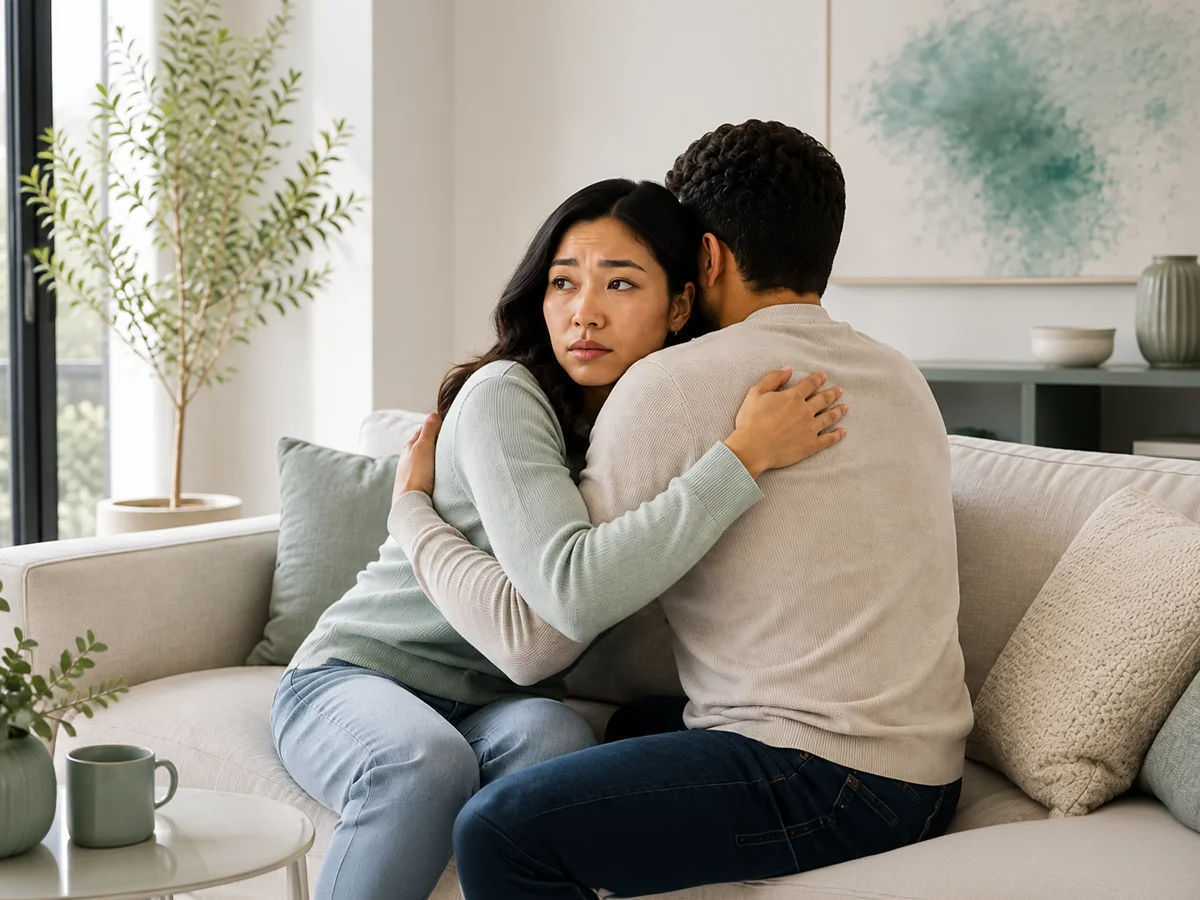
Trauma and anxiety are each, on their own, capable of creating significant difficulty in close relationships. Together, they create something more complex — a layered pattern of responses that can make intimacy feel simultaneously necessary and threatening, that can generate cycles of reaching and withdrawing that neither person fully understands, that can leave both partners feeling confused, depleted, and somehow at fault for something nobody chose. If you are trying to make sense of a relationship in which both trauma and anxiety seem to be at play — in yourself, in your partner, or in both of you — this post is for you.
This article is intended for general information and educational purposes only and should not be considered medical, psychiatric, psychological, or therapeutic advice. Every person’s circumstances are unique, and reading this article does not create a therapeutic relationship with Hope Therapy & Counselling Services. If you are concerned about your mental health or emotional wellbeing, we encourage you to seek support from a suitably qualified healthcare or mental health professional. Hope Therapy & Counselling Services offers a free 15-minute consultation – book yours now.
Trauma, Anxiety, and Relationships: The Distinctions That Matter
Trauma and anxiety are related but distinct experiences, and understanding the difference matters for understanding their combined impact on relationships. Trauma refers to the lasting psychological impact of overwhelming experiences — events or patterns of events that exceeded the nervous system’s capacity to process and resolve at the time. The impact of trauma is held not just in memory but in the body and the nervous system, as automatic responses that activate in situations that resemble the original overwhelming experience.
Anxiety refers to a state of heightened alertness and anticipatory dread — a nervous system response that prepares for threat, whether or not threat is actually present. Anxiety and trauma frequently co-occur: unprocessed trauma often generates chronic anxiety, and an anxious nervous system can be more vulnerable to developing trauma responses. But they are not the same thing, and the way each affects a relationship differs in important ways.
How Trauma Shapes Relational Patterns
Trauma that occurred within relationships creates specific patterns in how the person approaches future closeness. The nervous system learned, during the original traumatic experience, that intimacy carries danger. It may have learned that the person closest to you is the person most likely to hurt you, or that love is unpredictable, or that vulnerability invites harm. Those lessons become automated. In a new relationship, the nervous system applies them without waiting for evidence.
This produces the characteristic patterns of relationship trauma: hypervigilance to signs of threat, difficulty accepting genuine care, intense reactions to perceived withdrawal or criticism, and the tendency to interpret ambiguous signals in the most alarming available direction. These are not character flaws or deliberate behaviours. They are a nervous system doing exactly what it was shaped to do.
How Anxiety Shapes Relational Patterns
Anxiety in relationships operates somewhat differently. Where trauma responses tend to be triggered by specific cues that resemble the original experience, relationship anxiety is often more generalised — a persistent background hum of “what if” that does not require a specific trigger. The anxious partner may worry about the future of the relationship without any evidence that it is under threat. They may need frequent reassurance not because they have been betrayed, but because their nervous system is chronically oriented towards potential loss.
Relationship anxiety is closely related to anxious attachment — the pattern of hypervigilance and reassurance-seeking that develops when early caregiving was inconsistent. It may exist without any direct relationship trauma. But when anxiety and trauma occur together, each tends to intensify the other.
How Trauma and Anxiety Amplify Each Other in Relationships
When both trauma and anxiety are present in a relationship — whether in one person or shared between partners — the dynamic tends to become more complex than either would produce alone.
Trauma creates specific triggers: situations, tones, behaviours, or emotional states that closely resemble the original traumatic experience and activate the alarm. Anxiety generalises that alarm — it fills in the gaps between specific triggers with anticipatory dread, so that the person is not only responding to what actually happened but also dreading what might happen. The combination means that the window of tolerance for relationship stress becomes very narrow.
The Pursuit-Withdrawal Pattern
One of the most common dynamics in relationships affected by both trauma and anxiety is the pursuit-withdrawal cycle. One partner — typically the more anxiously attached, though not always — pursues connection, reassurance, and closeness with an intensity that reflects their alarm. The other partner, feeling overwhelmed or activated by their own trauma responses around being controlled or crowded, withdraws. That withdrawal triggers more alarm in the pursuing partner, whose pursuit intensifies, which triggers more withdrawal.
Both partners are responding reasonably, given their nervous systems. Both are usually doing the opposite of what would actually help. The pursuer needs to develop the capacity to tolerate uncertainty without immediately seeking to resolve it through closeness. The withdrawing partner needs to develop the capacity to tolerate intimacy without experiencing it as threat. Neither of these things happens easily in the middle of the cycle.
When Both Partners Carry Trauma or Anxiety
Relationships where both partners carry significant trauma or anxiety are not rare, and they deserve specific acknowledgement. Two people who have both been hurt — who both bring nervous systems shaped by experiences of loss, betrayal, or inconsistency — create an environment in which triggers are more frequent, the window of tolerance is narrower for both, and the cycles of activation and repair are more intense. This does not make the relationship impossible. It does mean that the relationship benefits enormously from both people developing their own internal resources — through their own therapy — rather than relying on the relationship itself to provide all the regulation.
If this sounds familiar
If you recognise the pursuit-withdrawal cycle, or the constant monitoring, or the sense that responses are disproportionate to what actually happened — what you are describing is a nervous system pattern, not a personality failure. It can change with the right support.
These patterns respond to the right support
If trauma and anxiety are affecting your relationships, Hope Therapy offers a free 15-minute consultation — online across England, no GP referral needed.
What Trauma and Anxiety Look Like in Day-to-Day Relationship Life
Understanding the theory of how trauma and anxiety affect relationships is useful. Understanding how they show up in ordinary daily life is what allows people to actually recognise the patterns in their own experience.
The Things That Get Disproportionate Responses
The most common day-to-day sign that trauma and anxiety are affecting a relationship is the experience of responses that feel disproportionate to what happened. A five-minute delay in replying to a message triggers a cascade of anxiety about the relationship’s security. A slightly impatient comment triggers a response that looks more like crisis than irritation. A cancelled plan triggers a fear of abandonment rather than simple disappointment.
These responses are not dramatic for the sake of drama. They are the nervous system responding to a perceived threat level that the rational mind knows is not proportionate to what is actually happening. The gap between what the nervous system perceives and what the thinking mind knows creates a particular kind of distress — the person knows their response is “too much,” which adds shame to the original activation, which makes regulation harder.
The Constant Low-Level Monitoring
Another characteristic pattern is the constant low-level monitoring of the relationship for signs of threat. Has their tone changed? Are they a bit colder today? Did they hesitate before they said they loved you? This monitoring is exhausting for the person doing it and gradually produces a particular kind of relational exhaustion — the sense of being always on alert, never fully at rest within the relationship, never able to simply enjoy closeness without scanning the horizon for what might disrupt it.
Over time, this monitoring can itself affect the relationship — not because the monitoring is wrong, but because living in perpetual vigilance prevents the accumulation of the simple, quiet experiences of being together that actually build the security the nervous system is looking for.
What Helps — And What Does Not
Understanding what genuinely helps with the combined impact of trauma and anxiety on relationships matters, because some of the most instinctive responses make things worse rather than better.
What Tends to Make Things Worse
Reassurance, given repeatedly, tends to maintain the anxiety cycle rather than break it. Each reassurance provides short-term relief while reinforcing the pattern that the only way to feel safe is through external confirmation. This does not mean warmth and care are wrong — it means that the specific pattern of seeking and receiving reassurance needs attention rather than perpetuation.
Trying to have important conversations about the relationship during moments of high activation tends to produce escalation rather than resolution. When both nervous systems are in threat-response mode, the capacity for perspective and nuance is significantly reduced. The most productive conversations happen at calm moments, and the most productive immediate response to activation is usually regulation — slowing down, creating space, giving both nervous systems time to settle — rather than trying to resolve what triggered the activation while it is still active.
What Tends to Help
Individual therapeutic work for each person tends to be the most significant factor in changing these patterns over time. The therapeutic relationship provides a consistent, reliable, non-contingent experience of being in a close relationship without the ordinary relational stressors, which allows the nervous system to begin updating its model in a contained setting. Over time, the updated model extends into other relationships.
Couples therapy provides something complementary: a supported space to understand the dynamic between you, to develop shared language for what happens when the cycles begin, and to practise the kinds of responses that interrupt the cycles rather than sustaining them. This is most effective when both people are also engaged in their own individual work.
When to Seek Professional Support
Understanding that trauma and anxiety are affecting a relationship is the beginning of a process, not the end of one. For some people, the recognition itself — combined with reading, self-reflection, and conscious effort — is enough to begin changing the patterns meaningfully. For many others, particularly where the patterns are deeply rooted and have been present for a long time, professional support makes the difference between gradual change and change that actually becomes durable.
The most useful sign that professional support would help is persistence. If you have been aware of these patterns for some time — if you have tried to do things differently, if you have talked about the dynamic with your partner, if you have consciously tried to change your responses — and the underlying patterns have not meaningfully shifted, that is not a sign of failure. It is a sign that what you are dealing with is held in the nervous system’s automated responses, and that it needs a different kind of intervention.
Individual vs Couples Therapy
For most people dealing with the combined impact of trauma and anxiety on a relationship, individual therapy is the more important starting point — because the patterns are rooted in the individual nervous system, not created by the relationship. Couples therapy is valuable for working on the dynamic between partners, but it works best when both people also have their own individual therapeutic support. Beginning with individual work, and introducing couples work when both people are more resourced, tends to produce more sustainable results than couples work alone.
Ready to Take the First Step?
Whether you are carrying the effects of trauma and anxiety yourself, supporting a partner who is, or trying to make sense of a relationship dynamic that has become difficult for both of you — the counsellors at Hope Therapy can help. We offer individual and couples counselling online across England, with no waiting list and no GP referral required. Your first 15-minute consultation is free.
- Free 15-minute consultation
- No commitment
- Online across England
- No GP Referral needed
- Qualified & registered therapists
- LGBTQIA+ affirming support
- NCPS organisational member
- Online nationwide
- Face-to-face across England
- Established 2014
This article is intended for general information and educational purposes only and should not be considered medical, psychiatric, psychological, or therapeutic advice. Every person’s circumstances are unique, and reading this article does not create a therapeutic relationship with Hope Therapy & Counselling Services. If you are concerned about your mental health or emotional wellbeing, we encourage you to seek support from a suitably qualified healthcare or mental health professional. Hope Therapy & Counselling Services offers a free 15-minute consultation – book yours now.
Frequently Asked Questions About Relationship Trauma & Anxiety
Can a relationship survive when both partners have trauma histories?
Yes — many relationships in which both people carry significant trauma histories are deeply meaningful and ultimately secure. What they tend to require is that both people develop their own internal resources — through individual therapy, through sustained self-awareness, through their own practices of regulation — rather than expecting the relationship itself to provide everything their nervous systems need. A relationship where both people are doing that work can become, over time, one of the most healing things available to either person.
How do I know if my relationship difficulty is caused by trauma or anxiety?
In practice, this distinction matters less than understanding the patterns themselves. Whether what you are experiencing is primarily trauma-based, primarily anxiety-based, or a combination of both, the therapeutic approach that helps tends to be the same: developing a more secure sense of self, learning to regulate the nervous system during activation, developing the capacity to tolerate uncertainty, and gradually accumulating experiences that update the nervous system’s model of what relationships feel like. A therapist can help you understand your own pattern in more detail.
Is it possible to have a relationship without therapy if trauma and anxiety are involved?
People do — and many relationships affected by trauma and anxiety are loving, committed, and meaningful without either person being in therapy. What therapy tends to change is the pace and sustainability of those relationships. Without support, patterns rooted in the nervous system tend to persist and can gradually erode the relationship through accumulated cycles of activation and rupture. With the right support, those patterns can shift — and the relationship can provide something more like the security that both people are looking for.
Find the Right Support for You
Our general counselling services page can help you determine what sort of therapy may be suitable for you.
Get Help With Other Conditions
Our general conditions page is a great place to start.
ABOUT THE AUTHOR

Ian Stockbridge
- MBACP (Senior Accredited)
Founder & Clinical Director — Hope Therapy & Counselling Services
Founder of Hope Therapy, published author, clinical supervisor, and co-presenter of The Talk Room Podcast. Practising therapist with 25+ years of senior leadership experience.
Before Ian Stockbridge was a therapist, he was a leader. For more than 25 years he worked in senior management and directorial roles across commercial organisations — at times managing teams of more than 200 people. He was effective at it. But the longer he did it, the harder something became to ignore. The people around him were struggling. Capable, committed, often high-achieving people carrying invisible weight that had nowhere to go. Stress accumulated quietly across months and years. Anxiety managed behind professionalism. Relationships and mental health dealt with in the margins of a working life that left little room for either.
- SCoPEd Band C
- SNCPS (Acc)
- BSc (Hons) CBT
- PGCert Clinical Supervision
- Diploma — Person-Centred Counselling
- Diploma — Mindfulness-Based Cognitive Therapy
- Certificate — Acceptance & Commitment Therapy
- Certificate — Trauma
- Certificate — CBT for Insomnia
- 25+ Years Leadership
- Clinical Supervisor
- Published Author
- Podcast Co-Host
- LGBTQIA+ Affirming
Free 15-minute consultation
A no-pressure conversation to find the right therapist for you. No commitment needed.
IN THIS ARTICLE
Trauma, Anxiety, and Relationships: The Distinctions That Matter
How Trauma and Anxiety Amplify Each Other in Relationships
What Trauma and Anxiety Look Like in Day-to-Day Relationship Life
What Helps — And What Does Not
When to Seek Professional Support
Frequently Asked Questions About Relationship Trauma & Anxiety
THE AUTHOR
Ian Stockbridge
MBACP (Senior Accredited)
Founder of Hope Therapy, published author, clinical supervisor, and co-presenter of The Talk Room Podcast. Practising therapist with 25+ years of senior leadership experience.
ABOUT HOPE THERAPY
Qualified registered therapists
Online nationwide across UK
Face-to-face across England
LGBTQIA+ & neurodivergent affirming
Mon–Sun, 9am–9pm
NCPS organisational member
Est 2014
Published: 25 August 2026 | Written by Ian Stockbridge | Reviewed for clinical accuracy before publishing | Review due: August 2028
More Articles About Relationship Trauma

Trust Issues in Relationships: Where They Come From and How to Rebuild

Dating With Relationship Trauma: How to Build Trust When Your Past Feels Present