BLOG
Falling Out of Love: What It Really Means and What You Can Do
- By Ian Stockbridge
- Founder & Clinical Director, Hope Therapy & Counselling Services
- 28th July 2026
- 7–11 minutes
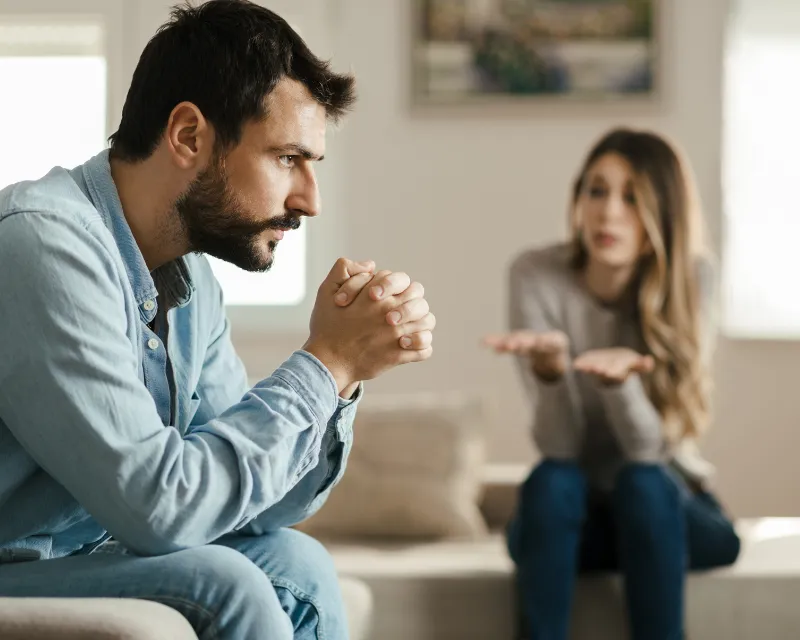
You can remember, clearly, how it used to feel. The lift when they walked into the room, the ease of being together, the sense that this was exactly where you wanted to be. Now something has shifted. The spark seems to have dimmed, the closeness feels further away, and you find yourself quietly wondering whether you still feel the same at all.
Realising you might be falling out of love with someone you care about is one of the most painful and confusing experiences a relationship can bring.
This article looks at what it really means, why it happens, and what you can do, because it does not always mean the end.
This article is intended for general information and educational purposes only and should not be considered medical, psychiatric, psychological, or therapeutic advice. Every person’s circumstances are unique, and reading this article does not create a therapeutic relationship with Hope Therapy & Counselling Services. If you are concerned about your mental health or emotional wellbeing, we encourage you to seek support from a suitably qualified healthcare or mental health professional. Hope Therapy & Counselling Services offers a free 15-minute consultation which can be booked at – books yours here.
What does falling out of love really mean?
Falling out of love is the gradual fading of the romantic feelings, closeness and desire you once felt for a partner. It can show up as emotional distance, a loss of that spark, or a sense that you are living more like housemates than partners. It is very common, and it does not automatically mean the relationship is over.
Part of the confusion is that we are rarely taught how love actually changes over time. The intense, all-consuming feeling of early romance is not designed to last forever, and its fading is a normal part of almost every long relationship.
What people often experience as falling out of love is really love changing shape, or a signal that something in the relationship needs attention. Understanding this makes an enormous difference, because it turns a frightening verdict into something that can often be understood and, in many cases, worked with. That shift in understanding is often where hope quietly begins.
Why do we fall out of love?
There is rarely one single reason. More often, a mix of natural changes and unmet needs slowly erodes the connection over time. Two themes come up again and again: the natural evolution of love itself, and the quiet build-up of disconnection.
When passionate love shifts to something quieter
Early relationships are often carried by intense passionate love, driven by novelty and a rush of feel-good chemistry. This stage is powerful, but by design it is temporary. In lasting relationships, it gradually gives way to a calmer, deeper companionate love, built on trust, friendship and commitment.
This shift is healthy and normal, yet if you are not expecting it, the fading of those early fireworks can feel alarmingly like falling out of love, when it is actually love maturing into something steadier.
Disconnection, resentment and drifting apart
Beyond that natural shift, feelings genuinely fade when a connection is not tended. Poor communication, unresolved conflict, and the slow accumulation of small resentments all take a toll. The pressures of work, parenting and daily life can leave couples drifting into parallel lives, sharing a home but little else.
Over time, that distance, and the sense of not feeling valued or understood, can quietly wear away the affection that was once there, until one or both people feel they have fallen out of love.
What does it feel like to fall out of love?
The experience is different for everyone, but there are familiar threads: a fading of desire, a growing emotional distance, and often a heavy sense of guilt or sadness about feeling this way at all.
Common signs and feelings
You might notice that you no longer look forward to time together in the way you once did, or that affection and physical closeness have quietly slipped away. Irritation can creep in, where small habits that never used to bother you suddenly grate.
Some people describe feeling more like flatmates than lovers, or sensing an emotional wall where there used to be closeness. There may be a wistful pull toward how things used to be, alongside a fear of what these feelings might mean.
Why it can be so confusing and lonely
What makes this so hard is the tangle of emotions that comes with it. You can still love and care deeply about someone while no longer feeling in love with them, and holding those two truths at once is genuinely disorienting.
Guilt is common, as is a reluctance to say any of it out loud, which can leave you feeling isolated inside your own relationship. That loneliness is one of the most painful parts, and it is also one that support can help ease.
Is falling out of love the end of the relationship?
Not necessarily, and this is the part worth holding onto. While falling out of love can sometimes be a sign that a relationship has run its course, very often it is a signal that the connection needs care and attention, not that it is beyond repair.
Many couples move through this and find their way back to each other. The early spark may not return in exactly the same form, but many couples build something deeper and more resilient than they had before. Feelings that have faded through disconnection can often be rekindled when the underlying issues are understood and addressed.
Sometimes, of course, people do conclude that the relationship has reached its end, and that too can be faced with honesty and care. There is no single right outcome here. What matters is understanding what is really happening, so that whatever you decide, you decide it with clarity rather than confusion
What you can do if you have fallen out of love
If you recognise yourself in this, there are gentle, constructive steps that can help, whatever you eventually decide. The aim is not to force a feeling back, but to understand what has happened and give the relationship a fair chance to be seen clearly.
It often helps to start with honest reflection about what has changed and when, and about what you actually need that may be missing. Where it feels safe, opening a gentle, blame-free conversation with your partner can begin to bridge the distance, as many couples simply stop truly talking over the years.
Small, deliberate efforts to reconnect, spending real time together, showing appreciation, or rediscovering shared enjoyment, can slowly rebuild warmth. And if the distance feels too wide to cross alone, that is not a failure. It is often exactly the point at which talking to someone outside the relationship can help most, and many strong relationships have been rebuilt from precisely there.
If any of this feels familiar, you do not have to work it out alone. A free, no-obligation 15-minute conversation can be a gentle first step, just a chance to be heard. You can book one here:
How can couples counselling help?
When you are caught in this, it can be hard to see a way through on your own. Couples counselling offers a calm, neutral space to understand what has happened and to explore, without pressure, whether and how the connection can be rebuilt. It is not about apportioning blame, but about understanding each other again.
A counsellor can help you and your partner communicate more openly, uncover the needs and hurts beneath the distance, and rediscover what drew you together in the first place. Even a single honest conversation, held safely, can begin to shift something that has felt stuck for years. This work often draws on rebuilding intimacy and connection and on gently untangling the relationship difficulties that have built up over time. Even where a couple ultimately decides to part, doing so with understanding and mutual respect can make an enormous difference. If you think it might help, our relationship counselling is there whenever you feel ready.
Where to go from here
There is no single right way to respond to any of this. Some people want to fight for the relationship and rediscover what they had. Others need to understand their feelings before they can decide anything at all. Both are completely valid, and neither has to be resolved today.
If reading this has helped make sense of something painful, that clarity matters. You are allowed to take your time, and to be kind to yourself and your partner while you find your way. When and if you feel ready, talking it through with someone who understands relationships can be a steady next step, at whatever pace feels right for you.
Visit our general services page and conditions page if you are unsure where to start or what type of counselling may be suitable for you.
Ready to Take the First Step?
If something here has resonated, we would be glad to talk it through with you. Hope Therapy & Counselling Services offers a free, no-obligation 15-minute consultation, a relaxed chance to ask questions and explore whether working together might suit you.
There is no pressure and no commitment. When you feel ready, you can book your free consultation here:
- Free 15-minute consultation
- No commitment
- Qualified & registered therapists
- LGBTQIA+ affirming support
- NCPS organisational member
- Online nationwide
- Face-to-face across England
- Established 2014
This article is intended for general information and educational purposes only and should not be considered medical, psychiatric, psychological, or therapeutic advice. Every person’s circumstances are unique, and reading this article does not create a therapeutic relationship with Hope Therapy & Counselling Services. If you are concerned about your mental health or emotional wellbeing, we encourage you to seek support from a suitably qualified healthcare or mental health professional. Hope Therapy & Counselling Services offers a free 15-minute consultation which can be booked at – books yours here.
Frequently Asked Questions
What does falling out of love really mean?
Falling out of love is the gradual fading of the romantic feelings, closeness and desire you once felt for a partner. It can show up as emotional distance or a loss of that spark. It is very common, and it does not automatically mean the relationship is over often it is love changing shape or a signal that something needs attention.
Is falling out of love the end of the relationship?
Not necessarily. It can sometimes mean a relationship has run its course, but very often it signals that the connection needs care and attention rather than being beyond repair. Many couples move through it and build something deeper; others decide to part, and that too can be faced with honesty and care.
How can couples counselling help?
Couples counselling offers a calm, neutral space to understand what has happened and explore, without pressure, whether and how the connection can be rebuilt. A counsellor can help you communicate more openly, uncover the needs beneath the distance, and rediscover what drew you together or part with understanding and respect.
Find the Right Support for You
Our general counselling services page can help you determine what sort of therapy may be suitable for you.
Get Help With Other Conditions
Our general conditions page is a great place to start.
THE AUTHOR

Ian Stockbridge
- MBACP (Senior Accredited)
Founder & Clinical Director — Hope Therapy & Counselling Services
MBACP (Senior Accredited) · SNCPS (Acc) · BSc (Hons) CBT · PGCert Clinical Supervision
Founder of Hope Therapy, published author, clinical supervisor, and co-presenter of The Talk Room Podcast. Practising therapist with 25+ years of senior leadership experience.
Before Ian Stockbridge was a therapist, he was a leader. For more than 25 years he worked in senior management and directorial roles across commercial organisations — at times managing teams of more than 200 people. He was effective at it. But the longer he did it, the harder something became to ignore. The people around him were struggling. Capable, committed, often high-achieving people carrying invisible weight that had nowhere to go. Stress accumulated quietly across months and years. Anxiety managed behind professionalism. Relationships and mental health dealt with in the margins of a working life that left little room for either.
- SCoPEd Band C
- 25+ Years Leadership
- Clinical Supervisor
- Published Author
- Podcast Co-Host
- BSc (Hons) CBT
- PGCert Clinical Supervision
- LGBTQIA+ Affirming
Free 15-minute consultation
A no-pressure conversation to find the right therapist for you. No commitment needed.
IN THIS ARTICLE
ABOUT THE AUTHOR
Ian Stockbridge
MBACP (Senior Accredited)
Founder of Hope Therapy, published author, clinical supervisor, and co-presenter of The Talk Room Podcast. Practising therapist with 25+ years of senior leadership experience.
ABOUT HOPE THERAPY
Qualified registered therapists
Online nationwide across UK
Face-to-face across England
LGBTQIA+ & neurodivergent affirming
Mon–Sun, 9am–9pm
NCPS organisational member
Est 2014
Published: 28th July 2026 | Written by a registered MBACP counsellor | Reviewed for clinical accuracy before publishing | Review due: July 2028