BLOG
Compassion Fatigue: The Cost of Caring
- By Ian Stockbridge
- Founder & Clinical Director, Hope Therapy & Counselling Services
- 9th August 2026
- 8–12 minutes
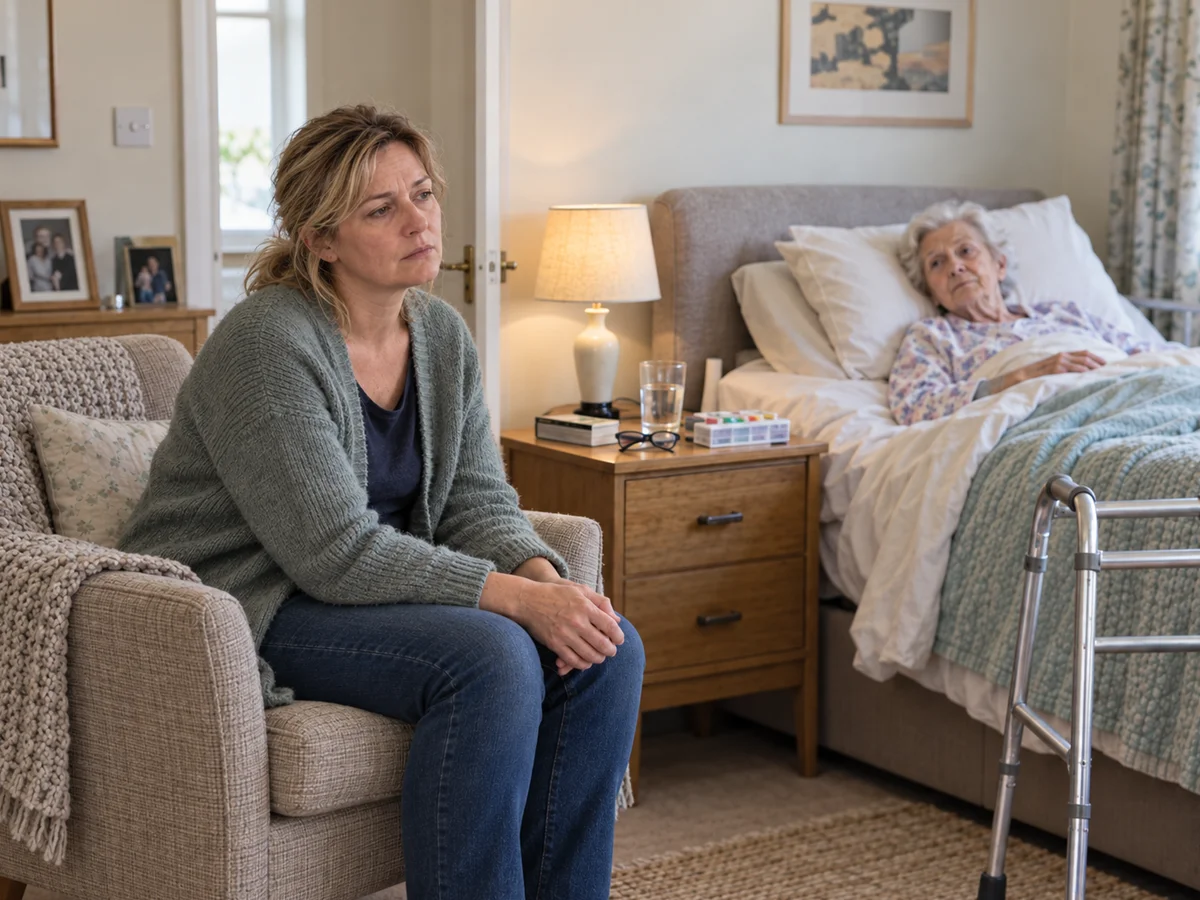
You are the one who copes. The one people lean on, at work and at home, steady, capable, endlessly available. But lately something has shifted. You feel strangely numb where you used to feel moved. You are short-tempered with the people you care for, then flooded with guilt.
The empathy that has always come so naturally feels worn thin, and you are tired in a way sleep does not touch.
If this is where you have quietly arrived, you may be experiencing compassion fatigue, a real and recognised condition that affects the people who care the most. It is not a sign you have stopped caring. It is a sign that caring has cost you a great deal.
This article is intended for general information and educational purposes only and should not be considered medical, psychiatric, psychological, or therapeutic advice. Every person’s circumstances are unique, and reading this article does not create a therapeutic relationship with Hope Therapy & Counselling Services. If you are concerned about your mental health or emotional wellbeing, we encourage you to seek support from a suitably qualified healthcare or mental health professional. Hope Therapy & Counselling Services offers a free 15-minute consultation – book yours now.
What is compassion fatigue?
Compassion fatigue is the deep emotional and physical exhaustion that builds up in people who spend their lives caring for others in distress. It is sometimes called the cost of caring, a gradual erosion of empathy and energy that comes from absorbing other people’s pain, day after day, without enough replenishment. It tends to arrive slowly, which is part of why it is so easily missed.
At first there is simply a lot of caring to do, and you do it, because that is who you are. But empathy is not infinite. Each time you sit with someone’s suffering, you take a little of it into yourself, and if there is never enough time or space to recover, the well slowly runs dry.
What is left is not a lack of care but a kind of protective numbness, the mind shielding itself from feeling any more. Seeing this as a normal response to sustained caring, rather than a personal failing, is often the first relief. It is worth saying plainly: this is not weakness, and it does not mean you chose the wrong work. It is because you kept giving when there was too little coming back.
What is the difference between compassion fatigue and burnout?
Compassion fatigue and burnout overlap, but they are not the same. Burnout is a broad exhaustion that can come from any overwhelming role, too much work, too little control, not enough rest. The cost of caring is more specific: it grows from the emotional labour of being present with others who are suffering.
The distinction matters because it points to different roots. You can love your role and feel no resentment towards it, and still run dry simply from the sheer weight of the pain you witness.
Burnout often builds from workload and a sense of being stuck; this builds from empathy itself, from repeatedly opening your heart to people who are hurting. The two frequently travel together, and the exhaustion of ongoing burnout can make it more likely.
Naming which one you are carrying, or that you are carrying both, helps point towards what might actually help. Rest alone can relieve burnout, but it does not always touch the cost of caring, because a heart that has been overexposed to suffering needs more than a holiday, it needs a chance to feel safe, and cared for, again.
Are you feeling drained by caring for others?
If you spend your days caring for others and have started to feel this creeping numbness, please know it is not a flaw in you. Talking to someone can help you understand it and find a way back to yourself. A free, no-obligation 15-minute conversation is a gentle place to start, whenever you feel ready.
The signs of compassion fatigue
The signs can be hard to spot in yourself, precisely because caring for others has trained you to look outward rather than in. They often build quietly, and it is usually the people around you who notice the change before you do. Because the shift is gradual, it can be easy to write off as a bad patch, a difficult month, or simply getting older and more tired, when in fact something more specific is happening.
Emotional numbness and detachment
One of the most telling signs is a growing sense of distance, from the people you care for, and from your own feelings. Where you once felt moved, you feel flat. You may find yourself going through the motions, performing care without the warmth that used to come with it, and then judging yourself harshly for the coldness.
Some people describe feeling like a shell, or watching themselves from a distance. This numbness is not indifference. It is the mind turning down the volume on feeling because the feeling had become too much to bear, and it is one of the clearest signals that something needs to change.
Guilt, irritability and dread
Alongside the numbness often comes a heavy layer of guilt, the sense that you should be coping, that others have it worse, that feeling this way makes you a bad carer or a bad person. Irritability creeps in, so that small demands provoke a flash of anger that startles you.
There may be a quiet dread about going to work, or about whatever the next person needs of you, followed by more guilt for feeling it. Physical signs are common too: poor sleep, headaches, frequent illness, and a bone-deep tiredness. None of this means you have failed. It means you have given far past the point of what was ever sustainable, for longer than anyone should be asked to.
Who is most at risk?
Compassion fatigue can affect anyone who cares for others under sustained emotional strain, nurses, doctors, carers, therapists, social workers, teachers, and the many people quietly caring for an unwell or ageing family member at home, often with no title and no time off. It is especially common in the helping professions, where the work is to be present with suffering all day and then do it again tomorrow. But it reaches far beyond paid roles.
The parent of a child with high needs, the partner of someone with a long illness, the daughter managing a parent’s slow decline, the friend who has quietly become everyone’s support, all can carry it, and unpaid carers are particularly vulnerable precisely because their caring never clocks off. If you have spent a long stretch responsible for someone else’s wellbeing, with little attention to your own, you are exactly the sort of person this quietly finds.
It is rarely the people who care least who struggle; it is the ones who care hardest and longest, and who are least likely to think they are allowed to stop.
Why caring so much can take such a toll
Caring costs because empathy is not free. To help someone in pain, you have to let yourself feel a version of their pain, that is what empathy is, and it is the very quality that makes good carers good. But feeling is metabolically and emotionally expensive, and a heart that stays open all day needs time to close, rest, and refill. The trouble is that carers rarely get that time.
There is always another person who needs you, another shift, another crisis, and your own recovery keeps sliding to the bottom of the list. Many carers also carry a quiet belief that their needs matter less than everyone else’s, which makes rest feel selfish and boundaries feel unkind.
Over months and years, empathy given without replenishment turns into depletion. It is not that you cared too much. It is that you cared without anyone caring for you. And because the decline is so gradual, most people do not notice it happening until the warmth has already drained away, and they are left wondering where the person they used to be has gone.
How to recover and find support
Recovery is not about caring less. It is about caring in a way that is sustainable, refilling the well rather than scraping the bottom of it, and learning that your own needs are not an inconvenience to squeeze out. That shift is often harder for carers than any practical change, because so many have been running on self-neglect for years.
Practical steps help: real rest, proper boundaries, and permission to say no without a landslide of guilt. But the deeper work is often about your relationship with yourself. Approaches such as compassion-focused therapy can help you extend to yourself the same care you so readily give others, which for many carers is a genuinely new idea.
Talking with a counsellor gives you a space where, for once, you are the one being held rather than doing the holding. That in itself can be a quiet turning point. Recovery is rarely fast, and it is rarely linear, but it does happen, the numbness thaws, the warmth returns, and caring stops meaning self-erasure. Many people find that, with support, they come back to the work or the caring role they love, but on terms that no longer cost them themselves.
Where to go from here
If you have recognised yourself in this, the most important thing to hear is that compassion fatigue is not a sign of weakness or a lack of care, it is the price of caring deeply for a long time, often with too little support. You are allowed to need support too.
Tending to your own wellbeing is not a betrayal of the people who depend on you; it is what makes it possible to keep caring at all. Talking it through with someone, whenever you feel ready, can be a gentle place to begin refilling what has been so steadily poured out.
Ready to Take the First Step?
If caring for others has left you running on empty, talking to someone who understands compassion fatigue can help you find your way back to yourself.
At Hope Therapy & Counselling Services we offer a free, no-obligation 15-minute consultation, a chance to talk about how you are and explore whether we might be able to help, with no pressure to commit to anything further. Whenever you feel ready, you can book yours here
- Free 15-minute consultation
- No commitment
- Qualified & registered therapists
- LGBTQIA+ affirming support
- NCPS organisational member
- Online nationwide
- Face-to-face across England
- Established 2014
This article is intended for general information and educational purposes only and should not be considered medical, psychiatric, psychological, or therapeutic advice. Every person’s circumstances are unique, and reading this article does not create a therapeutic relationship with Hope Therapy & Counselling Services. If you are concerned about your mental health or emotional wellbeing, we encourage you to seek support from a suitably qualified healthcare or mental health professional. Hope Therapy & Counselling Services offers a free 15-minute consultation – book yours now.
Frequently Asked Questions
What is compassion fatigue?
Compassion fatigue is the deep emotional and physical exhaustion that builds up in people who spend their lives caring for others in distress. It is sometimes called the cost of caring, a gradual erosion of empathy and energy from absorbing other people’s pain without enough replenishment. It is not a sign you have stopped caring.
What is the difference between compassion fatigue and burnout?
Burnout is a broad exhaustion that can come from any overwhelming role, too much work, too little control, not enough rest. Compassion fatigue is more specific: it grows from the emotional labour of being present with others who are suffering. The two often travel together, but they have different roots.
Who is most at risk of compassion fatigue?
Anyone who cares for others under sustained emotional strain, nurses, doctors, carers, therapists, social workers, teachers, and people quietly caring for an unwell or ageing family member at home. Unpaid carers are particularly vulnerable, because their caring never clocks off.
Find the Right Support for You
Our general counselling services page can help you determine what sort of therapy may be suitable for you.
Get Help With Other Conditions
Our general conditions page is a great place to start.
ABOUT THE AUTHOR

Ian Stockbridge
- MBACP (Senior Accredited)
Founder & Clinical Director — Hope Therapy & Counselling Services
Founder of Hope Therapy, published author, clinical supervisor, and co-presenter of The Talk Room Podcast. Practising therapist with 25+ years of senior leadership experience.
Before Ian Stockbridge was a therapist, he was a leader. For more than 25 years he worked in senior management and directorial roles across commercial organisations — at times managing teams of more than 200 people. He was effective at it. But the longer he did it, the harder something became to ignore. The people around him were struggling. Capable, committed, often high-achieving people carrying invisible weight that had nowhere to go. Stress accumulated quietly across months and years. Anxiety managed behind professionalism. Relationships and mental health dealt with in the margins of a working life that left little room for either.
- SCoPEd Band C
- SNCPS (Acc)
- BSc (Hons) CBT
- PGCert Clinical Supervision
- Diploma — Person-Centred Counselling
- Diploma — Mindfulness-Based Cognitive Therapy
- Certificate — Acceptance & Commitment Therapy
- Certificate — Trauma
- Certificate — CBT for Insomnia
- 25+ Years Leadership
- Clinical Supervisor
- Published Author
- Podcast Co-Host
- LGBTQIA+ Affirming
Free 15-minute consultation
A no-pressure conversation to find the right therapist for you. No commitment needed.
THE AUTHOR
Ian Stockbridge
MBACP (Senior Accredited)
Founder of Hope Therapy, published author, clinical supervisor, and co-presenter of The Talk Room Podcast. Practising therapist with 25+ years of senior leadership experience.
ABOUT HOPE THERAPY
Qualified registered therapists
Online nationwide across UK
Face-to-face across England
LGBTQIA+ & neurodivergent affirming
Mon–Sun, 9am–9pm
NCPS organisational member
Est 2014
Published: 9th August 2026 | Written by Ian Stockbridge | Reviewed for clinical accuracy before publishing | Review due: August 2028