BLOG
AuDHD in Women: The Signs That Get Missed
- By Lisa Capper
- Integrative Counsellor, Hope Therapy & Counselling Services
- 29th August 2026
- 6–9 minutes

AuDHD is the informal but widely used term for the experience of being both autistic and having ADHD. It is not a clinical diagnosis in its own right, a person receives a diagnosis of autism spectrum condition, ADHD, or both, but it describes something real and distinctive: the interaction between two neurodivergent profiles that, in combination, creates an experience that is not simply the sum of its parts.
In women, this combination is frequently missed, misidentified, or discovered only in adulthood after years of unexplained difficulty.
This article is intended for general information and educational purposes only and should not be considered medical, psychiatric, psychological, or therapeutic advice. Every person’s circumstances are unique, and reading this article does not create a therapeutic relationship with Hope Therapy & Counselling Services. If you are concerned about your mental health or emotional wellbeing, we encourage you to seek support from a suitably qualified healthcare or mental health professional. Hope Therapy & Counselling Services offers a free 15-minute consultation – book yours now.
What Is AuDHD?
AuDHD describes the co-occurrence of autism spectrum condition and ADHD in the same person. Both conditions affect how the brain processes information, manages attention and sensory experience, and navigates social and emotional demands, but they interact in ways that make the combined presentation different from either diagnosis alone.
Autism and ADHD were considered mutually exclusive diagnoses until 2013, when the DSM-5 allowed them to be given simultaneously. This means that a generation of people, now adults, who had both were formally assessed for only one, or neither. Many women who now identify as AuDHD spent years being told they had anxiety, depression, personality difficulties, or nothing diagnosable at all, when the underlying picture was neurodivergent all along.
The combination of autism and ADHD in the same person can produce particular internal tensions. Autism often involves a strong preference for routine, predictability, and sameness; ADHD often involves difficulty maintaining those very things. These tensions are not personal failings, they are the predictable result of two neurotypes with different demands existing in the same nervous system.
Why AuDHD is often described as more than the sum of its parts
Research into AuDHD increasingly suggests that the co-occurring presentation is not simply additive, it is interactional. Some autistic traits may be amplified by ADHD, and some ADHD traits may be intensified by the autism. The result is often a more complex and more exhausting daily experience than either diagnosis alone would predict, with the executive function demands of ADHD compounding the sensory and social demands of autism.
What Are the Signs of AuDHD in Women?
The signs of AuDHD in women are often the same signs that caused her to be missed for so long: she is articulate, socially capable enough to navigate ordinary situations, appears to manage well from the outside, and does not present with the hyperactivity or obvious social difficulty that clinical assessment tools were historically calibrated to identify.
What is less visible is the cost. The social capability is effortful masking, not ease. The apparent organisation is elaborate compensatory systems that take significant energy to maintain. The emotional stability is a carefully managed performance that collapses in private. And beneath all of it is a level of mental and physical exhaustion that most people around her do not see.
Specific signs of AuDHD in women that are often missed include: profound sensitivity to sensory experience that she has learned to tolerate or hide; intense and specific interests that organise her inner world; difficulty with emotional regulation that presents as anxiety or depression rather than recognisable autism or ADHD; significant difficulty with task initiation, time perception, and sustained attention that is masked by hyperfocus in areas of high interest; and a persistent, exhausting sense of being different from everyone else without understanding why.
The masking that hides AuDHD in women
Masking, the sustained effort to suppress or compensate for neurodivergent traits in order to appear neurotypical, is more pronounced and more prolonged in women with AuDHD than in almost any other group.
The combination of autistic social learning (closely observing and mirroring neurotypical behaviour) and ADHD impulsivity management (working constantly to contain responses that might reveal the internal chaos) produces a mask that is extremely effective, and extremely expensive to maintain.
This is why many AuDHD women first present with burnout, anxiety, or depression, the mask has broken, or the reserves that maintained it have emptied, without either the person or those around her understanding why. The crisis is the first visible evidence of something that has been hidden at enormous cost for years, sometimes decades.
Why Is AuDHD in Women Missed for So Long?
AuDHD in women is missed for a combination of historical, clinical, and social reasons. Historically, both autism and ADHD research was conducted predominantly in male samples, producing diagnostic criteria calibrated to male presentations. The classic autistic child was hyperactive, socially isolated, and unable to mask, features that are genuinely less common in the female phenotype.
Clinically, assessment tools have been slow to update to female presentations. An autistic woman who is warm, makes eye contact, and has a rich social history may not be recognised as autistic even by practitioners who are looking. An ADHD woman whose attention difficulties are internal, racing thoughts, inability to start tasks, time blindness, rather than visibly disruptive may not be flagged for assessment.
Socially, the same traits that drive masking in AuDHD women, sensitivity, adaptability, the desire to fit in, mean that others are less likely to notice the difficulty. She manages. She copes. She seems fine. That she is managing at an unsustainable cost is not visible.
Struggling with AuDHD?
A free 15-minute consultation is a good place to start. No preparation needed, no commitment.
What Happens When AuDHD Goes Unidentified in Women?
When AuDHD in women goes unidentified, the experience is typically one of years of unexplained difficulty, failed coping strategies, and misdiagnoses. The anxiety and depression that frequently accompany AuDHD are treated without understanding their neurodivergent root, so they improve partially but not fully. Relationships and work become increasingly difficult as the masking becomes less sustainable.
For many women, a late diagnosis of AuDHD, whether that comes through formal assessment or through the kind of recognition that can come from reading, community, or therapy, is simultaneously a relief and a grief. The relief is the explanation: finally, a framework that makes sense of the life. The grief is for the time and energy spent in confusion and blame, and for the person who might have had a different experience had the picture been seen earlier.
For more information on AuDHD, you may find our blog AuDHD: When Autism and ADHD overlap useful.
How Can Counselling Help With AuDHD?
Counselling for AuDHD works best when the practitioner genuinely understands the neurodivergent experience, when the session itself does not require masking, when the pacing and structure are adapted to the person rather than to a neurotypical template, and when the full complexity of the AuDHD experience is held rather than reduced to either diagnosis alone.
A counsellor experienced in supporting autistic and ADHD clients can help with the emotional processing that late diagnosis involves, the grief and relief that often accompany finally understanding the picture, and the practical work of understanding where masking is happening and at what cost.
Ready to Take the First Step?
Whether you have a diagnosis, are in the process of seeking one, or simply recognise yourself in this description without a formal label, a free, no-obligation 15-minute conversation is a good place to start. No preparation needed, no pressure to commit.
- Free 15-minute consultation
- No commitment
- Qualified & registered therapists
- LGBTQIA+ affirming support
- NCPS organisational member
- Online nationwide
- Face-to-face across England
- Established 2014
This article is intended for general information and educational purposes only and should not be considered medical, psychiatric, psychological, or therapeutic advice. Every person’s circumstances are unique, and reading this article does not create a therapeutic relationship with Hope Therapy & Counselling Services. If you are concerned about your mental health or emotional wellbeing, we encourage you to seek support from a suitably qualified healthcare or mental health professional. Hope Therapy & Counselling Services offers a free 15-minute consultation – book yours now.
Frequently Asked Questions
What is AuDHD?
AuDHD describes the co-occurrence of autism spectrum condition and ADHD in the same person. It is not a clinical diagnosis in its own right, but describes a distinctive interactional experience, the combination of two neurodivergent profiles that creates something more complex than either diagnosis alone. The two conditions were considered mutually exclusive until 2013.
What are the signs of AuDHD in women?
Signs of AuDHD in women are often those that caused her to be missed: she appears socially capable and manages well externally. Less visible is the effortful masking, elaborate compensatory systems, and profound exhaustion beneath that surface. Specific signs include hidden sensory sensitivity, intense specific interests, emotional dysregulation presenting as anxiety or depression, difficulty with task initiation masked by hyperfocus, and a persistent sense of being different without knowing why.
Why is AuDHD in women missed for so long?
AuDHD in women is missed for historical reasons (research in male samples, criteria calibrated to male presentations), clinical reasons (assessment tools not updated to female presentations), and social reasons (masking makes difficulty invisible to others). An autistic woman who is warm and socially capable may not be identified even by practitioners who are looking.
Find the Right Support for You
Our general counselling services page can help you determine what sort of therapy may be suitable for you.
Get Help With Other Conditions
Our general conditions page is a great place to start.
ABOUT THE AUTHOR
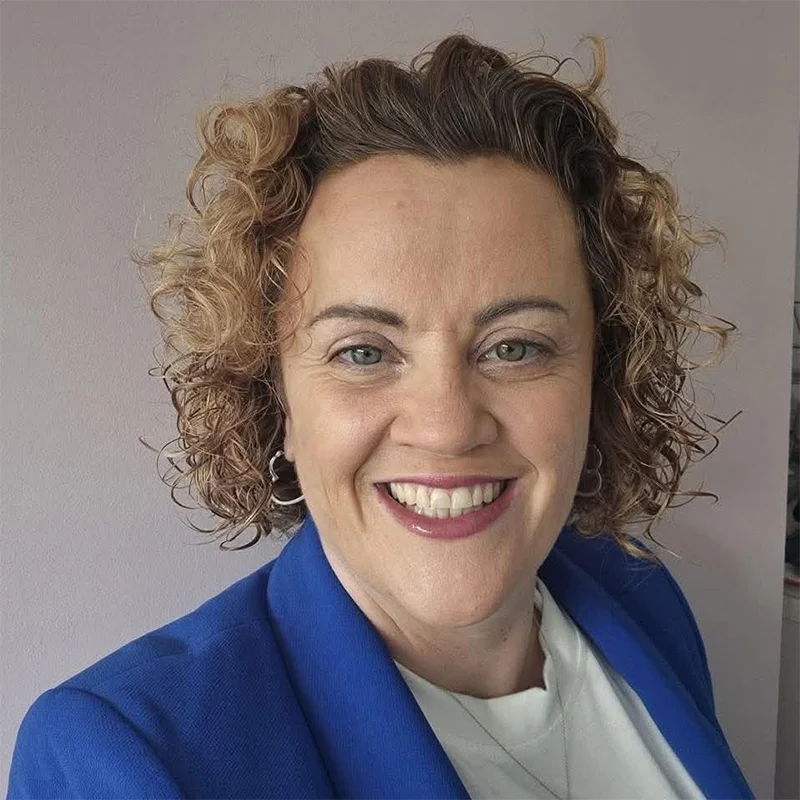
Lisa Capper
- MNCPS
Integrative Counsellor, Clinical Supervisor & Coach — Hope Therapy & Counselling Services
Lisa is an experienced integrative counsellor, clinical supervisor, and coach with a background in the care sector, where she developed a deep understanding of supporting neurodivergent individuals and their families. Her experience enables her to adapt therapy to each person’s unique needs and life circumstances.
Lisa holds an L4 Diploma in Therapeutic Counselling, an Advanced CBT Diploma, and additional qualifications in Clinical Supervision, Rewind Therapy, Transactional Analysis (TA), Emotionally Focused Tapping (EFT), and Life Coaching. She is an Accredited Member of the National Counselling & Psychotherapy Society (NCPS) and is committed to ongoing professional development.
Her specialist interests include PMDD, perimenopause and menopause, neurodivergence, bereavement, domestic and narcissistic abuse, anxiety, and trauma. Lisa also brings lived experience of PMDD to her work, combining professional expertise with personal insight into the challenges of hormonal mental health.
Lisa provides a warm, compassionate, and collaborative environment where clients can explore their experiences safely and without judgement. Drawing on an integrative approach, she tailors therapy to each individual, helping clients better understand themselves, overcome life’s challenges, and create lasting positive change.
- NCPS Accredited Member
- L4 Diploma in Therapeutic Counselling
- Advanced CBT Diploma
- Clinical SupervisorIntegrative Counsellor
- PMDD Specialist
- Women’s Hormonal Mental Health
- Neurodivergent-Affirming
Free 15-minute consultation
A no-pressure conversation to find the right therapist for you. No commitment needed.
THE AUTHOR
Lisa Capper
MNCPS
Integrative counsellor, clinical supervisor, and coach specialising in PMDD, neurodivergence, trauma, and women’s hormonal mental health.
ABOUT HOPE THERAPY
Qualified registered therapists
Online nationwide across UK
Face-to-face across England
LGBTQIA+ & neurodivergent affirming
Mon–Sun, 9am–9pm
NCPS organisational member
Est 2014
Published: 29th August 2026 | Written by Lisa Capper | Reviewed for clinical accuracy before publishing | Review due: August 2028