
Anxiety
Relationship trauma — when a past relationship still shapes the present
What relationship trauma is, how it affects people, and how it can echo into later relationships — and how counselling can help. Support for adults across England, online nationwide and face-to-face.
NCPS Organisational Member
Professionally registered therapists
Free 15-minute consultation

5,000+
People supported
90+
Qualified therapists
5 ★
Website testimonials
20+
Counties across England
This page is part of our anxiety hub
What relationship trauma is
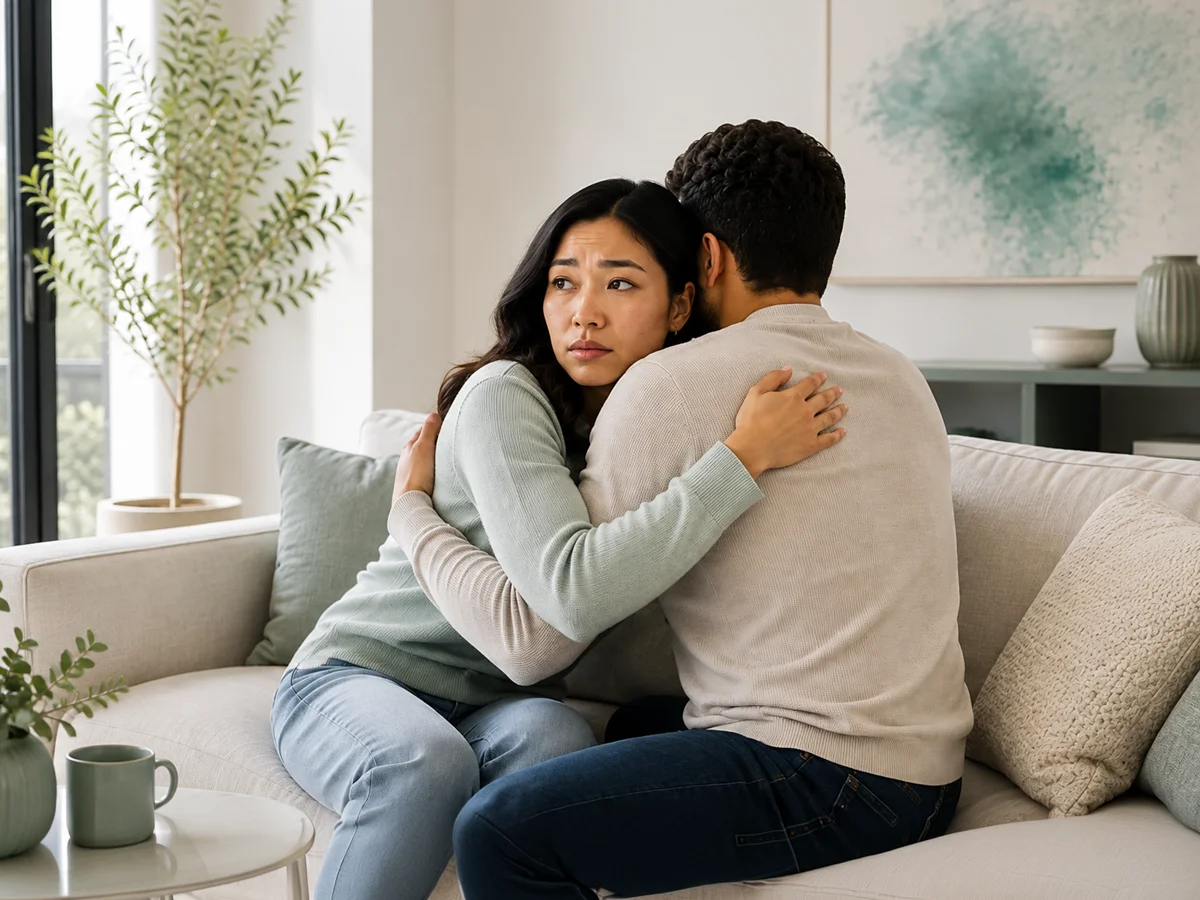
Relationship trauma is the lasting emotional impact of a harmful or deeply painful relationship — one marked by betrayal, control, emotional harm, or a profound loss of trust. It can leave anxiety, low self-worth, and fear in later relationships, long after the relationship itself has ended.
Not every difficult relationship leaves trauma, and this is not about ordinary heartbreak, painful as that is. Relationship trauma refers to the deeper mark left when a relationship was frightening, damaging, or eroded your sense of who you are. That might be a relationship with a partner, but it can also involve a parent, a family member, or a close friend.
What makes it trauma is the way it lives on. Long after the relationship is over, its effects can shape how safe you feel with others. They can change how you see yourself, and how much you are able to trust. If you recognise this, what you are carrying is real, it is understandable, and it is something counselling can help with.
The signs of relationship trauma
The signs of relationship trauma can include difficulty trusting others, anxiety and hypervigilance in relationships, and fear of intimacy. Others are low self-esteem, feeling easily triggered, and strong emotional reactions to reminders of the past. These are the effects of trauma, not flaws in who you are.
Emotionally, relationship trauma often leaves a deep sense of unsafety around closeness. You might feel anxious when a relationship becomes serious, brace yourself for betrayal, or find it hard to believe that someone’s care is genuine. Some people notice they expect the worst, even from a partner who has given no reason to.
It can also affect how you see yourself. A harmful relationship can leave you doubting your judgement, blaming yourself, or carrying a lasting sense that you are not enough. And it can show up in the body and nervous system — feeling on edge, easily startled, or overwhelmed by situations that echo the past. None of these responses mean something is wrong with you; they are how the mind and body try to stay safe after being hurt.
How relationship trauma affects later relationships
Relationship trauma can make it hard to feel safe with a new partner, even a kind one. You might expect betrayal, struggle to trust, feel anxious about closeness, or react strongly to situations that echo the past. This can continue long after the relationship that caused the harm has ended.
This is one of the most painful parts of relationship trauma: it can follow you into relationships that are genuinely safe. A raised voice, a change of plan, or a moment of distance can trigger a wave of fear that belongs to the past rather than the present. You may find yourself testing a partner, withdrawing to protect yourself, or feeling anxious precisely when things are going well.
Understanding these reactions as the echoes of trauma — rather than evidence that something is wrong with you or your relationship — can bring real relief. It also opens the door to change. With support, it is possible to help the nervous system learn that the present is not the past, so closeness can begin to feel safer again.
If you are supporting a partner with relationship trauma
If you are in a relationship with someone who carries relationship trauma, it can be confusing and painful to watch them struggle to trust or feel safe. Understanding that their reactions come from past hurt — not from you — is often the most helpful starting point.
Their fear, withdrawal, or need for reassurance is usually the past speaking, not a judgement of you or the relationship. Patience, consistency, and gentle reliability tend to help far more than trying to argue someone out of their feelings. At the same time, your own needs matter too, and supporting someone through trauma can be demanding.
Recovering from trauma is ultimately something the person does for themselves, often with professional support. It is not something a partner can do for them, however much they love them. Encouraging them to seek help, while looking after yourself, is usually the most sustainable way to support someone you care about.
What can cause relationship trauma
Relationship trauma can grow from a range of harmful experiences — a relationship marked by control, betrayal, emotional or verbal harm, repeated broken trust, or feeling persistently unsafe. It can also stem from earlier relationships, including with a parent or family member.
It is not defined by a single type of event. For some people it follows a relationship where they were belittled, manipulated, or made to feel small over a long period. For others it comes from a profound betrayal, an unpredictable and frightening partner, or a pattern of being let down by someone they depended on. What these experiences share is that they eroded trust and safety in a relationship that was supposed to provide them.
Earlier relationships shape this too. Trauma in childhood — a caregiver who was frightening, absent, or unpredictable — can lay down deep patterns that later relationships reawaken. This is why relationship trauma and attachment are closely linked, and why our page on anxious attachment often speaks to people carrying relationship trauma too. If any of this involved abuse, please see the note at the foot of this page about specialist support.
How counselling can help with relationship trauma
Counselling offers a safe, confidential space to process what happened and to understand its ongoing effects. Over time, a past relationship can hold less power over your present and your future. The aim is not to force you to “get over it,” but to help you carry it differently.
Approaches vary from person to person. Trauma-informed counselling offers a steady, paced space to make sense of what happened and its effects. EMDR is well-researched for trauma and can help the mind process painful experiences so they lose some of their charge. Person-centred counselling supports you in rebuilding trust — in others and in yourself. Your therapist will talk through what suits you, and will always work at your pace. Confidentiality is discussed with you before any work begins, including the limited circumstances in which it may need to be reviewed.
Our anxiety counselling service and our wider counselling service explain what working with us involves and how to begin. Sessions start from £65; you can see the options and full detail on the service page and our fees page. When you are ready, a free 15-minute consultation is a no-pressure way to talk it through and see whether we feel like the right fit.
A printable overview of our anxiety counselling service — useful to keep or share.
A note on what we do and do not offer: Hope Therapy provides counselling and psychotherapy for adults. We are not a crisis or emergency service. If you are currently experiencing abuse, or are in a relationship where you feel unsafe or controlled, please reach out to a specialist service: in England you can contact the (free, 24/7), or in an emergency call . For emotional support at any time, contact or text SHOUT to 85258. Counselling for relationship trauma is usually most helpful once you are safe. Confidentiality is discussed with you before any work begins, including the limited circumstances in which it may need to be reviewed.
What our clients say
Real experiences
★ ★ ★ ★ ★
Years after it ended, I was still braced for the worst in every relationship. Working through it gently, I’ve slowly started to trust again.
Client who sought support for relationship trauma
★ ★ ★ ★ ★
I blamed myself for everything that happened. My therapist helped me understand it wasn’t my fault, and that changed how I see myself.
Client who accessed counselling online
★ ★ ★ ★ ★
I didn’t think I could feel safe with anyone again. It’s been slow, but I finally believe a different kind of relationship is possible.
Client who sought support for relationship trauma
Client experiences are unique. Results vary between individuals.
Common Questions
Frequently asked questions
What is relationship trauma?
Relationship trauma is the lasting emotional impact of a harmful or deeply painful relationship — one marked by betrayal, control, repeated conflict, emotional harm, or the breakdown of trust. It can leave someone with anxiety, low self-worth, difficulty trusting, and fear in later relationships, long after the relationship itself has ended.
What are the signs of relationship trauma?
Signs of relationship trauma can include difficulty trusting others, anxiety and hypervigilance in relationships, fear of intimacy or of being hurt again, low self-esteem, feeling on edge or easily triggered, and patterns such as expecting the worst from a partner. It can also bring flashbacks or strong emotional reactions to reminders of the past relationship.
How does relationship trauma affect future relationships?
Relationship trauma can make it hard to feel safe with a new partner, even a kind one. You might find yourself expecting betrayal, struggling to trust, feeling anxious about closeness, or reacting strongly to situations that echo the past. Understanding these responses as the effects of trauma — rather than flaws — is often an important first step.
Can counselling help with relationship trauma?
Yes. Counselling offers a safe, confidential space to process what happened and to understand its ongoing effects. Approaches such as trauma-informed counselling and EMDR can help the mind process painful experiences so they hold less power in the present. During a free consultation we can talk through what might suit you.
Is it normal to still be affected by a relationship that has ended?
Yes. A harmful relationship can leave a lasting mark, and being affected long after it has ended is a common and understandable response — not a sign of weakness or of failing to move on. Trauma changes how we feel about ourselves and others, and that takes time and often support to work through.
Related Support
You might also find these helpful
Related conditions
Therapy approaches
From our Blog
Articles about relationship trauma anxiety
Meet Our Founder
Built by someone who saw the need from the inside

★
SCoPEd Band C
MBACP & SNCPS Senior Accredited
“Having worked for more than 25 years in senior management, I saw the same thing repeatedly — people struggling with mental health and relationship challenges, and so often struggling to access the right support when it was needed. It was out of this recognition of human need that Hope was born.”
Ian Stockbridge founded Hope Therapy after 25+ years leading large commercial teams – watching colleagues carry stress, anxiety, and personal difficulty with nowhere to turn. He retrained rigorously, now holding Senior Accredited status with both the BACP and NCPS, alongside SCoPEd Band C — the highest independent competence verification in the UK counselling profession.
He remains a practising therapist, clinical supervisor, published author of PMDD Uncovered, and co-presenter of The Talk Room Podcast. Hope Therapy was built on the things he saw were most broken – and designed, from the ground up, to do better.
MBACP (Senior Accredited)
SNCPS (Acc)
SCoPEd Band C
BSc (Hons) CBT
PGCert Supervision L7
Quality Award 2024 — 95%+

You do not have to keep carrying this on your own
A free, no-obligation 15-minute conversation. No pressure, no script — just a chance to be heard, ask questions, and see whether we feel like the right fit.
Get in Touch
Start your enquiry
Not sure where to start? Send us a message and a member of our team will get back to you. All enquiries are treated in the strictest confidence.
★ ★ ★ ★ ★
“From the very first phone call, I felt heard. They didn’t rush me — they helped me work out what I needed.”
Hope Therapy enquiry feedback
NCPS Organisational Member
Est 2014
90+ Qualified Therapists

National Counselling & Psychotherapy Society
British Association for Counselling and Psychotherapy

British Association for Behavioural & Cognitive Psychotherapies
Individual registrations vary per therapist. Last reviewed: May 2026.