
Anxiety
Panic disorder and panic attacks — when fear arrives without warning
What panic attacks and panic disorder are, why they happen, how they differ from general anxiety, and how counselling can help. Support across England — online nationwide and face-to-face.
NCPS Organisational Member
Professionally registered therapists
Free 15-minute consultation
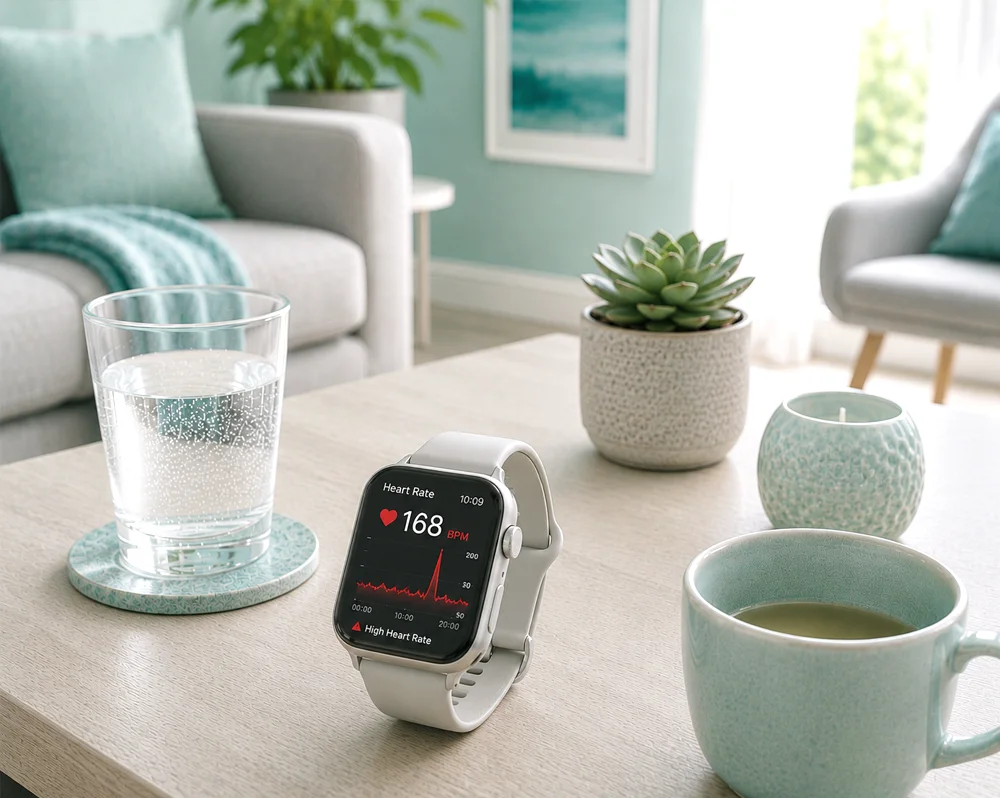
★ ★ ★ ★ ★“The first attack sent me to A&E, certain it was my heart. Understanding what was really happening was the moment the fear started to lift.”
Client who sought support for panic
5,000+
People supported
90+
Qualified therapists
5 ★
Website testimonials
20+
Counties across England
This page is part of our anxiety hub
What a panic attack actually feels like
A panic attack is a sudden surge of intense fear that arrives with powerful physical symptoms — a pounding heart, shortness of breath, dizziness, and a sense that something terrible is about to happen. It usually peaks within minutes. Frightening as it is, it is the body’s stress response, not a sign of physical harm.
If you have had one, you will know how overwhelming it is. It can feel as though you are having a heart attack, cannot breathe, or are about to lose control or even die. The body floods with adrenaline, the heart races, the chest tightens, and the mind fills with fear — often a fear of the sensations themselves. Many people end up in A&E the first time, certain something is physically wrong.
What makes panic so distressing is how sudden and total it feels. It can strike in a supermarket, while driving, or lying in bed — sometimes without any obvious trigger. And once you have experienced one, the fear of it happening again can take on a life of its own.
If this is familiar, what you are experiencing has a name and is well understood. Panic is common, it is recognised, and it responds well to support.
Panic attacks and panic disorder — what is the difference?
A panic attack is a single episode of sudden, intense fear. Panic disorder is when attacks happen repeatedly and unexpectedly, and you begin to live in fear of the next one — often changing what you do to try to avoid it.
Having an occasional panic attack is more common than people realise, and it does not necessarily mean you have panic disorder. Many people have one during a particularly stressful period and never have another. Panic disorder is the ongoing pattern: recurring attacks, and the anxious anticipation and dread that build up around them.
That anticipation is a large part of what keeps panic disorder going. The fear of another attack — sometimes called “fear of fear” — can lead you to avoid places or situations where a previous attack happened, or where escape would feel difficult. Over time, that avoidance can narrow your world, and for some people it develops into agoraphobia. Our page on agoraphobia looks at that pattern in more detail.
Why panic attacks happen
Panic attacks happen when the body’s stress response fires strongly when there is no real danger. A small physical sensation or a build-up of stress can set it off, and the fear of the sensations then fuels the attack — which is why panic can feel as though it comes from nowhere.
The stress response itself is normal and protective — it is meant to prepare you to face danger. In a panic attack, it fires at full strength when there is nothing to run from. Often the spark is a small bodily sensation: a skipped heartbeat, a moment of dizziness, a slight breathlessness. In panic, that sensation is read as a sign of catastrophe, which triggers more adrenaline, stronger sensations, and a rapid spiral into full panic.
This is why the attacks can seem random. The initial trigger is often so small, or so far below conscious awareness, that there appears to be no cause at all. Underlying stress, tiredness, caffeine, or a difficult period can all lower the threshold. Understanding this mechanism is a central part of learning to interrupt it.
Confidentiality note: before any work begins, your therapist will explain how confidentiality works. They will also explain the limited circumstances in which it may need to be reviewed — for example, where there is a serious risk of harm.
The cycle that keeps panic going
Panic is kept going by a cycle. A physical sensation triggers fear, the fear produces more adrenaline, and the adrenaline intensifies the sensation — so a small feeling escalates into a full attack. The fear of future attacks then keeps the whole cycle primed.
Within a single attack, the loop moves fast. You notice a sensation, interpret it as dangerous, and your body responds with more adrenaline. That makes the sensation stronger, which seems to confirm the danger, and within moments the fear has taken over. Because the cycle is driven by the response to the sensations, it can be interrupted once you understand it.
Between attacks, a second loop runs more slowly. The dread of another attack keeps you scanning your body for warning signs — and that hyper-awareness makes ordinary sensations more noticeable, which can itself set off the next attack. This is why panic so often becomes self-sustaining, and why the way out involves changing your relationship with the sensations rather than fighting them. That is exactly the kind of work counselling supports.
Who panic disorder affects
Panic disorder can affect anyone, and panic attacks themselves are very common. Panic disorder often begins in late adolescence or early adulthood, though it can start at any age, and it frequently appears during or shortly after a particularly stressful period.
It affects people of every background, including those who seem calm and capable to everyone around them. It often runs alongside other forms of anxiety, low mood, and periods of high stress. A first attack frequently follows a time of pressure — an illness, a bereavement, overwork, or a major life change — even if the attack itself feels to come out of the blue.
Whatever the pattern for you, panic responds well to the right support, and many people see real change. You do not have to keep living in fear of the next attack, and you do not have to face it alone.
How counselling can help with panic
Counselling can help you understand the panic cycle and respond to the sensations differently, so they lose their power to escalate into an attack. Rather than trying to suppress panic, which tends to feed it, the work helps you change your relationship with the fear itself.
Approaches vary from person to person. CBT is well-researched for panic and helps you recognise and interrupt the cycle, so a rising sensation no longer spirals into a full attack. EMDR can help where panic is linked to a past frightening experience. Person-centred counselling offers space to understand the stress and feelings underneath. Your therapist will talk through what suits you.
Our anxiety counselling service explains what working with us involves, the approaches we offer, and how to begin. Sessions start from £65; you can see the options and full detail on the service page and our fees page. When you are ready, a free 15-minute consultation is a no-pressure way to talk it through and see whether we feel like the right fit.
A printable overview of our anxiety counselling service — useful to keep or share.
A note on what we do and do not offer: Hope Therapy provides counselling and psychotherapy for adults. We do not offer diagnosis or medical treatment, and counselling is not a substitute for medical advice — new or severe symptoms such as chest pain should always be checked by a doctor. If you are in immediate danger or crisis, please call , contact , or text SHOUT to 85258 — free, confidential, and available 24/7. Confidentiality is discussed with you before any work begins, including the limited circumstances in which it may need to be reviewed.
What our clients say
Real experiences
★ ★ ★ ★ ★
The first attack sent me to A&E, certain it was my heart. Understanding the panic cycle, and that the sensations couldn’t harm me, is what finally broke the fear.
Client who sought support for panic
★ ★ ★ ★ ★
I’d started avoiding more and more places in case it happened again. My therapist helped me step back into my life, one situation at a time.
Client who accessed anxiety counselling online
★ ★ ★ ★ ★
Living in fear of the next attack was exhausting. Learning why panic happens took away its power in a way I didn’t think was possible.
Client who sought support for panic
Client experiences are unique. Results vary between individuals.
Common Questions
Frequently asked questions
What is a panic attack?
A panic attack is a sudden surge of intense fear that comes with strong physical symptoms — a pounding heart, shortness of breath, dizziness, and a feeling of losing control or that something terrible is about to happen. It usually peaks within minutes. The sensations are frightening but are the body’s stress response, not a sign of physical harm.
What is the difference between panic attacks and panic disorder?
A panic attack is a single episode of sudden intense fear. Panic disorder is when panic attacks happen repeatedly and unexpectedly, and you begin to live in fear of the next one — often changing your behaviour to try to avoid it. Many people have an occasional panic attack; panic disorder is the ongoing pattern and the dread that surrounds it.
Why do panic attacks happen for no reason?
Panic attacks can feel as though they come from nowhere, but they are the body’s stress response firing when there is no obvious danger. Sometimes a small physical sensation, a memory, or built-up stress sets it off below conscious awareness. Because the trigger is not obvious, the attack feels random and frightening, which can make the fear of future attacks worse.
Are panic attacks dangerous?
Panic attacks are extremely unpleasant but are not physically dangerous in themselves — they are the body’s stress response, which passes. That said, some symptoms of panic can overlap with other conditions, so it is always sensible to have new or severe symptoms such as chest pain checked by a doctor, both for reassurance and to rule out other causes.
Can counselling help with panic attacks?
Yes. Panic responds well to counselling. Cognitive Behavioural Therapy (CBT) is well-researched for panic and helps you understand the panic cycle and respond to the sensations differently, so they lose their power to escalate. EMDR can help where panic is linked to past experiences. During a free consultation we can talk through what might suit you.
Related Support
You might also find these helpful
Related conditions
Therapy approaches
From our Blog
Articles about panic disorder and panic attacks
The Connection Between Panic Disorder and Anxiety: Insights and Solutions
Practical Tips for Reducing the Impact of Panic Disorder on Your Life
From Fear to Freedom: Overcoming the Challenges of Panic Disorder
Meet Our Founder
Built by someone who saw the need from the inside

★
SCoPEd Band C
MBACP & SNCPS Senior Accredited
“Having worked for more than 25 years in senior management, I saw the same thing repeatedly — people struggling with mental health and relationship challenges, and so often struggling to access the right support when it was needed. It was out of this recognition of human need that Hope was born.”
Ian Stockbridge founded Hope Therapy after 25+ years leading large commercial teams – watching colleagues carry stress, anxiety, and personal difficulty with nowhere to turn. He retrained rigorously, now holding Senior Accredited status with both the BACP and NCPS, alongside SCoPEd Band C — the highest independent competence verification in the UK counselling profession.
He remains a practising therapist, clinical supervisor, published author of PMDD Uncovered, and co-presenter of The Talk Room Podcast. Hope Therapy was built on the things he saw were most broken – and designed, from the ground up, to do better.
MBACP (Senior Accredited)
SNCPS (Acc)
SCoPEd Band C
BSc (Hons) CBT
PGCert Supervision L7
Quality Award 2024 — 95%+

You do not have to keep carrying this on your own
A free, no-obligation 15-minute conversation. No pressure, no script — just a chance to be heard, ask questions, and see whether we feel like the right fit.
Get in Touch
Start your enquiry
Not sure where to start? Send us a message and a member of our team will get back to you. All enquiries are treated in the strictest confidence.
★ ★ ★ ★ ★
“From the very first phone call, I felt heard. They didn’t rush me — they helped me work out what I needed.”
Hope Therapy enquiry feedback
NCPS Organisational Member
Est 2014
90+ Qualified Therapists

National Counselling & Psychotherapy Society
British Association for Counselling and Psychotherapy

British Association for Behavioural & Cognitive Psychotherapies
Individual registrations vary per therapist. Last reviewed: May 2026.