
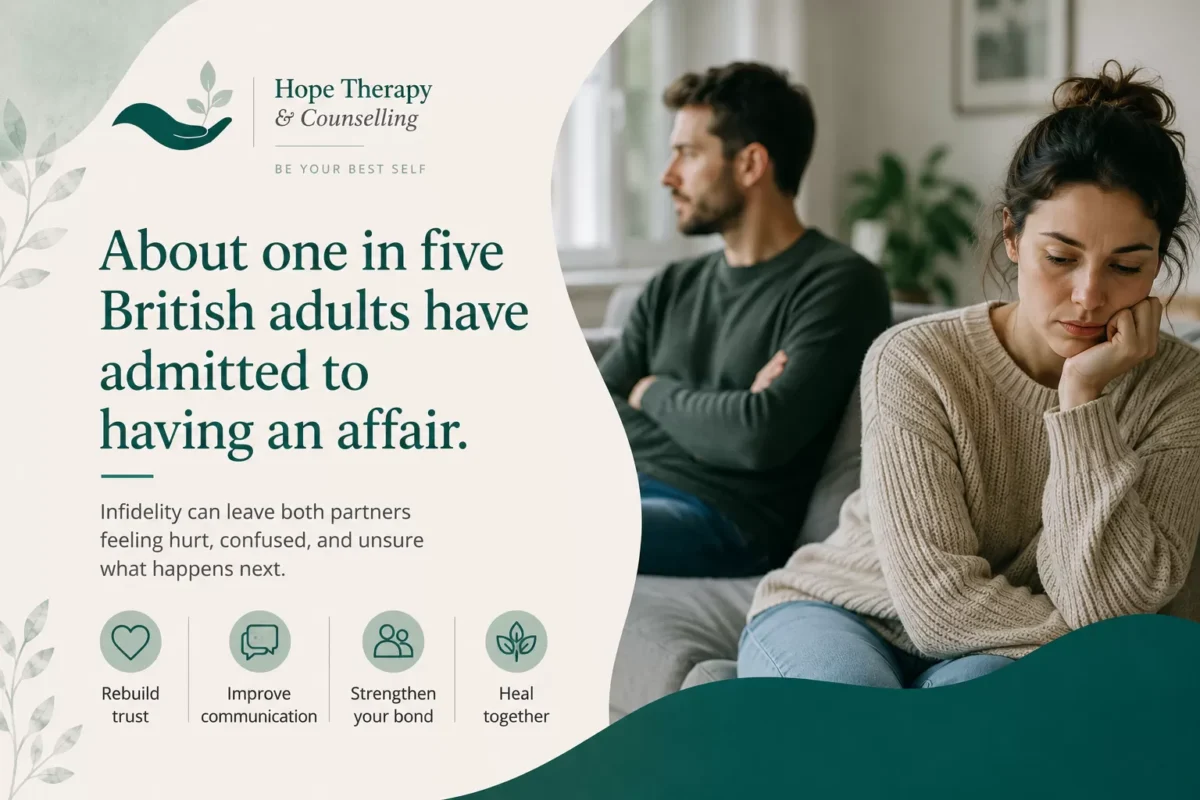
Understanding betrayal, rebuilding trust, and how counselling can support recovery after an affair
Infidelity can shake the foundations of a relationship in a way that few other experiences can. For many couples, it creates a deep sense of emotional disorientation. What once felt safe, familiar, and secure can suddenly feel uncertain. Questions begin to surface about trust, honesty, intimacy, self-worth, and whether the relationship can survive.
For the person who has discovered the betrayal, the emotional impact can feel overwhelming. Many describe it as traumatic. Thoughts can become intrusive, sleep may become difficult, and there can be a constant sense of anxiety, anger, grief, or hypervigilance. For the partner who has been unfaithful, there may also be intense feelings of guilt, shame, confusion, regret, or fear about what happens next.
At Hope Therapy & Counselling Services, we understand that healing after infidelity is rarely simple or linear. Every relationship has its own story, history, vulnerabilities, and emotional dynamics. Some couples decide they want to repair and rebuild. Others seek counselling to understand what happened, improve communication, or find clarity about the future.
What is important to remember is this: relationships can heal after betrayal. While trust cannot be rebuilt overnight, many couples are able to develop stronger communication, deeper emotional understanding, and healthier relationship patterns through the recovery process.
Understanding Infidelity
Infidelity is often defined as a breach of trust or exclusivity within a relationship. While many people associate affairs purely with physical intimacy, infidelity can take several different forms.
For some couples, emotional infidelity can feel equally painful. This may involve secrecy, emotional intimacy outside the relationship, hidden communication, or developing a significant emotional connection with another person. In modern relationships, digital forms of infidelity are also increasingly common, including secret messaging, online relationships, dating apps, or hidden online behaviours.
What constitutes betrayal can differ from relationship to relationship. This is why honest communication around boundaries, expectations, and emotional needs is so important.
The causes of infidelity are often complex and layered. It is rarely as simple as one partner being “bad” and the other being “good.” This does not excuse betrayal or minimise the pain caused, but understanding the context can be important in the healing process.
Some common contributing factors can include:
- Communication breakdown within the relationship
- Emotional or physical intimacy difficulties
- Feeling disconnected, unseen, or emotionally neglected
- Unresolved trauma or attachment difficulties
- Poor boundaries
- Validation-seeking behaviours
- Stress, life transitions, or mental health difficulties
- Avoidance of conflict or emotional vulnerability
- Impulsivity or self-destructive coping patterns
In some situations, the affair itself becomes a symptom of deeper unresolved issues within either the individual or the relationship dynamic.
The Emotional Impact of Betrayal
Discovering infidelity can create an emotional shock response. Many people describe feeling as though the relationship they thought they had suddenly disappears overnight.
The betrayed partner may experience:
- Anger and rage
- Anxiety and panic
- Grief and sadness
- Intrusive thoughts and overthinking
- Difficulty sleeping or eating
- Hypervigilance
- Loss of confidence or self-esteem
- Fear of abandonment
- Difficulty trusting others
Many individuals begin questioning their own worth or replaying events repeatedly in an attempt to make sense of what happened.
For the partner who has been unfaithful, emotions can also become overwhelming. There may be shame, guilt, confusion, defensiveness, fear of losing the relationship, or difficulty understanding their own behaviour.
Affairs can also affect wider family systems, friendships, children, and everyday functioning. It is not uncommon for couples to feel emotionally exhausted in the weeks and months following disclosure.
Why Counselling Can Help After Infidelity
Healing after betrayal often requires more than simply deciding to “move on.” Without support, couples can easily become trapped in cycles of blame, defensiveness, withdrawal, repeated conflict, or emotional shutdown.
Counselling provides a structured and supportive environment where both people can begin to process what has happened safely.
At Hope Therapy & Counselling Services, infidelity counselling is not about taking sides or assigning blame. Instead, the focus is on helping couples understand the impact of the betrayal, improve communication, process difficult emotions, and explore whether trust can be rebuilt.
For some couples, therapy becomes the first time they are able to have honest conversations without escalation or avoidance.
Emotional Healing
One of the most important aspects of recovery is emotional processing.
The betrayed partner often needs space to express hurt, grief, anger, and confusion without being dismissed or minimised. Equally, the partner who has been unfaithful may need support in understanding their own behaviours, shame, or emotional patterns.
Counselling can help couples move away from reactive conflict and towards emotional understanding.
Healing does not mean pretending the betrayal never happened. It means learning how to process the pain without remaining trapped inside it.
Rebuilding Communication
Communication often breaks down significantly after infidelity.
Conversations may quickly escalate into arguments, emotional withdrawal, stonewalling, defensiveness, or repeated reassurance-seeking. Couples may find themselves having the same painful conversations repeatedly without resolution.
Therapy helps create healthier dialogue patterns where both people can express feelings, fears, needs, and boundaries more effectively.
This can include:
- Learning active listening skills
- Developing emotional regulation
- Understanding triggers
- Reducing defensive communication
- Practising honesty and transparency
- Building empathy and accountability
For many couples, this becomes the foundation for rebuilding emotional safety.
Understanding the Relationship Dynamic
Part of the counselling process often involves exploring the wider context surrounding the affair.
This does not mean blaming the betrayed partner for what happened. Responsibility for infidelity remains with the individual who crossed the relationship boundary.
However, relationships exist within broader emotional systems, and understanding those systems can help prevent repeating destructive patterns.
Therapy may explore:
- Emotional disconnection
- Unmet needs
- Attachment styles
- Conflict avoidance
- Past trauma
- Relationship patterns
- Intimacy difficulties
- Self-esteem and validation needs
This deeper understanding can help couples decide how they want to move forward.
Our Counselling Process at Hope Therapy
At Hope Therapy & Counselling Services, we aim to create a calm, non-judgemental, and emotionally safe space for couples navigating betrayal.
Creating Emotional Safety
The first stage of therapy is often focused on stabilisation and emotional safety.
This means creating an environment where both individuals feel able to speak honestly without fear of judgement or attack. In the early stages after disclosure, emotions can understandably feel extremely heightened.
Therapy can help slow conversations down so both people feel heard.
Exploration and Understanding
As therapy progresses, couples begin exploring the underlying relationship dynamics, emotional injuries, communication patterns, and vulnerabilities that may have contributed to the situation.
Again, this is not about excusing infidelity. It is about understanding the bigger picture.
Skill Building
Recovery after betrayal requires practical relational skills.
Counselling may involve developing:
- Communication strategies
- Emotional regulation techniques
- Conflict resolution skills
- Boundary setting
- Trust-building exercises
- Reconnection work
Many couples discover that they have never previously been taught how to communicate openly and vulnerably.
Moving Forward
For some couples, therapy supports reconciliation and rebuilding the relationship. For others, it provides clarity, closure, or a healthier separation process.
Either way, the goal is emotional healing and healthier future relationships.
What Happens in the First Session?
Starting counselling after infidelity can feel daunting, particularly when emotions are already high.
The first session is usually focused on understanding your situation, hearing both perspectives, and creating an initial framework for support.
This may include:
Introductions
You will meet your counsellor and have space to explain what has brought you to therapy.
Assessment
Your therapist may ask questions about the relationship history, the impact of the affair, communication patterns, and what support currently looks like.
Goal Setting
Couples are encouraged to think about what they hope to achieve through therapy.
Some may want to rebuild trust. Others may want better communication, emotional closure, understanding, or support navigating uncertainty.
Planning
The counsellor will help establish a structure for future sessions and may suggest practical exercises or reflection work between appointments.
Keys to Recovery Success
While every relationship is different, there are certain themes that often support successful recovery after infidelity.
Commitment
Healing requires effort from both individuals. Rebuilding trust takes time, consistency, and emotional honesty.
Transparency
Many couples benefit from increased openness during recovery. This can involve more honest communication about feelings, concerns, triggers, and boundaries.
Consistency
Trust is rarely rebuilt through words alone. Consistent behaviours over time are often what help relationships begin to feel emotionally safe again.
Patience
Healing after betrayal is rarely quick. There may be setbacks, difficult conversations, and emotional fluctuations throughout the process.
Compassion
While accountability is important, self-compassion and empathy also matter. Shame and self-hatred rarely create healthy long-term change.
Can a Relationship Truly Recover After an Affair?
This is one of the most common questions couples ask.
The honest answer is that some relationships do recover — and many even become healthier than they were before. However, this usually requires genuine accountability, openness, emotional work, and a willingness to address underlying patterns.
Recovery is not about returning to the exact relationship that existed before the betrayal. Often, that relationship no longer exists.
Instead, healing involves creating a new foundation built on honesty, communication, emotional awareness, and intentional connection.
For some couples, therapy helps them rediscover closeness and understanding that had been missing for years.
Seeking Support
Many people delay reaching out for support because they feel embarrassed, ashamed, or unsure whether their relationship problems are “serious enough.”
But if something is affecting your emotional wellbeing, relationship stability, confidence, or peace of mind, support is valid.
At Hope Therapy & Counselling Services, we provide compassionate counselling support for couples and individuals navigating infidelity, betrayal trauma, communication difficulties, relationship breakdown, and emotional healing.
We offer online, telephone, and in-person sessions designed to create a safe and supportive environment for recovery.
Healing after infidelity is difficult, but you do not have to navigate it alone.
Frequently Asked Questions
Is it normal to feel traumatised after infidelity?
Yes. Many people experience symptoms similar to trauma responses after discovering betrayal, including anxiety, intrusive thoughts, hypervigilance, emotional overwhelm, and difficulty trusting.
Can counselling help rebuild trust?
Counselling can help couples develop healthier communication, accountability, emotional understanding, and practical trust-building strategies. Rebuilding trust takes time, but therapy can support the process.
Should we attend couples counselling immediately after disclosure?
For many couples, early support can be very beneficial. Therapy can help stabilise communication, reduce escalation, and create emotional safety during a highly distressing time.
What if we are unsure whether we want to stay together?
Therapy does not force couples towards reconciliation. Counselling can help provide clarity, understanding, and support regardless of the eventual outcome.
Does Hope Therapy offer online infidelity counselling?
Yes. Hope Therapy & Counselling Services offers online, telephone, and in-person counselling sessions to support couples and individuals after infidelity.
How long does recovery after infidelity take?
Recovery varies greatly between couples. Some people begin feeling more stable within months, while for others the healing process can take significantly longer. There is no “correct” timeline for emotional recovery.
Further reading: https://www.hopefulminds.co.uk/blog/category/infedility/