
Anxiety
When anxiety lives in your body
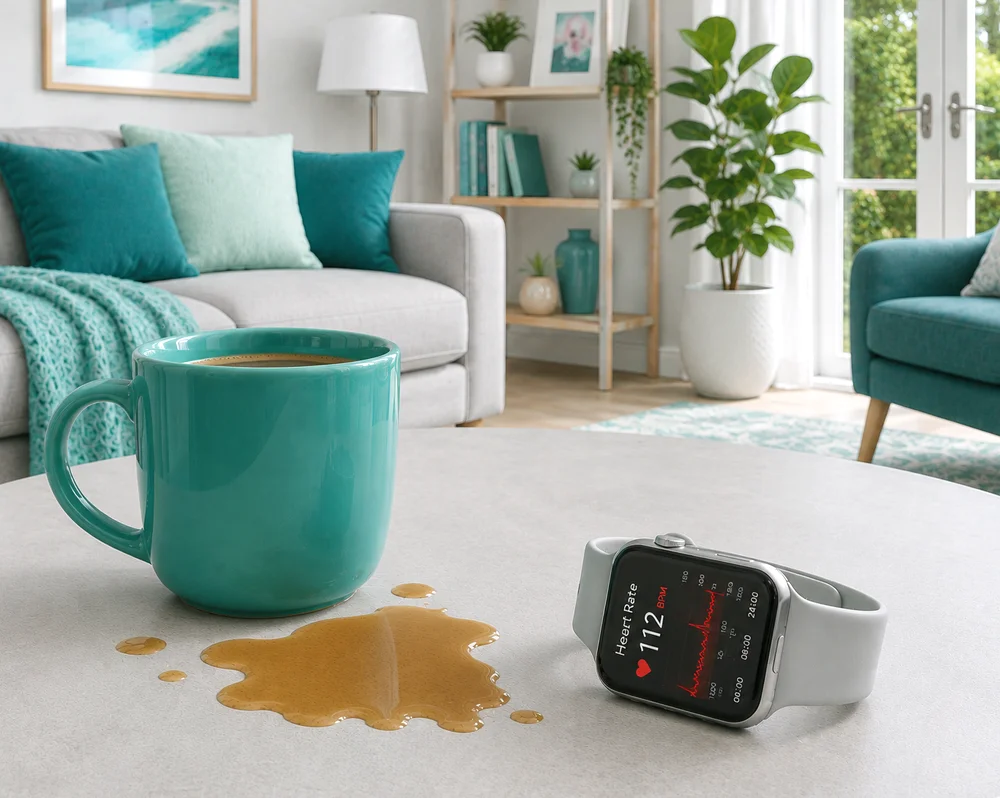
Shaking, chest tightness, dizziness, a racing heart — anxiety does not just live in your mind. If your body has been sending signals you cannot explain, you are not imagining it. Our therapists can help you understand what is happening and find a way through.
NCPS Organisational Member
Professionally registered therapists
Free 15-minute consultation
5,000+
People supported
90+
Qualified therapists
5 ★
Website Testimonials
20+
Counties across England
This page is part of our anxiety hub — visit for a full overview of how we support those suffering with anxiety.
Most people think of anxiety as a feeling — worry, dread, a mind that will not switch off. But for many people, anxiety is something they feel in their body first. A tightness in the chest. A stomach that will not settle. Waking up shaking and not knowing why.
These physical symptoms can be frightening, especially when they seem to come from nowhere. You might have been to your GP, had tests, been told everything is fine — and yet your body keeps telling you something is wrong. That disconnect between what the tests say and what you feel can be deeply unsettling.
The truth is, anxiety is as much a physical experience as an emotional one. Your body is not malfunctioning — it is responding to a perceived threat in exactly the way it was designed to. Understanding that is often the first step towards feeling less afraid of what is happening.
Why anxiety causes physical symptoms
Your nervous system has a built-in alarm called the fight-or-flight response. When your brain detects a threat — real or perceived — it floods your body with adrenaline and cortisol. Your heart rate increases. Your muscles tense. Your breathing becomes shallow. Blood is diverted away from your digestive system and towards your limbs, ready to run or fight.
This response is completely normal. It kept our ancestors alive. The problem is that the same system fires whether you are being chased by something dangerous or lying in bed worrying about tomorrow. Your body cannot tell the difference.
When anxiety becomes persistent, this alarm system can get stuck in the “on” position. The physical symptoms stop being occasional and start becoming part of daily life — a background hum of tension, discomfort, and exhaustion that never fully lifts.
What the physical symptoms actually feel like
The clinical language talks about “somatic manifestations” and “autonomic arousal.” But if you are living with it, the experience is far more personal than that.
You might wake up shaking and not know why. Your chest might feel tight for hours — not painful exactly, but wrong, like something is pressing on it. You might feel dizzy in the supermarket, nauseous before a meeting, or notice that your hands tremble when you try to hold a cup of tea. Some people describe a feeling of internal vibration — as though their body is buzzing beneath the surface.
Perhaps the most unsettling part is how random it can seem. The symptoms do not always arrive when you feel anxious. Sometimes they come when you are apparently calm — which is what makes so many people think there must be something physically wrong with them.
If your GP has checked and found nothing, that is actually reassuring — even if it does not feel like it. It often means your body is working exactly as it should, just in response to a level of stress or anxiety that has become chronic.
Shaking, trembling, and body tremors
Of all the physical symptoms of anxiety, shaking is one of the most alarming. It can happen at any time — but it is particularly common first thing in the morning, and many people search for answers after waking up shaking or trembling without an obvious cause.
There is usually a straightforward explanation. During sleep, your body continues to process stress hormones. Cortisol levels naturally rise in the early hours as part of the cortisol awakening response — a well-documented process that prepares your body for the day ahead. If you are already carrying a significant level of anxiety, this natural cortisol surge can trigger a disproportionate fight-or-flight response before you are even fully awake. The result is trembling, a racing heart, and a wash of dread — all within minutes of opening your eyes.
For some people, this happens occasionally during particularly stressful periods. For others, it becomes a daily pattern that makes mornings feel like a battle before the day has even begun. The trembling may be visible — shaking hands, trembling legs — or it may feel internal, like a vibration running through your body that no one else can see.
Body tremors linked to anxiety can also occur during the night, waking you from sleep with a jolt of adrenaline and a sense that something is wrong. This is different from a panic attack, though the two can overlap. The shaking itself is not dangerous — it is your muscles responding to a surge of stress hormones — but it can feel deeply frightening, especially if you do not know what is causing it.
A note about physical causes: while shaking and trembling are common anxiety symptoms, they can also be caused by other medical conditions — including low blood sugar, thyroid disorders, medication side effects, and neurological conditions. If you are experiencing persistent or unexplained shaking, it is important to see your GP to rule out other causes. Anxiety is often the explanation, but it should be a diagnosis of consideration alongside other possibilities, not an assumption,
When physical symptoms become a cycle
One of the hardest things about the physical symptoms of anxiety is that they tend to create their own feedback loop. You notice a symptom — say, a tightness in your chest. That symptom makes you anxious. The anxiety produces more physical symptoms. Which makes you more anxious. And so it goes.
Over time, this cycle can lead to hypervigilance — a state of constant body-scanning, checking for the next symptom, bracing for the next wave. You might start avoiding situations where symptoms have occurred before, which can gradually narrow your world in ways that feel very similar to agoraphobia.
This is not a sign that you are getting worse. It is a sign that your nervous system has learned a pattern — and patterns, with the right support, can be changed.
Common Symptoms
Physical symptoms you might recognise
Anxiety affects everyone differently. These are some of the most common physical symptoms.
Shaking or trembling
Waking up shaking, trembling hands, or a feeling of internal vibration — especially during stressful periods or first thing in the morning.
Chest tightness
A persistent feeling of pressure or tightness in the chest — not quite pain, but a sense that something is wrong. Often mistaken for a heart problem.
Dizziness or lightheadedness
Feeling unsteady, lightheaded, or as though the world is slightly off-balance — particularly in busy or unfamiliar environments.
Nausea or digestive problems
A churning stomach, loss of appetite, or persistent nausea — your gut is closely connected to your nervous system and responds strongly to anxiety.
Racing heart or palpitations
A pounding heart, skipped beats, or a feeling that your heart is beating too fast — even when you are sitting still or trying to relax.
Muscle tension and exhaustion
Chronic tension in the jaw, shoulders, or back. A tiredness that sleep does not fix. The feeling of being physically drained by the end of each day.
How counselling helps with the physical symptoms of anxiety
You might wonder what talking could possibly do about a racing heart or a tight chest. It is a fair question — and the answer is more than you might expect.
Counselling works with the physical symptoms of anxiety by addressing what drives them. The shaking, the tension, the digestive problems — these are not random. They are your body’s response to a pattern of thinking and feeling that has become stuck. When you begin to understand that pattern, the physical symptoms often start to shift.
A therapist experienced in anxiety will help you recognise the connection between your thoughts, your emotions, and what happens in your body. That awareness alone can reduce the fear that something is physically wrong — which, in turn, can break the cycle that keeps the symptoms going.
This is not about thinking your symptoms away. It is about understanding them well enough that they lose their power to frighten you. Many people find that as the fear of the symptoms reduces, the symptoms themselves become less intense and less frequent.
At Hope Therapy, we take time to match you with a therapist who has experience working with the physical side of anxiety. The matching process is part of your free consultation — we find the right person for you, rather than simply assigning whoever is available.
Our Approach
Therapeutic approaches that can help
Different approaches work for different people. Here are the ones our therapists most commonly use for the physical symptoms of anxiety.
Cognitive Behavioural Therapy (CBT)
CBT helps you identify the thinking patterns that fuel your physical symptoms — the catastrophising, the body-scanning, the “what if” thoughts — and gently challenge them. It also builds practical skills for managing symptoms in the moment, such as breathing techniques and grounding exercises.
Learn more about CBT →
EMDR
Where physical anxiety symptoms are linked to a specific frightening experience — a panic attack, a medical scare, or a traumatic event — EMDR can help process that memory so it no longer triggers such an intense physical response. This can be particularly helpful when symptoms started suddenly after a specific event.
Learn more about EMDR →
Integrative Counselling
For people who want to understand not just what is happening in their body but why — integrative counselling draws on a range of therapeutic models to explore the deeper roots of your anxiety. This is especially valuable when physical symptoms exist alongside low mood, exhaustion, or a feeling that something in your life is fundamentally out of balance.
Learn more about counselling →
Our booking team and your therapist will discuss which approach — or combination — feels most appropriate for what you are bringing. You do not need to know which is right before you start.
What our clients say
Real experiences
★ ★ ★ ★ ★
I had been having chest tightness and dizziness for months and was convinced something was seriously wrong. My counsellor helped me understand the link between my anxiety and the physical symptoms. It did not happen overnight, but gradually the symptoms became less frightening and less frequent.
★ ★ ★ ★ ★
I was waking up shaking almost every morning and had no idea why. Being matched with a therapist who understood physical anxiety made all the difference. For the first time in a long while, I feel like I understand what my body is doing.
★ ★ ★ ★ ★
The free consultation put me at ease straight away. I was matched with someone who really understood what I was going through physically. The whole process felt genuinely caring, not like being sold something.
Client experiences are unique. Results vary between individuals.
Getting started
How it works
Three simple steps. No pressure, no obligation.
1
Book a free consultation
A relaxed 15-minute conversation with a member of our team. We listen to what has been going on and answer any questions you have. You can do this from home — by phone or online.
2
We find the right therapist
Based on what you tell us, we carefully match you with a therapist from our team of 90+ who has the right experience and approach for your needs. This is not random — it is a considered process.
3
Begin your sessions
Start your sessions online from wherever you feel comfortable. Your therapist will help you understand the connection between your mind and body — at a pace that feels right for you.
Most clients hear back from us the same working day, and typically begin sessions within a week of the free consultation — depending on your preferences and therapist availability.
Standards you can trust
How we match you with the right therapist for the physical symptoms of anxiety
Choosing a therapist is a personal decision, and we take time to get the match right.
A careful match, not a long list
Therapist availability changes from week to week, so rather than asking you to choose from a directory, we take time during your free 15-minute consultation to understand what you are looking for — and then match you with a therapist suited to your needs.
During the consultation, we will ask about:
- What you would like the work to focus on, and any specific concerns
- Whether you would prefer face-to-face, online, or combination
- Any preferences around therapy approach (counselling, CBT, EMDR, hypnotherapy, mindfulness, ACT, compassion focused therapy and others)
- Day and time availability
- Any specialisms (LGBTQIA+ affirming, neurodiversity-affirming, particular life experiences)
- Practical preferences (therapist gender, age range, shared lived experience)
All therapists we work with are qualified and registered with appropriate UK professional bodies, and we will confirm the most suitable options with you before any sessions begin.
Professional standards across our team
Hope Therapy & Counselling Services has been operating since 2014, and we hold Organisational Membership with the National Counselling & Psychotherapy Society (NCPS). We work in line with the NCPS Code of Ethics and BACP Good Practice, and our wider clinical standards include:
- Qualified, professionally registered therapists across the team — registrations vary per therapist and are confirmed before matching
- Ongoing clinical supervision in line with professional body requirements
- Continuing professional development to maintain and develop practice
- Clear confidentiality standards, with limits explained before sessions begin
- Client-centred, non-judgemental and inclusive practice across all areas of identity and experience
- Founder-led clinical oversight from Ian Stockbridge — MBACP (Senior Accredited) – who continues to lead the practice and oversee its standards
Whether you choose face-to-face counselling near you or online therapy from anywhere in the UK, you can expect to be matched with a therapist who is appropriately qualified and suited to the support you are looking for.
Transparent Pricing
Our fees
No hidden costs. Your therapist and fees are discussed during your free consultation.
Individual Counselling
From £65
per 50-minute session
- Online via Zoom or telephone
- Face-to-face where available
- Mon–Fri, limited weekend availability
CBT
From £85
per 50-minute session
- Structured, evidence-based approach
- Experienced CBT practitioners
- Online or face-to-face
EMDR
From £95
per 50-minute session
- Specialist trauma processing
- Trained EMDR practitioners
- Online or face-to-face
Looking for a more affordable option? We may be able to offer sessions at a reduced rate — just ask during your free consultation.
London clients: Location-adjusted rates may apply. Please ask during your free consultation and we will confirm the exact fee before you commit to anything.
Common Questions
Frequently asked questions
Why does anxiety cause physical symptoms?
Anxiety activates the body’s fight-or-flight response, releasing stress hormones like adrenaline and cortisol. These hormones prepare your body to respond to a perceived threat — increasing your heart rate, tensing your muscles, and diverting blood flow. When anxiety is persistent, these physical responses can become chronic.
Can anxiety really cause shaking when you wake up?
Yes. Waking up shaking is a common physical response to anxiety. During sleep, stress hormones can build up, and the transition to wakefulness can trigger a surge of adrenaline. If shaking on waking is persistent, it is worth speaking with your GP to rule out other causes such as low blood sugar, thyroid conditions, or medication effects.
How do I know if my symptoms are caused by anxiety?
Anxiety-related physical symptoms tend to come and go with stress, appear in clusters, and often worsen when you are worried or in triggering situations. If your GP has ruled out other medical causes and the symptoms persist, anxiety is a common explanation. A counsellor can help you understand the connection.
Can counselling help with physical anxiety symptoms?
Yes. Counselling — particularly approaches like CBT — can help you understand the cycle between anxious thoughts, physical responses, and avoidance behaviours. By addressing what drives the anxiety, many people find that the physical symptoms gradually reduce in intensity and frequency.
Do I need to see a doctor before starting counselling?
It is a good idea to see your GP if you are experiencing new or unexplained physical symptoms, to rule out other causes. However, you do not need a GP referral to begin counselling with us. Many people come to us while they are still working things out — our free 15-minute consultation is a good place to start.
How much does anxiety counselling cost?
Individual counselling sessions start from £65 per 50-minute session. CBT starts from £85 per session. We also offer a reduced rate for those who need it. Fees are discussed during your free consultation so you are clear before committing.
Your body is trying to tell you something
If you have been living with physical symptoms that no one can quite explain — or that you have been told are “just anxiety” — you deserve more than a dismissal. The symptoms are real. The distress is real. And there is a way to work with them that does not involve simply pushing through.
You do not need to have a diagnosis. You do not need to understand exactly what is happening. You do not even need to be sure it is anxiety. A free 15-minute consultation is simply a conversation — a chance to talk about what you have been experiencing and to find out whether we can help.
If any of this has felt familiar, book a free consultation or call us on . We answer the phone 9am to 9pm.
Related Support
You might also find these helpful
Related conditions
Therapy approaches

Meet Our Founder
Built by someone who saw the need from the inside

★
SCoPEd Band C
MBACP & SNCPS Senior Accredited
“Having worked for more than 25 years in senior management, I saw the same thing repeatedly — people struggling with mental health and relationship challenges, and so often struggling to access the right support when it was needed. It was out of this recognition of human need that Hope was born.”
Ian Stockbridge founded Hope Therapy after 25+ years leading large commercial teams – watching colleagues carry stress, anxiety, and personal difficulty with nowhere to turn. He retrained rigorously, now holding Senior Accredited status with both the BACP and NCPS, alongside SCoPEd Band C — the highest independent competence verification in the UK counselling profession.
He remains a practising therapist, clinical supervisor, published author of PMDD Uncovered, and co-presenter of The Talk Room Podcast. Hope Therapy was built on the things he saw were most broken – and designed, from the ground up, to do better.
MBACP (Senior Accredited)
SNCPS (Acc)
SCoPEd Band C
BSc (Hons) CBT
PGCert Supervision L7
Quality Award 2024 — 95%+

You do not have to keep pushing through this alone
A free, no-obligation 15-minute conversation. No pressure, no script — just a chance to be heard, ask questions, and see whether we feel like the right fit.
Get in Touch
Start your enquiry
Not sure where to start? Send us a message and a member of our team will get back to you. All enquiries are treated in the strictest confidence.
★ ★ ★ ★ ★
“From the very first phone call, I felt heard. They didn’t rush me — they helped me work out what I needed.”
Hope Therapy enquiry feedback
NCPS Organisational Member
Est 2014
90+ Qualified Therapists

National Counselling & Psychotherapy Society
British Association for Counselling and Psychotherapy

British Association for Behavioural & Cognitive Psychotherapies
Individual registrations vary per therapist. Last reviewed: May 2026.