Relationship Difficulties
When conversations keep going wrong
Qualified therapists offering support for communication and conflict in relationships across England — online nationwide and face-to-face.
NCPS Organisational Member
Professionally registered therapists
Free 15-minute consultation

★ ★ ★ ★ ★“We had forgotten how to talk to each other without it turning into a fight. Having someone help us hear what the other person was actually saying changed everything.”
Client who sought couples counselling for communication
5,000+
People supported
90+
Qualified therapists
5 ★
Website Testimonials
20+
Counties across England
When you cannot seem to get through to each other
You know the feeling. A conversation that starts about something small — the washing up, a plan that fell through, a comment that landed the wrong way — and within minutes, you are in territory that has nothing to do with the original subject. The voices get louder, or they get quieter. Someone shuts down. Someone walks away. And afterwards, nothing has been resolved. You are left with the same frustration, the same distance, and the growing suspicion that there is no point trying to talk about it again.
Or perhaps the arguments have stopped altogether — not because things are better, but because you have both given up trying. The silence can feel worse than the conflict. You share a house, a bed, a life — but the important things have become too risky to say out loud. You might feel lonely in the relationship, frustrated, resentful, or simply exhausted by the effort of not saying what you actually mean.
Communication problems are one of the most common reasons couples seek counselling. Not because people do not care, but because the ways they have learned to talk to each other — or not talk — have stopped working. The patterns are usually older than either person realises, and they tend to get worse, not better, without support.
Why couples get stuck in the same patterns
Most communication problems in relationships are not about a lack of skill. They are about what happens emotionally when a conversation touches something that feels vulnerable. When you feel criticised, unheard, dismissed, or misunderstood, your nervous system responds — and the response is often automatic: defend, attack, withdraw, or shut down.
Over time, these automatic responses become fixed patterns. One person pursues — asking, pushing, demanding — while the other retreats. Or both escalate, matching each other’s intensity until the conversation becomes a competition no one wins. Or both withdraw, creating a silence that grows heavier with every conversation that does not happen. The pattern becomes self-reinforcing: the more one person pushes, the more the other pulls away — and the more the other pulls away, the harder the first person pushes. Both are trying to be heard. Neither feels like they are succeeding.
These patterns often have roots that go back further than the current relationship. The way you learned to handle conflict in your family of origin — whether that was shouting, silence, or pretending everything was fine — shapes how you respond to conflict now. If expressing needs was met with anger, dismissal, or punishment when you were growing up, it makes sense that doing so as an adult would feel dangerous, even when your partner is willing to listen.
Understanding these patterns is not about assigning blame. It is about seeing the dynamic clearly enough to change it — and recognising that both people are usually caught in a cycle that neither of them chose deliberately.
What the argument is really about
Most recurring arguments are not really about the thing on the surface. The argument about who does more housework is often about feeling unappreciated. The argument about spending time apart is often about feeling insecure. The argument about money is often about control, or fear, or different values that have never been properly discussed.
When these deeper needs go unspoken — because they feel too vulnerable, or because past attempts to express them have gone badly — they come out sideways: as criticism, as withdrawal, as sarcasm, as the kind of cold precision that is designed to wound. Neither person is getting what they need, and both feel misunderstood. The longer this continues, the more entrenched it becomes — until the relationship starts to feel like a problem to be managed rather than a connection to be nourished.
Conflict is not always a sign that a relationship is failing. Sometimes it is a sign that something important is trying to be said, but neither person has found a way to say it yet. Counselling can help you get underneath the surface argument and find out what is actually at stake — and that understanding, more than any technique, is usually what allows things to shift. When both people feel heard, the need to keep fighting the same battle tends to fall away on its own.
How counselling can help
Counselling for communication and conflict is not about learning scripts or rehearsing phrases. It is about understanding what is really happening between you — the fears, the assumptions, the unspoken needs — and finding ways to express those things honestly, without the conversation collapsing into the same familiar pattern.
In couples counselling, your therapist acts as a third perspective — someone who can see what neither of you can from inside the dynamic. They can help you notice the moments when a conversation shifts from connection to conflict, and understand what triggers that shift. They can slow the conversation down, creating space for each person to say what they actually mean, rather than what comes out in the heat of the moment. Over time, many couples find they are able to have conversations they had been avoiding for months or years — not because they have learned a technique, but because they have started to understand each other differently.
For individuals, counselling can help you understand your own communication patterns — why you withdraw, why you escalate, why certain words or tones from your partner produce a reaction that feels out of proportion. This kind of self-awareness does not depend on your partner attending. It changes how you show up in the relationship regardless. And for many people, that change alone is enough to begin shifting the dynamic between you.
Sessions are confidential. There are limited circumstances where this may need to change — for example, if there is a serious risk of harm — and your therapist will explain these clearly before you begin.
Our Approach
How we work with communication and conflict
We offer several approaches, and your therapist will recommend the one that best fits your situation.
Our booking team and your therapist will discuss which approach — or combination — feels most appropriate for what you are bringing. You do not need to know which is right before you start.
What our clients say
Real experiences
★ ★ ★ ★ ★
We had forgotten how to talk to each other without it turning into a fight. Having someone help us hear what the other person was actually saying changed everything.
Client who sought couples counselling for communication
★ ★ ★ ★ ★
I came on my own because my partner was not ready. Understanding my own patterns — why I shut down, why I get defensive — has changed how I respond, and that has changed our dynamic.
Client who sought individual support for conflict
★ ★ ★ ★ ★
We were having the same argument for years. Counselling helped us see what it was really about — and once we understood that, the argument stopped needing to happen.
Client who sought couples counselling
Client experiences are unique. Results vary between individuals.
Getting started
What to expect
Reaching out about communication problems — especially when things feel fragile — takes courage. Here is how it works.
1
Free consultation
A brief, relaxed 15-minute conversation with a member of our booking team. We listen to what is going on and explore whether counselling could help. No pressure, no obligation.
2
Matched with a therapist
Based on your needs and preferences, we carefully match you with one of our 90+ qualified therapists. If it doesn’t feel right, we’ll find someone else — at no extra cost.
3
Your first session
Your therapist will take time to understand your situation and what you are hoping to work on. There is no rush, no script, and nothing you have to share before you are ready.
Most clients hear back from us the same working day, and typically begin sessions within a week of the free consultation — depending on your preferences and therapist availability.
Standards you can trust
How we match you with the right therapist for communication and conflict support
Choosing a therapist is a personal decision, and we take time to get the match right.
A careful match, not a long list
Therapist availability changes from week to week, so rather than asking you to choose from a directory, we take time during your free 15-minute consultation to understand what you are looking for — and then match you with a therapist suited to your needs.
During the consultation, we will ask about:
- What you would like the work to focus on, and any specific concerns you would like support with
- Whether you would prefer face-to-face counselling, online sessions, or a combination of the two
- Any preferences around therapy approach (counselling, CBT, EMDR, hypnotherapy, mindfulness, ACT, compassion focused therapy and others)
- Day and time availability that works around your life
- Any specialisms that matter to you — for example LGBTQIA+ affirming therapy, neurodiversity-affirming support, or particular life experiences
- Practical preferences — for example therapist gender, age range, or shared lived experience where that matters to you
All therapists we work with are qualified and registered with appropriate UK professional bodies, and we will confirm the most suitable options with you before any sessions begin.
Professional standards across our team
Hope Therapy & Counselling Services has been operating since 2014, and we hold Organisational Membership with the National Counselling & Psychotherapy Society (NCPS). We work in line with the NCPS Code of Ethics and BACP Good Practice, and our wider clinical standards include:
- Qualified, professionally registered therapists across the team — registrations vary per therapist and are confirmed before matching
- Ongoing clinical supervision in line with professional body requirements
- Continuing professional development to maintain and develop practice
- Clear confidentiality standards, with limits explained before sessions begin
- Client-centred, non-judgemental and inclusive practice across all areas of identity and experience
- Founder-led clinical oversight from Ian Stockbridge — MBACP (Senior Accredited) – who continues to lead the practice and oversee its standards
Whether you choose face-to-face counselling near you or online therapy from anywhere in the UK, you can expect to be matched with a therapist who is appropriately qualified and suited to the support you are looking for.
Transparent Pricing
Our fees
No hidden costs. Your therapist and fees are discussed during your free consultation.
Counselling
From £65
per 50-minute session
- Person-centred or integrative
- Individual communication work
- Online or face-to-face
Couples Counselling
From £85
per 50-minute session
- Both partners attend together
- Specialist couples therapist
- Online or face-to-face
CBT
From £85
per 50-minute session
- Structured, goal-focused
- Practical conflict strategies
- Online or face-to-face
Looking for a more affordable option? We may be able to offer sessions at a reduced rate — just ask during your free consultation.
London clients: Location-adjusted rates may apply. Please ask during your free consultation and we will confirm the exact fee before you commit to anything.
Common Questions
Frequently asked questions
Why do we keep having the same arguments?
Repeated arguments are usually a sign that there is something underneath the surface issue that has not been addressed — unmet needs, assumptions, past hurts, or patterns of communicating that have developed over time. Counselling can help you understand what is really driving the conflict, rather than staying stuck on the surface.
Can counselling help if we have stopped talking altogether?
Yes. Emotional withdrawal or shutting down is just as much a communication problem as constant arguing — it is simply a different response to the same difficulty. A therapist can help you understand why the silence has developed and create the conditions for honest conversation to begin again.
Do we both need to attend?
Couples counselling works best when both people are willing to attend. However, individual counselling can also help you understand your own communication patterns, develop different responses, and gain clarity about what you need from the relationship — regardless of whether your partner attends.
Is everything discussed in counselling confidential?
Yes. Sessions are confidential in line with professional ethical standards. In couples work, confidentiality applies to what is shared in the room. There are limited exceptions — for example, where there is a serious risk of harm — and your therapist will explain these clearly before you begin.
How many sessions will we need?
It depends on your situation. Some couples find that a short block of sessions helps them break a pattern. Others benefit from longer-term work to address deeper dynamics. Your therapist will discuss this with you and review progress together.
Is counselling for communication problems available online?
Yes. All of our therapists offer sessions online via Zoom or telephone. Many couples find online sessions work well for this kind of work. Face-to-face sessions are also available across England.
Related Support
You might also find these helpful
Related conditions
Therapy approaches
From our Blog
Articles you might find helpful
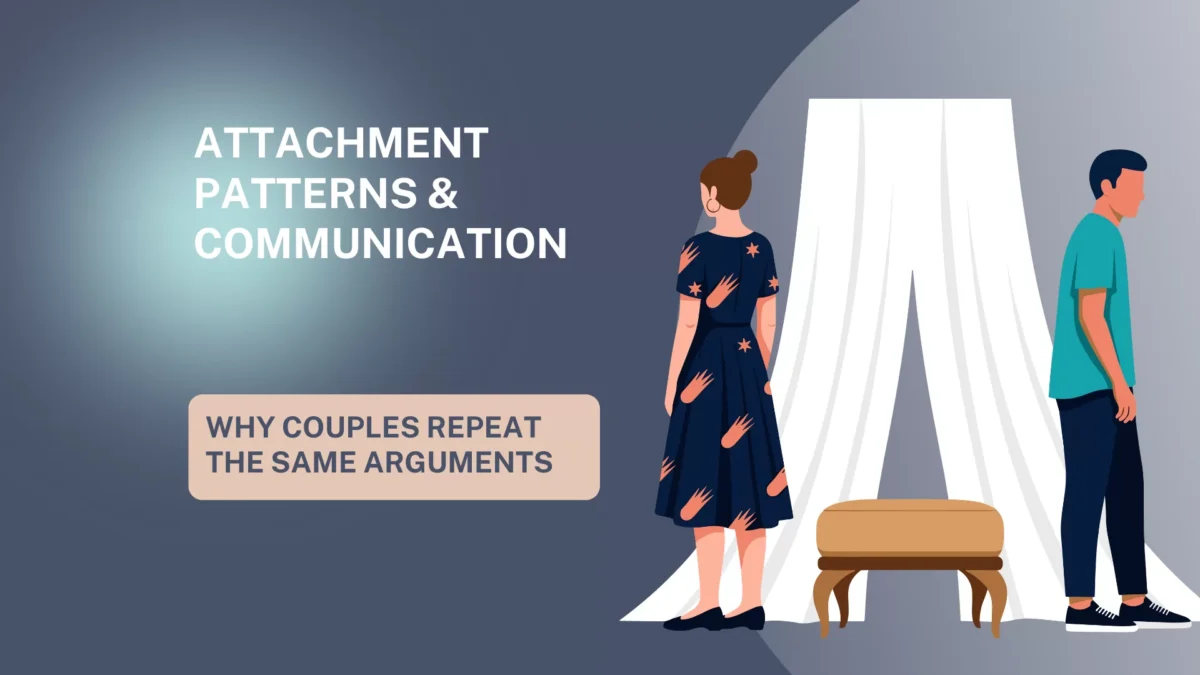
Attachment Patterns & Communication: Why Couples Repeat the Same Arguments
Why Couples Repeat the Same Arguments Every couple has disagreements. Conflict isn’t a sign of a failing relationship…
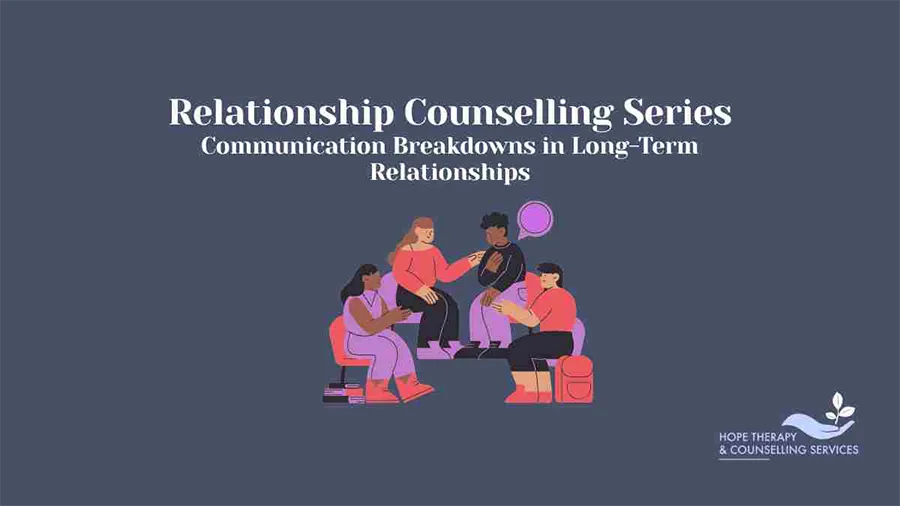
Communication Breakdowns in Long-Term Relationships
In any long-term relationship, communication is the glue that holds the partnership together. It is how we share…

How Clear Communication Can Transform Your Relationships – and Your Mental Health
We’ve all been there—feeling frustrated when someone doesn’t meet our expectations, only to realise we never actually communicated…
Meet Our Founder
Built by someone who saw the need from the inside

★
SCoPEd Band C
MBACP & SNCPS Senior Accredited
“Having worked for more than 25 years in senior management, I saw the same thing repeatedly — people struggling with mental health and relationship challenges, and so often struggling to access the right support when it was needed. It was out of this recognition of human need that Hope was born.”
Ian Stockbridge founded Hope Therapy after 25+ years leading large commercial teams – watching colleagues carry stress, anxiety, and personal difficulty with nowhere to turn. He retrained rigorously, now holding Senior Accredited status with both the BACP and NCPS, alongside SCoPEd Band C — the highest independent competence verification in the UK counselling profession.
He remains a practising therapist, clinical supervisor, published author of PMDD Uncovered, and co-presenter of The Talk Room Podcast. Hope Therapy was built on the things he saw were most broken – and designed, from the ground up, to do better.
MBACP (Senior Accredited)
SNCPS (Acc)
SCoPEd Band C
BSc (Hons) CBT
PGCert Supervision L7
Quality Award 2024 — 95%+

The conversation can be different
A free, no-obligation 15-minute conversation. No pressure, no script — just a chance to be heard, ask questions, and see whether we feel like the right fit.
Get in Touch
Start your enquiry
Not sure where to start? Send us a message and a member of our team will get back to you. All enquiries are treated in the strictest confidence.
★ ★ ★ ★ ★
“From the very first phone call, I felt heard. They didn’t rush me — they helped me work out what I needed.”
Hope Therapy enquiry feedback
NCPS Organisational Member
Est 2014
90+ Qualified Therapists

National Counselling & Psychotherapy Society
British Association for Counselling and Psychotherapy

British Association for Behavioural & Cognitive Psychotherapies
Individual registrations vary per therapist. Last reviewed: May 2026.