Addiction
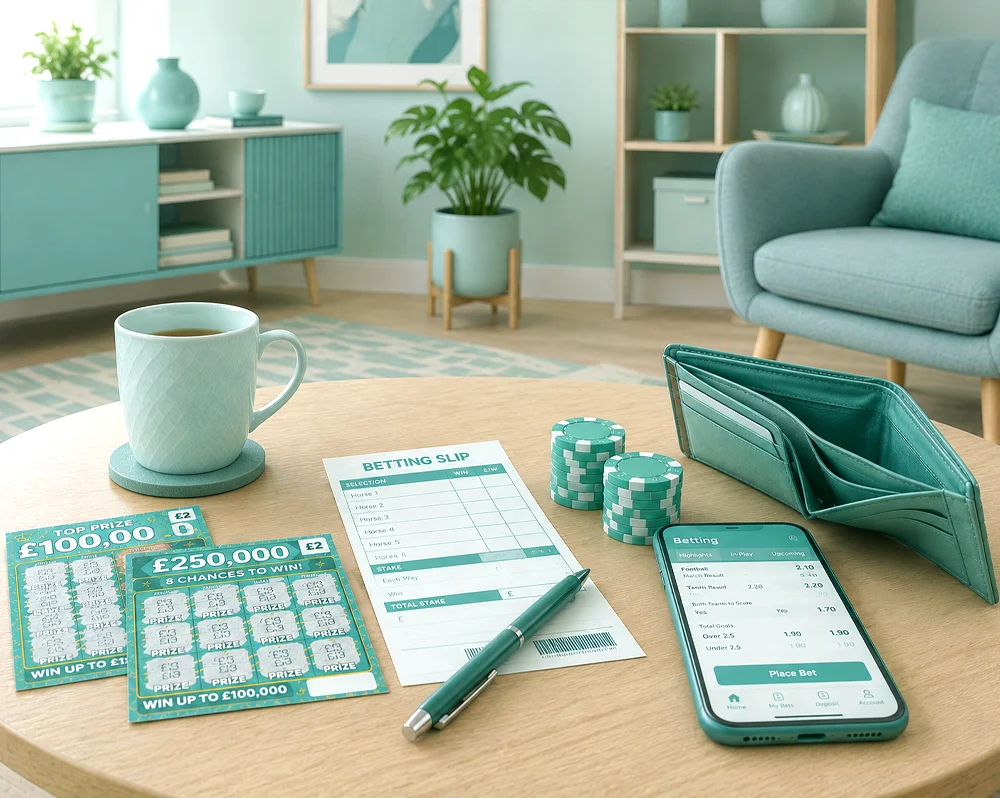
When gambling stops feeling like a game
Counselling for the emotional and financial impact of gambling on your life, relationships, and wellbeing — online across the UK and face-to-face across England.
NCPS Organisational Member
Professionally registered therapists
Free 15-minute consultation
★ ★ ★ ★ ★“I had been hiding it from everyone. Being able to finally tell someone the truth — without being judged — was the turning point.”
Client who sought support for gambling
5,000+
People supported
90+
Qualified therapists
5 ★
Website Testimonials
20+
Counties across England
It started with excitement. Now it feels like something you cannot walk away from.
Maybe it was a bet that came off, and then another, and then the feeling that the next one would too. Or maybe it began as something to do — an app on your phone, a way to make an evening more interesting, something that did not seem like a big deal at the time.
But somewhere along the way, the balance tipped. You might be spending more than you can afford, chasing losses that keep growing, or finding that the first thing you reach for when you feel stressed, bored, or anxious is the betting app rather than anything else. You might be lying to people you love about how much you have lost — or how much time you are spending on it.
Gambling can be uniquely isolating because it is so easy to hide. There are no visible signs in the way there might be with drinking. The damage happens quietly — in bank accounts, in the growing distance between you and the people who matter, in the constant background hum of anxiety about money and secrecy.
If any of this sounds familiar, you are not alone. Around 340,000 adults in the UK meet the criteria for problem gambling, and many more are worried about patterns they cannot seem to break. Asking for help is not a sign of weakness — it is often the first moment things start to change.
What we offer
Counselling for the emotional and relational impact of gambling — the anxiety, the secrecy, the financial stress, and the effect on your relationships and sense of self. We provide a confidential, non-judgemental space.
What we do not provide
Specialist gambling treatment programmes, residential rehabilitation, or financial advice. If you need specialist clinical intervention, we encourage you to contact your GP or one of the services below.
Specialist support
(free, 24/7) · Gamblers Anonymous UK · NHS National Gambling Clinic · BeGambleAware
The weight of it goes far beyond money
Financial loss is often the most visible consequence of problem gambling, but it is rarely the only one. Underneath the debt and the secrecy, there is usually a growing emotional toll — shame, anxiety, a feeling of being trapped in something you started voluntarily but can no longer control.
Relationships are often deeply affected. Partners who discover the extent of the gambling may feel betrayed, not just financially but emotionally — because the secrecy itself is a kind of breach of trust. Arguments about money become arguments about honesty, and the gap between what is happening and what is being said grows wider.
Work can suffer too. Not always in obvious ways, but in the distraction, the inability to concentrate, the constant checking of results or account balances. Some people describe a sense of living two lives — the one everyone sees and the one that plays out silently on their phone.
Mental health is almost always involved. Anxiety, depression, difficulty sleeping, and a deepening sense of hopelessness are common. For some people, gambling and poor mental health feed each other in a cycle that feels impossible to break alone.
If you are a partner or family member affected by someone else’s gambling, your experience matters too. The worry, the financial uncertainty, the emotional exhaustion of trying to help someone who may not yet be ready to change — all of that deserves support in its own right.
Understanding why it is so hard to stop
Problem gambling is not about greed or a lack of discipline. It is a pattern of behaviour that has become compulsive — driven by emotional needs that the gambling temporarily meets, even as it creates far greater problems in return.
For some people, gambling provides an escape from stress, boredom, or emotional pain. The moment of placing a bet — the anticipation, the rush — temporarily replaces whatever uncomfortable feeling was there before. For others, there is a powerful illusion of control, a belief that the next bet will be the one that fixes everything. And for many, chasing losses becomes its own compulsion — not because they believe they will win, but because stopping means facing the reality of what has already been lost.
Understanding your own pattern — what triggers the urge, what gambling gives you in the moment, what it costs you afterwards — is usually the starting point for change. Not because understanding eliminates the impulse, but because it gives you something to work with beyond willpower alone.
How counselling can help
Talking about gambling — honestly, without minimising or defending — is often the hardest and most important step. A good therapist will recognise that from the very first conversation. Counselling is not about being lectured or told what to do. It is a confidential, non-judgemental space where you can be honest about what is happening and begin to understand why.
Your therapist can help you explore the emotional triggers that drive compulsive gambling, develop practical strategies for managing urges, and begin to rebuild the parts of your life that have been affected — relationships, self-esteem, trust. If anxiety, depression, or other mental health concerns are part of the picture, those can be addressed alongside the gambling.
For couples and families, counselling can help repair the damage that secrecy and financial strain have caused — rebuilding trust, improving communication, and working out what both partners need to move forward.
Sessions are confidential in line with professional ethical standards. There are limited circumstances where confidentiality may need to change — for example, if there is a serious risk of harm — and your therapist will explain these clearly at the outset.
Our Approach
How we work with gambling concerns
We offer several evidence-based approaches, and your therapist will recommend the one that best fits your situation.
Our booking team and your therapist will discuss which approach — or combination — feels most appropriate for what you are bringing. You do not need to know which is right before you start.
What our clients say
Real experiences
★ ★ ★ ★ ★
I had been hiding it from everyone. Being able to finally tell someone the truth — without being judged — was the turning point for me.
Client who sought support for gambling
★ ★ ★ ★ ★
My therapist helped me understand that the gambling was not really about money. It was about everything I was trying not to feel. That changed everything.
Client who sought support for gambling and anxiety
★ ★ ★ ★ ★
The free consultation put me at ease straight away. I was nervous about opening up, but from the very first session, I felt genuinely listened to.
Client who sought support for behavioural concerns
Client experiences are unique. Results vary between individuals.
Getting started
What to expect
Starting counselling can feel like a big step — especially when secrecy has been part of the pattern. Here is how it works.
1
Free consultation
A brief, relaxed 15-minute conversation with a member of our booking team. We listen to what is going on and explore whether counselling could help. No pressure, no obligation.
2
Matched with a therapist
Based on your needs and preferences, we carefully match you with one of our 90+ qualified therapists. If it does not feel right, we will find someone else — at no extra cost.
3
Your first session
Your therapist will take time to understand your situation and what you are hoping to work on. There is no rush, no script, and nothing you have to share before you are ready.
Most clients hear back from us the same working day, and typically begin sessions within a week of the free consultation — depending on your preferences and therapist availability.
Standards you can trust
How we match you with the right therapist
Choosing a therapist is a personal decision, and we take time to get the match right.
A careful match, not a long list
Therapist availability changes from week to week, so rather than asking you to choose from a directory, we take time during your free 15-minute consultation to understand what you are looking for — and then match you with a therapist suited to your needs.
During the consultation, we will ask about:
- What you would like the work to focus on, and any specific concerns
- Whether you would prefer face-to-face counselling, online sessions, or a combination
- Any preferences around therapy approach
- Day and time availability that works around your life
- Any specialisms that matter to you
- Practical preferences — for example therapist gender or age range
All therapists we work with are qualified and registered with appropriate UK professional bodies, and we will confirm the most suitable options with you before any sessions begin.
Professional standards across our team
Hope Therapy & Counselling Services has been operating since 2014, and we hold Organisational Membership with the National Counselling & Psychotherapy Society (NCPS). We work in line with the NCPS Code of Ethics and BACP Good Practice, and our wider clinical standards include:
- Qualified, professionally registered therapists across the team — registrations vary per therapist and are confirmed before matching
- Ongoing clinical supervision in line with professional body requirements
- Continuing professional development to maintain and develop practice
- Clear confidentiality standards, with limits explained before sessions begin
- Client-centred, non-judgemental and inclusive practice across all areas of identity and experience
- Founder-led clinical oversight from Ian Stockbridge — MBACP (Senior Accredited) – who continues to lead the practice and oversee its standards
Whether you choose face-to-face counselling near you or online therapy from anywhere in the UK, you can expect to be matched with a therapist who is appropriately qualified and suited to the support you are looking for.
Transparent Pricing
Our fees
No hidden costs. Your therapist and fees are discussed during your free consultation.
Counselling
From £65
per 50-minute session
- Person-centred or integrative approach
- Online via Zoom or telephone
- Face-to-face where available
CBT
From £85
per 50-minute session
- Structured, goal-focused approach
- Practical tools and strategies
- Online or face-to-face
Couples Counselling
From £85
per 50-minute session
- Support for both partners
- When gambling affects a relationship
- Online or face-to-face
Looking for a more affordable option? We may be able to offer sessions at a reduced rate — just ask during your free consultation.
London clients: Location-adjusted rates may apply. Please ask during your free consultation and we will confirm the exact fee before you commit to anything.
Common Questions
Frequently asked questions
Do I need to be a problem gambler to get counselling?
No. You do not need a clinical diagnosis or a label. Many people come to us because they have started to worry about their gambling — the amount they are spending, the secrecy, the way it is affecting their mood or relationships. Counselling can help you understand the pattern and decide what you want to change.
What kind of gambling support does Hope Therapy offer?
We provide counselling for the emotional and relational impact of gambling. We do not provide specialist gambling treatment programmes, residential rehabilitation, or financial advice. If you need specialist intervention, we can help you find the right service.
Is gambling counselling available online?
Yes. All of our counsellors offer sessions online via Zoom or telephone, so you can access support from anywhere in the UK. If you prefer face-to-face sessions, we also have therapists available in locations across England.
Is everything I say confidential?
Yes. Sessions are confidential in line with professional ethical standards. There are some limited exceptions, for example where there is a serious risk of harm, and your therapist will explain these clearly before you begin.
Can counselling help if my partner gambles?
Yes. Living with someone whose gambling is causing concern can be deeply stressful and isolating. We offer individual counselling for partners and family members, as well as couples counselling where both partners want to work together.
How many sessions will I need?
It depends on your individual situation. Some people find that a short block of sessions helps them understand their triggers and develop new strategies. Others benefit from longer-term support. There is no fixed number, and your therapist will review progress with you as you go.
Related Support
You might also find these helpful
Related conditions
Therapy approaches
From our Blog
Articles about gambling addiction
No blog posts found.
Meet Our Founder
Built by someone who saw the need from the inside

★
SCoPEd Band C
MBACP & SNCPS Senior Accredited
“Having worked for more than 25 years in senior management, I saw the same thing repeatedly — people struggling with mental health and relationship challenges, and so often struggling to access the right support when it was needed. It was out of this recognition of human need that Hope was born.”
Ian Stockbridge founded Hope Therapy after 25+ years leading large commercial teams – watching colleagues carry stress, anxiety, and personal difficulty with nowhere to turn. He retrained rigorously, now holding Senior Accredited status with both the BACP and NCPS, alongside SCoPEd Band C — the highest independent competence verification in the UK counselling profession.
He remains a practising therapist, clinical supervisor, published author of PMDD Uncovered, and co-presenter of The Talk Room Podcast. Hope Therapy was built on the things he saw were most broken – and designed, from the ground up, to do better.
MBACP (Senior Accredited)
SNCPS (Acc)
SCoPEd Band C
BSc (Hons) CBT
PGCert Supervision L7
Quality Award 2024 — 95%+

You do not have to wait until things get worse
A free, no-obligation 15-minute conversation. No pressure, no script — just a chance to be heard, ask questions, and see whether we feel like the right fit.
Get in Touch
Start your enquiry
Not sure where to start? Send us a message and a member of our team will get back to you. All enquiries are treated in the strictest confidence.
★ ★ ★ ★ ★
“From the very first phone call, I felt heard. They didn’t rush me — they helped me work out what I needed.”
Hope Therapy enquiry feedback
NCPS Organisational Member
Est 2014
90+ Qualified Therapists
National Counselling & Psychotherapy Society
British Association for Counselling and Psychotherapy
British Association for Behavioural & Cognitive Psychotherapies
Individual registrations vary per therapist. Last reviewed: May 2026.