Childhood Sexual Abuse
Ian
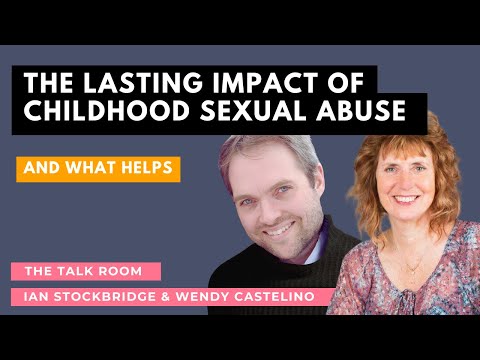
Hi, everyone, and a warm welcome to another episode of the Talk Room series of podcasts. In this episode, we examine the question of how to be your best self. We do that by examining mental health and well-being and how this applies to people’s daily lives.
For those people who have yet to see any of our previous podcasts, I’d like to introduce my co-presenter, Wendy. You are an Accredited CBT psychotherapist and EMDR therapist in private practice who has been involved in mental health and wellbeing for over 35 years.
Wendy
Thank you Ian. And you are a Senior Accredited National Counselling & Psychotherapy Society member and the founder of Hope Therapy & Counselling Services.
Ian
So I understand we are going to cover a very sensitive topic, child sexual abuse. So Wendy why have you chosen this topic today?
Wendy
Good question, Ian. In my work as a psychotherapist I often see the devastation of this issue – but often things are made more complicated due to misunderstanding and misinformation. I would also put out a recommendation that if this podcast raises a sensitive issue for you, please do seek help via A and E, or to call a helpline such as the Samaritans. There is help out there for you – please actively seek help.
Ian
Yes I cannot emphasise the importance of this, a very important point to raise. So, can we start with an understanding what we mean by childhood sexual abuse?
Wendy
Childhood sexual abuse , or CSA for short, rarely looks like the “stranger in a dark alley” version we see in films. More often, the perpetrator is someone the child knows — a family member, a family friend, a babysitter, a coach, or someone they met online who built trust over time.
This trust-building is often called grooming. It can look like giving gifts, making the child feel “special,” pushing small boundaries, and insisting on secrecy — “This is our little secret.” Children may be coerced with threats, fear, or shame.
Common immediate effects include nightmares, sleep problems, jumpiness, trouble concentrating, and avoidance of reminders. Many children, and later adults, also feel guilt and self-blame — “I didn’t fight back” or “I didn’t say no.” That self-blame is a normal trauma effect, not proof of consent.
Ian
That is good to know and these are symptoms that parents or carers can look for. I understand that a common problem is that children find it very difficult to tell – or don’t disclose until years later – why is this?
Wendy
It’s extremely common to delay telling. People fear not being believed, losing family relationships, or “blowing up” the household. Some tried to tell and were dismissed. Others were told they’d ruin the family if they spoke out.
Reporting to the police can be the right choice for some, but it’s also daunting: it can take time, it’s emotionally demanding, and evidence can be difficult. In the UK there’s no time limit on reporting sexual offences. Whether or not someone reports, they can still access medical and emotional support.
Ian
Ok, so there seems to be two issues here – the actual abuse itself and the difficulties with disclosing the abuse. I was wondering what the long term effects are?
Wendy
Not everyone will experience the same difficulties — many people go on to live rich, connected lives. But there are common themes:
- Emotional health: anxiety, low mood, PTSD or complex PTSD, dissociation, and sometimes self-harm or suicidal thoughts.
- Boundaries and trust: people-pleasing, freezing under pressure, going along with things to keep the peace, or avoiding closeness because it feels unsafe.
- Intimacy and sex: triggers during sexual contact, difficulties with touch, or swinging between craving closeness and pushing it away.
- Work and study: concentration and sleep problems can affect grades or performance; stress can feel overwhelming.
- Body and health: long-term stress can show up physically — headaches, muscle pain, gut problems — and for some, alcohol or other substances become coping tools.
Key point: these are understandable responses to abnormal experiences; they are not character flaws.
I would like to illustrate the difficulties people experience with CSA to help with understanding. These are fictional, but are classic examples of what a person might go through with CSA.
Case study One
“Sophie” is a composite example based on many survivors’ stories. She’s 32, in a caring profession, and in a kind relationship with “Tom.” When things get intimate, she often freezes. Afterwards she feels ashamed and can’t explain why she didn’t speak up. She also finds it hard to set everyday boundaries — she says yes to extra shifts, favours, and plans she doesn’t want — then feels burnt out.
In therapy, Sophie learns how grooming taught her as a child that survival meant being agreeable and quiet. Her nervous system learned that saying “no” could be dangerous. With a trauma-informed therapist, she practises grounding skills (paced breathing and 5‑senses check-ins) and assertive scripts for micro-boundaries: “I need a minute,” “Not right now, can we slow down?”, “I’m not comfortable with that.”
Sophie chooses EMDR to process specific memories and body sensations that drive the freeze response. Over time, the memories feel less raw, and her body no longer reacts as if the danger is happening now. With her consent, Tom joins one session to learn supportive language and how to pause and check in without pressure.
Takeaway: Freezing is a protective response, not weakness. With skills and memory processing, the body can learn that the present is safe — and boundaries can become clear and doable.
Case Study Two
“Aisha” is 27. As a teenager she was abused by a trusted family friend. She tried to tell an adult and was dismissed. Now, she’s quick to anger with partners and friends; she keeps relationships at arm’s length and sometimes drinks to numb out. She feels broken and ashamed.
Aisha begins trauma-focused CBT. First comes stabilisation: sleep routines, reducing alcohol, learning to name triggers and calm her system. Next, she and her therapist identify unhelpful beliefs like “It was my fault,” “I lead people on,” and “No one will ever believe me.” They gently test these beliefs against facts and compassion-focused perspectives. She gradually writes a trauma narrative in short, manageable sections and processes it in session, pairing it with grounding.
Aisha also learns relationship skills: spotting red flags, pacing intimacy, and using “I” statements — “I want to slow down,” “I need reassurance,” “I’m not okay with that.” She decides to speak to a Sexual Assault Referral Centre (SARC) for information about options. She hasn’t decided about a police report, but she now knows it’s her choice, on her timeline.
Takeaway: Recovery is possible without perfection. There are three stages – Skills first, then trauma processing, then rebuilding the life you want.
Ian
Thank you that is really interesting. So can you give me some details of how therapy might help a person with CSA?
Wendy
Certainly,
- Trauma-focused CBT (TF-CBT): grounding and emotion regulation, processing traumatic memories, updating painful beliefs like self-blame and shame, and practising real-world boundaries and consent.
- EMDR: uses sets of eye movements or other bilateral stimulation while recalling targeted aspects of the trauma. This helps your brain re-file memories so they’re less distressing and less present-tense.
- A phased approach is normal — Phase 1: Stabilise (safety, grounding, sleep, reducing risky coping); Phase 2: Process (TF-CBT or EMDR); Phase 3: Rebuild (relationships, identity, sexuality, purpose, goals).
- Pre-trial therapy: in the UK, you do not have to stop therapy during a police case. Guidance supports access to therapy before trial.
Ian
That is interesting – but if a person is struggling with CSA today and doesn’t have access to a therapist – is there anything else you can recommend?
Wendy
Yes certainly.
- Grounding in the moment: Name 5 things you can see, 4 you can feel, 3 you can hear, 2 you can smell, 1 you can taste. Keep eyes open, feet planted, breathe out slowly.
- Body reset: Try a long exhale — in for 4, out for 6 — for two minutes.
- Micro-boundaries: Prepare phrases you can use under pressure: “Pause,” “Slower,” “I’m changing my mind,” “That’s a no for me,” “I need more information before I decide.”
- Trigger plan: Write your top three triggers, how you spot them, and what you’ll do (text a friend, step outside, use breathing, hold a cold object, listen to a grounding track).
- Consent check-ins for couples: Agree a code word that means “stop and reset.”
- Make “Is this still okay?” a routine question.
Ian
And what support is available in the UK?
Wendy
Below are some examples and details are available in the show notes:-
- Rape Crisis England & Wales — 24/7 Support Line: 0808 500 2222 and webchat.
- Sexual Assault Referral Centres (SARCs): medical care, forensic options, and Independent Sexual Violence Advisers — available with or without police involvement.
- NHS Talking Therapies (England): self-refer online; ask about trauma-focused CBT or EMDR if you have PTSD-type symptoms.
- Samaritans (24/7): 116 123 — if you’re struggling or thinking about suicide.
- NSPCC: 0808 800 5000 — for adults worried about a child.
- Childline: 0800 1111 — for children and young people.
Ian
Thanks Wendy, that is really useful. So finally, Wendy. If people have listened to this podcast and are looking for professional help. What should they do then?
Wendy
CSA can leave deep marks — on the body, on trust, and on relationships. But with the right support, healing is absolutely possible. You’re not to blame. Your boundaries matter. And help is available.
If this episode was useful, consider sharing it with someone who might need it. Take gentle care of yourself today.
Downloads available. And you, Ian?
Ian
So organisations such as Hope Therapy & Counselling Services regularly work with people with various mental health and wellbeing needs, including Health Anxiety.
So, people are welcome to contact us; we work with people nationwide.
People are welcome to look at our website; we have various free resources and a team of really experienced counsellors who are available.
People can look at www.hopefulminds.co.uk
Ending.
Show Notes
Episode title
The Lasting Impact of Childhood Sexual Abuse — and What Helps (UK)
Summary
We explore the lasting impact of childhood sexual abuse (CSA), why disclosure can be delayed, common effects into adulthood, and evidence-based therapies that help recovery — including trauma-focused CBT and EMDR. Two anonymised composite case examples illustrate typical experiences and pathways to healing.
Key points
- CSA is often perpetrated by someone known to the child; grooming and secrecy are common.
- Delayed disclosure is normal; fear of not being believed is a major barrier.
- Common adult impacts include PTSD/complex PTSD, difficulties with boundaries and intimacy, and physical health effects.
- Trauma-focused CBT and EMDR are recommended therapies; a phased approach is typical: stabilise, process, rebuild.
- Pre-trial therapy is permitted in the UK; you don’t have to pause treatment during a police case.
Case examples
- “Sophie”: boundaries, freeze response, EMDR and partner involvement.
- “Aisha”: anger, trust, trauma-focused CBT, SARCs and choice.
Call to action
- If you were affected by this episode, consider contacting Rape Crisis England & Wales (0808 500 2222) or Samaritans (116 123).
- To self-refer for psychological support in England, search “NHS Talking Therapies self-referral”.
- Share this episode with someone who may find it helpful.
Content note
Mentions of childhood sexual abuse and trauma, without graphic detail. UK helplines provided.
Suggested chapter markers
- 00:00 Intro & content note
- 01:00 What CSA can look like (grooming)
- 06:00 Why disclosure is delayed
- 10:00 Adult impacts
- 15:00 Case Example 1: Sophie
- 22:00 Case Example 2: Aisha
- 28:00 What effective therapy looks like
- 34:00 Practical tools
- 38:00 Getting help in the UK
- 41:00 Closing
Immediate help
- If you’re in immediate danger, call 999.
- Samaritans (24/7): 116 123 — emotional support any time.
Specialist support
- Rape Crisis England & Wales — 24/7 Support Line: 0808 500 2222; webchat available.
- SurvivorsUK (for men and non-binary people): search “SurvivorsUK helpline”.
- Childline (under 19s): 0800 1111.
- NSPCC (adults worried about a child): 0808 800 5000.
Medical & forensic options
- Sexual Assault Referral Centres (SARCs): available with or without police involvement; provide medical care, forensic options, and ISVA support. Search “Find my nearest SARC” online.
Therapy pathways
- NHS Talking Therapies (England): self-refer; ask about trauma-focused CBT or EMDR if you have PTSD-type symptoms.
- Ask your GP about local trauma services if you need longer-term or complex trauma support.
Self-care tools
- Grounding: 5-4-3-2-1 senses; paced breathing (in 4, out 6).
- Micro-boundaries: “Pause”, “Not right now”, “I’m changing my mind”.
- Trigger plan: identify top triggers and a go-to action (text a friend, step outside, grounding track).
Your rights
- There is no time limit on reporting sexual offences in the UK.
- Pre-trial therapy is allowed; you do not need to stop therapy during a police case.