
Conditions
Understanding anxiety — and what helps
What anxiety is, how it shows up in your body and mind, why it takes hold, and how counselling can help. Support across England — online nationwide and face-to-face.
NCPS Organisational Member
Professionally registered therapists
Free 15-minute consultation

★ ★ ★ ★ ★“I’d lived with a low hum of worry for so long I thought it was just me. The first session helped me see it had a shape — and that it could change.”
Client who sought support for anxiety
5,000+
People supported
90+
Qualified therapists
5 ★
Website testimonials
20+
Counties across England
What anxiety actually feels like
Sometimes it starts before you have even opened your eyes properly. A tightness in your chest, a weight in your stomach, a sense that something is not right — even though nothing specific has happened. You do not always know what you are anxious about. Sometimes there is no single reason. It is just there, quietly running underneath everything you do.
For some people, anxiety is sharp and sudden — a wave of panic in the supermarket, a racing heart in a meeting, a feeling that the walls are closing in. For others it is slower and more constant: a mind that replays every conversation looking for what you might have said wrong, a body that holds tension so tightly you have forgotten what it feels like to relax.
The effort of getting through an ordinary day can be genuinely exhausting — not because anything dramatic has happened, but because your nervous system has been running at full capacity the whole time. You might find yourself avoiding things that used to feel manageable: social plans, phone calls, decisions at work, even answering a text. Over time, the world can get a little smaller.
If any of that sounds familiar, you are far from alone. Anxiety is one of the most common reasons people come to counselling — and one of the most misunderstood, because from the outside it can look like everything is fine.
The signs and symptoms of anxiety
Anxiety shows up in three ways: in your body, in your thinking, and in what you do. Physically, it can mean a racing heart, tight chest, nausea, shaking or trouble sleeping. Mentally, it can be constant worry, a sense of dread, or a mind that will not switch off. And in your behaviour — avoiding people, places or decisions that once felt manageable.
Recognising these signs can be a relief in itself. Many people carry anxiety for years without a name for it, assuming the racing heart, the broken sleep or the endless mental checking are just how they are made. They are not. They are recognised symptoms of anxiety, and they tend to cluster together.
Physical symptoms
Anxiety often reaches the body before you have named the feeling. Common physical symptoms include a racing or pounding heart, a tight chest and shallow breathing, nausea or digestive problems, dizziness, muscle tension, headaches, and trouble falling or staying asleep. Some people describe symptoms they did not expect — waking up shaking, a persistent feeling of internal vibration, or trembling that no one else can see. These sensations are real, and they are produced by the body’s stress response — not by anything being physically wrong with you.
Psychological symptoms
In the mind, anxiety can feel like worry that will not stop, a constant sense of dread or of waiting for something to go wrong, and a difficulty concentrating because part of your attention is always elsewhere. You might notice irritability, a struggle to relax even when nothing is wrong, or a mind that replays conversations and rehearses conversations that have not happened yet.
Behavioural symptoms
Anxiety also shapes what you do. It can mean avoiding situations that feel risky, seeking reassurance from others, checking and re-checking, or staying constantly busy to keep the feeling at bay. Over time these responses — understandable as they are — can become part of what keeps the anxiety going. Noticing them is often the first step in a different direction.
Explore Further
Types of anxiety we work with
Anxiety shows up differently for everyone. Each page below looks at a specific form of anxiety in more depth — what it feels like, why it happens, and how support can help.
Physical Symptoms
When anxiety shows up in your body, not your thoughts
Learn more →
Relationship Trauma
When past relationships shape present anxiety
Learn more →
Why anxiety stays — even when you know it does not make sense
One of the most frustrating things about anxiety is the gap between what you know and what you feel. You might know the presentation will be fine, that the message does not mean what you fear it means, that the doctor has already said there is nothing wrong. But the feeling does not care about the facts. People who live with anxiety often describe this as the hardest part — the sense of being at war with your own mind.
Part of the reason anxiety persists is physiological. Your body has a built-in alarm system — the fight-or-flight response — designed to protect you from genuine threats. When anxiety becomes chronic, this system can become overactive, firing in response to everyday situations your rational mind knows are not dangerous. The result is a body flooded with stress hormones, producing symptoms that feel very real.
Anxiety also persists for reasons that vary from person to person. For some it is connected to specific experiences — a difficult childhood, a relationship that eroded a sense of safety, a period of stress that never fully resolved. For others it is rooted in patterns formed early in life that shape how they respond to uncertainty. Sometimes the coping strategies meant to help — avoidance, reassurance-seeking, overthinking — have themselves become part of the cycle.
None of this means you are doing something wrong. These responses make sense once you understand what is behind them — and understanding what is behind them is exactly what counselling can help with.
What causes anxiety
There is rarely a single cause. Anxiety usually develops from a combination of things — some to do with how you are built, some to do with what you have lived through, and some to do with the pressures of the life you are in right now. Understanding which of these are at play for you is often part of what makes it feel less baffling.
For some people there is a genetic or temperamental thread — anxiety can run in families, and some of us are simply born more sensitive to threat and uncertainty. For others it grows out of experience: a childhood where things felt unpredictable, a loss, a long stretch of stress, a relationship that eroded your confidence, or a frightening event your nervous system has not fully settled from. And for many, it is simply the shape of daily life — work pressure, money worries, caring for others, poor sleep, isolation, or just too much for too long.
Physical factors can play a part too. Ongoing stress, hormonal changes, some health conditions, and even caffeine or alcohol can all amplify anxious feelings. This is one reason it can be worth speaking to your GP alongside any other support — to rule out or address anything physical that might be adding to how you feel.
Knowing the cause is not a prerequisite for getting help, and you do not have to arrive with it worked out. But understanding what set your anxiety going, and what keeps it going now, is often part of what allows it to change.
Who anxiety affects
If it feels as though everyone else is coping and you are the only one struggling, it is worth knowing how common this really is. Widely reported UK figures suggest that around one in six adults experiences a common mental health condition such as anxiety or depression in any given week. Anxiety is one of the most frequent reasons people seek support — and many of the people around you are quietly managing something similar.
It can affect anyone, whatever your age or background. You might be a teenager, a new parent, a student, or someone who looks entirely in control from the outside while carrying a great deal underneath. Anxiety does not discriminate by how capable or resilient you are — and if you are the person everyone else leans on, you may be carrying more of it unseen than most.
You may also notice it does not travel alone. Anxiety often comes alongside low mood, stress, burnout, broken sleep, or the after-effects of something difficult you have been through. That overlap is normal, and it does not mean anything has gone seriously wrong — it just means your experience is worth understanding as a whole, rather than one piece at a time.
Wherever you recognise yourself in this, the same thing holds: what you are feeling is common, it makes sense, and it is something people move through with the right support.
How counselling can help with anxiety — and where to start
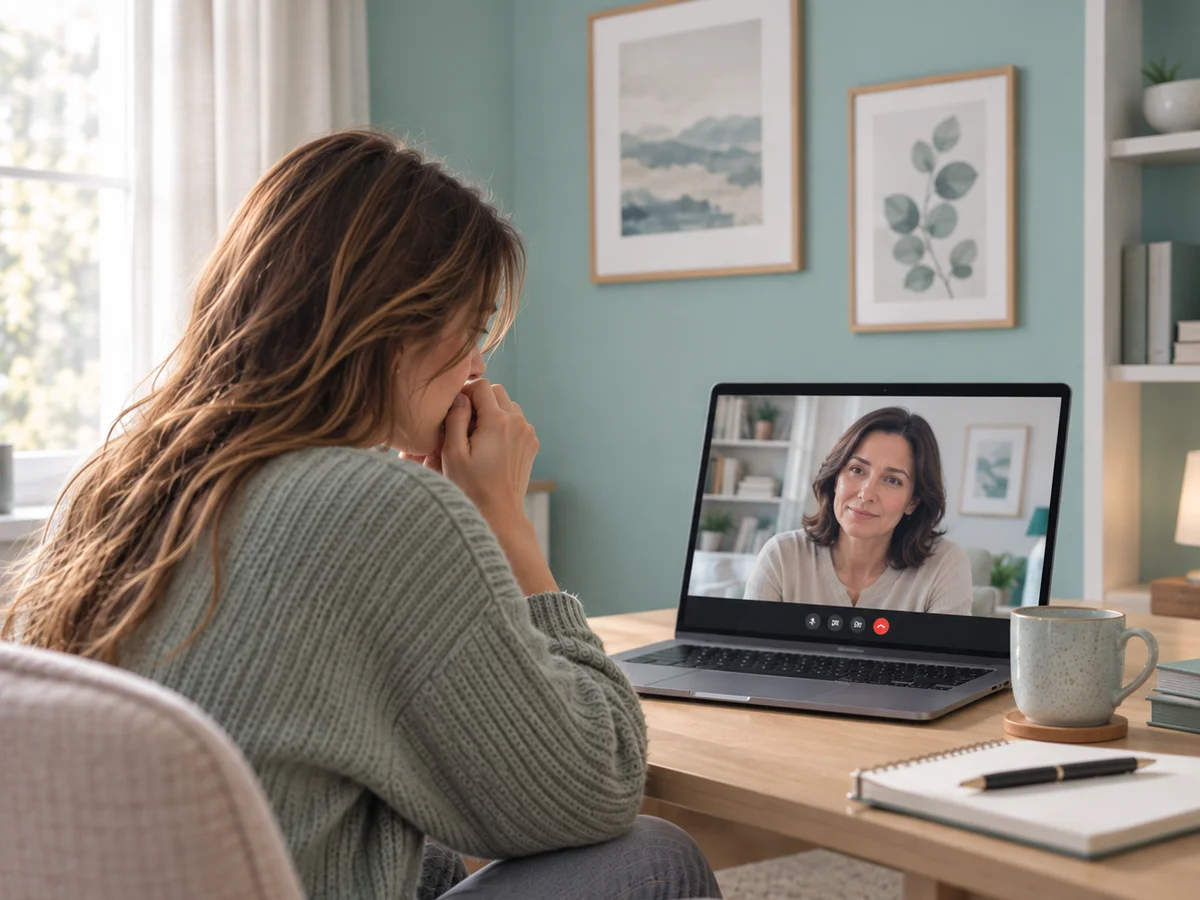
Counselling gives you a confidential space to understand what is behind your anxiety, not just manage the symptoms. A qualified therapist helps you notice the patterns and triggers keeping it in place, and supports you in responding to uncertainty differently — at a pace that feels right for you. For some people that means understanding how past experiences shape present responses; for others it means practical tools to interrupt anxious thinking in the moment; for many, it is both.
We offer several evidence-based approaches — including counselling, CBT, EMDR and mindfulness-based therapy — and match you with a therapist suited to what you are bringing. Sessions are available online across the UK and face-to-face in locations across England. Sessions are confidential; there are limited circumstances where confidentiality may need to change, such as a serious risk of harm, and your therapist will explain these clearly before you begin.
Our dedicated anxiety counselling service explains exactly how sessions work, the approaches we use, what the first session is like, how we match you with the right therapist, and how to begin. Sessions start from £65; you can see full details on our anxiety counselling page and our fee schedule.
A printable overview of our anxiety counselling service — useful to keep or share.
A note on what we do and do not offer: Hope Therapy provides talking therapy for anxiety. We are not a crisis service and we do not offer diagnosis, medication, or emergency support. If you need urgent help, or you are worried about your immediate safety, please contact your GP, call if you are in immediate danger, contact , or text SHOUT to 85258.
What Our Clients Say
Real experiences
★ ★ ★ ★ ★
I’d been carrying anxiety for years without realising how much it was affecting everything. My therapist helped me see the patterns I couldn’t see on my own. I finally feel like I can breathe.
Client who sought support for anxiety
★ ★ ★ ★ ★
The free consultation put me at ease straight away. I was nervous about opening up, but from the very first session I felt genuinely listened to. I’d recommend Hope Therapy to anyone thinking about getting support.
Client who sought support for anxiety and stress
★ ★ ★ ★ ★
I didn’t think counselling could help with anxiety — I’d tried everything else. But having someone who really understood what was going on underneath made more difference than I expected.
Client who sought support for generalised anxiety
Client experiences are unique. Results vary between individuals.
Fees
Session fees for anxiety counselling
Anxiety sessions start from £65 for counselling, with CBT, EMDR and other approaches priced individually. A limited number of reduced-rate sessions are available with our trainee counsellors — qualified-in-training and working under professional supervision. Your therapist and exact fee are confirmed during your free consultation.
Everything you share is treated in confidence. There are limited circumstances where confidentiality may need to change — for example, if there is a serious risk of harm — and the limits to confidentiality are always explained in advance, before your first session begins.
Full pricing for every approach is set out on our anxiety counselling service page and our complete fee schedule.
Common Questions
Frequently asked questions
Is it normal to feel anxious all the time?
Feeling anxious sometimes is a normal part of life. It becomes worth paying attention to when the worry is there most days, feels hard to control, and starts to affect your sleep, your relationships, your work, or the things you used to enjoy. Persistent anxiety like this is common, and it is something counselling can help with.
What are the physical symptoms of anxiety?
Anxiety often shows up in the body before you have named the feeling. Common physical symptoms include a racing or pounding heart, tight chest, shallow breathing, nausea or stomach problems, dizziness, muscle tension, trembling or shaking, and difficulty sleeping. These sensations are real and are caused by the body’s stress response — they are not a sign that something is physically wrong with you.
Can counselling help with anxiety?
Many people find that counselling helps. Rather than simply managing symptoms, counselling offers a confidential space to understand the patterns and triggers keeping anxiety in place, and to work towards responding to uncertainty differently. Different approaches suit different people — during a free consultation, we can talk through what might work for you.
What are the different types of anxiety?
Anxiety takes many forms. Common types include generalised anxiety, health anxiety, social anxiety, panic disorder, phobias, separation anxiety, and anxiety linked to past relationships or trauma. It also often overlaps with attachment patterns and physical symptoms. Each presentation can feel different, which is why understanding your own experience matters — the pages above look at several of these in more depth.
Is anxiety counselling available online?
Yes. Our therapists offer sessions online via secure video call or telephone, so you can access support from anywhere in the UK. Face-to-face sessions are also available in locations across England. Research consistently shows online therapy can be as effective as in-person sessions for anxiety.
Can anxiety cause physical symptoms?
Yes. When anxiety becomes persistent, the body’s fight-or-flight system can stay switched on, releasing stress hormones that produce very real physical effects — a racing heart, shaking, nausea, dizziness, and a feeling of internal tension or vibration. These symptoms can be frightening precisely because they feel physical, but they are a recognised part of how anxiety works.
Still have questions? The free consultation is the easiest way to ask them — no pressure to book sessions.
Related
You might also find these helpful
Related conditions
Therapy approaches


Meet Our Founder
Built by someone who saw the need from the inside

★
SCoPEd Band C
MBACP & SNCPS Senior Accredited
“Having worked for more than 25 years in senior management, I saw the same thing repeatedly — people struggling with mental health and relationship challenges, and so often struggling to access the right support when it was needed. It was out of this recognition of human need that Hope was born.”
Ian Stockbridge founded Hope Therapy after 25+ years leading large commercial teams – watching colleagues carry stress, anxiety, and personal difficulty with nowhere to turn. He retrained rigorously, now holding Senior Accredited status with both the BACP and NCPS, alongside SCoPEd Band C — the highest independent competence verification in the UK counselling profession.
He remains a practising therapist, clinical supervisor, published author of PMDD Uncovered, and co-presenter of The Talk Room Podcast. Hope Therapy was built on the things he saw were most broken – and designed, from the ground up, to do better.
MBACP (Senior Accredited)
SNCPS (Acc)
SCoPEd Band C
BSc (Hons) CBT
PGCert Supervision L7
Quality Award 2024 — 95%+


You do not have to keep carrying this on your own
A free, no-obligation 15-minute conversation. No pressure, no script — just a chance to be heard, ask questions, and see whether we feel like the right fit.
Get in Touch
Start your enquiry
Not sure where to start? Send us a message and a member of our team will get back to you. All enquiries are treated in the strictest confidence.
★ ★ ★ ★ ★
“From the very first phone call, I felt heard. They didn’t rush me — they helped me work out what I needed.”
Hope Therapy enquiry feedback
NCPS Organisational Member
Est 2014
90+ Qualified Therapists

National Counselling & Psychotherapy Society
British Association for Counselling and Psychotherapy

British Association for Behavioural & Cognitive Psychotherapies
Individual registrations vary per therapist. Last reviewed: May 2026.